
The Post-Work Decompression: Seating + Lighting Combos
The end of the workday doesn’t always feel like the end of work. You finish a meeting, answer one last email, then somehow find yourself sitting on the sofa with your laptop open again.
Your living room can do more than give you somewhere to sit.
With the right combination of seating and lighting, it can become a physical cue that tells your brain: We're done for today. Think of it as a decompression zone, a small piece of your home designed around the transition from work mode to actual life.
And no, you don’t need to turn your living room into a spa. A well-positioned armchair, a warm lamp, and somewhere to put your drink can go surprisingly far.
1. The reading nook: Armchair + warm floor lamp
There’s something wonderfully decisive about an armchair. A sofa invites you to spread out. An armchair tells you where to land.
For a reading nook, pair a generously upholstered armchair with a floor lamp to give you focused illumination. Place the chair somewhere slightly removed from the TV and, if possible, away from your desk. Choose a lamp with a warm bulb and position it so the light falls over your shoulder rather than directly into your eyes.
A small side table can complete the setup, giving you somewhere for a book or the cup of tea you made with every intention of drinking while it was still hot.
This is one of the most effective reading nook ideas because the setup gives you a clear activity without demanding much from you.
The Tan France Rumi Chair
Picture credits: @tobyshome
The Tan France Rumi Chair
Picture credits: @tobyshome
The Avery Performance Bouclé Swivel Armchair
Picture credits: @_jessicaugc_
The Avery Performance Bouclé Swivel Armchair
Picture credits: @_jessicaugc_
2. The sofa reset: Deep sofa + ambient lighting
Sometimes you don’t want to read. You just want to collapse onto your sofa and stare at the ceiling for five minutes before deciding what happens next. And we respect that.
A deep, comfortable sofa paired with soft ambient lighting in the living room creates a more relaxed environment without forcing you into a particular activity. The key is to avoid relying solely on the overhead light.
Ceiling lights are excellent when you’re looking for something you dropped under the sofa. They’re less convincing when you’re trying to create a sense of calm.
Instead, introduce several lower sources of light around the room. A floor lamp beside the sofa, a table lamp on a console, and subtle accent lighting can create a softer pool of illumination at eye level.
3. The conversation corner: Accent chairs + table lamp
Not everyone decompresses alone. Sometimes the best part of finishing work is talking about everything except work. A separate seating arrangement can encourage that shift, particularly if your living room is large enough to accommodate more than one zone.
Try pairing two accent chairs in the living room with a compact side table and table lamp. Position them across from the sofa or at a slight angle to create a more intimate conversation area.
This is where lighting becomes almost architectural. Rather than flooding the whole room with equal brightness, let the lamp create a smaller pool of light around the chair. It tells you which parts of the room are active and which can fade into the background.
The Winora Armchairs
Picture credits: @style_meetshome
The Winora Armchairs
Picture credits: @style_meetshome
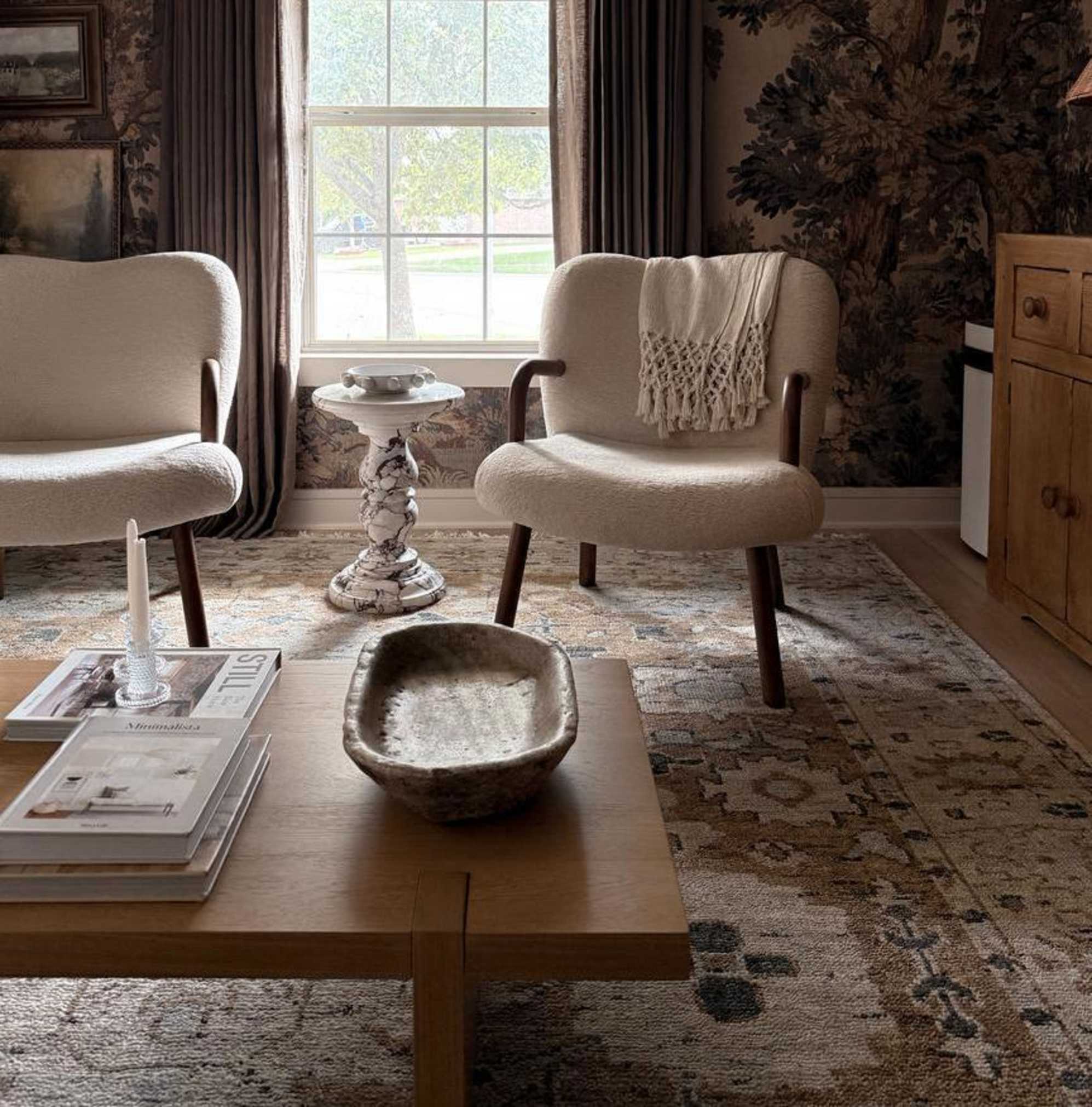
The Ingrid Sherpa Chairs
Picture credits: @jcdesign1.1
The Ingrid Sherpa Chairs
Picture credits: @jcdesign1.1
4. The low-light lounge: Chaise sectional + dimmable lighting
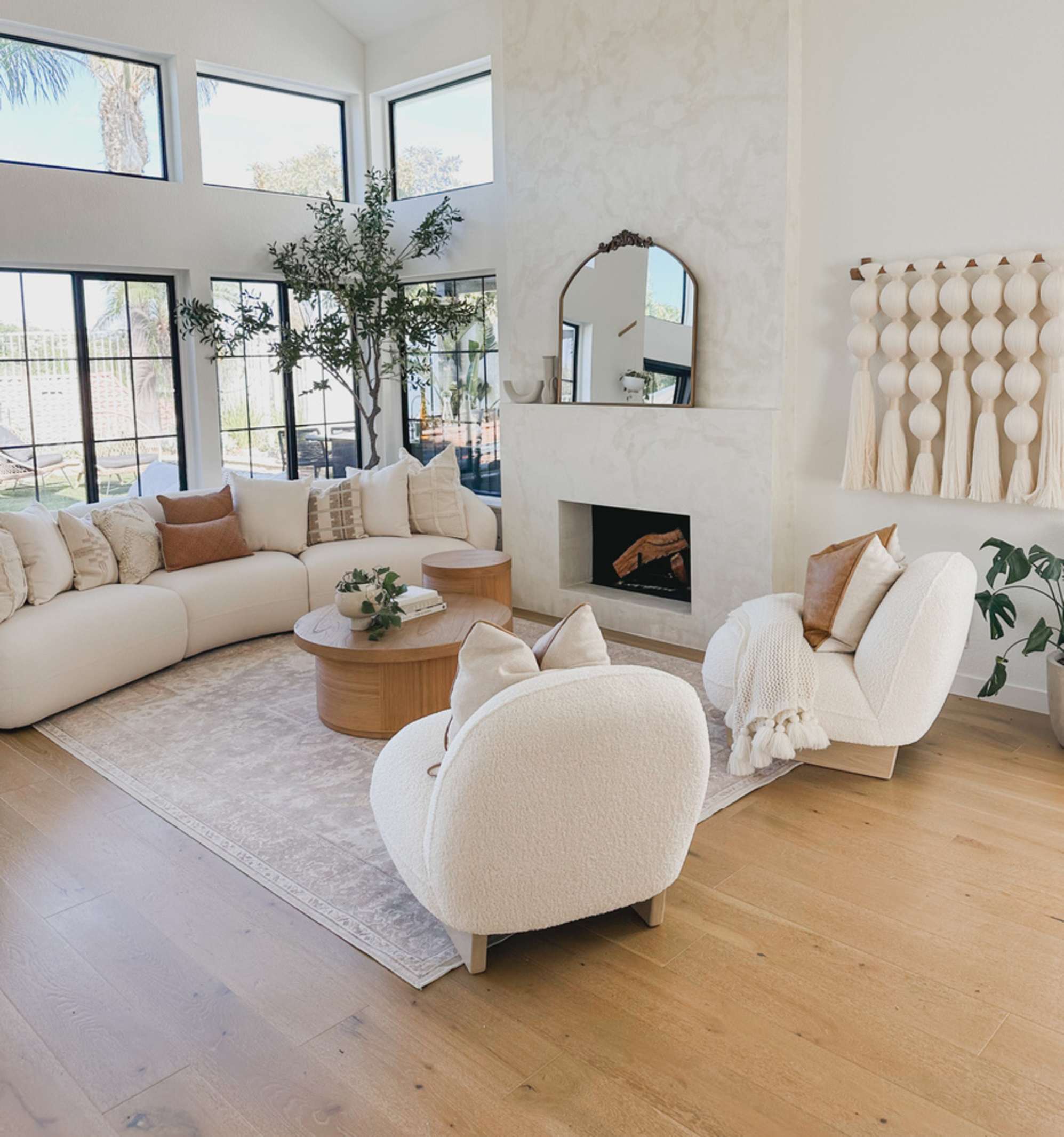
For the person whose ideal evening involves maximum horizontal potential, consider a chaise sectional paired with dimmable lighting.
A sectional naturally creates a sense of enclosure. With a chaise, generous cushions, and carefully layered lighting, the living room starts to feel more like a retreat than a passage between the kitchen and TV.
Dimmable lamps allow you to adjust the atmosphere as the evening progresses. You might want brighter illumination while eating or talking, then lower the light when you settle into a film or listen to music.
This is particularly useful if you’re exploring different living room lighting ideas because it gives one space several personalities without requiring different furniture arrangements.
Think of it like a volume dial for the room. At full brightness, the living room is functional. Turn it down, and it becomes softer, quieter, and considerably more conducive to doing nothing.
5. The solo corner: Compact chair + task light
You don’t need a sprawling living room to create a decompression zone. In a smaller apartment, a compact lounge chair paired with a slim floor or table lamp can carve out a personal retreat without overwhelming the room. Place it beside a window, in an unused corner, or near a bookshelf.
The trick is to give the zone visual breathing room.
You don’t need a chair, ottoman, side table, floor lamp, plant, rug, and three decorative objects just because you’ve found a corner. Sometimes the best arrangement is simply a chair and a light.
The Dean Performance Recliner Chair
Picture credits: @michellereed
The Dean Performance Recliner Chair
Picture credits: @michellereed

The Mori Performance Fabric Armchair
Picture credits: @lisahuhome
The Mori Performance Fabric Armchair
Picture credits: @lisahuhome

How to layer lighting for a better wind-down
Good living room lighting rarely comes from a single source. Instead, think in layers. Each layer performs a different role, and together they give you control over the atmosphere.
Ambient lighting
Ambient lighting provides the general illumination in the room. It’s the foundation, but it doesn’t have to come exclusively from a ceiling fixture. Floor lamps, wall lights, and table lamps can all contribute to ambient lighting in the living room, particularly when you distribute them around the space.
For winding down, aim for a softer, warmer atmosphere rather than bright, cool illumination.
Task lighting
Task lighting is more focused. It helps you see what you are actually doing, whether that’s reading, knitting, writing or scrolling through a recipe while pretending you will cook tonight.
A floor lamp beside an armchair is an easy way to introduce task lighting without making the space feel overly functional.
Accent lighting
Accent lighting draws attention to specific parts of the room. It might highlight artwork, a shelving unit, architectural detail, or a particularly good piece of furniture.
This layer is less about visibility and more about atmosphere.
When combined, the three layers create depth. Instead of every corner competing for attention, the room develops a hierarchy. Your favorite chair glows softly. The sofa sits in a pool of warm light. The rest of the room recedes.
That’s when a living room starts to feel genuinely relaxing.
How to choose seating for your decompression ritual
Start with a slightly uncomfortable question: how do you actually relax? Not how you think you should relax. Not how the room looks in a furniture catalogue. How do you spend the first hour after work when nobody is watching?
If you like reading, an upright lounge chair may work better than an oversized sofa. If you watch films with your feet up, a sectional or chaise could make more sense. If you spend the evening talking with family, prioritize seating that encourages people to face one another.
Comfort also deserves more scrutiny than the word suggests.
Consider the seat depth, cushion firmness, back support and arm height. These details can completely change how a piece feels after 30 minutes. A sofa can look beautifully relaxed and still leave you shifting around like you are trying to find the comfortable side of a pillow.
Then think about scale.
Your decompression zone should feel generous without swallowing the room. Leave enough space around the furniture for movement and make sure lamps, side tables and other pieces sit within easy reach.
The best setup is the one you stop noticing because everything is exactly where you need it.
Give your living room a job beyond looking good
Your living room already has a lot to do. It hosts dinners, absorbs movie nights, and occasionally becomes an impromptu office. But it can also help you leave work behind.
And the best part? You don’t need an entirely new living room to make it happen. Sometimes, the shift is as simple as moving a chair away from your desk, adding a warm lamp, and deciding that one particular corner is where work ends.
The point is to create somewhere you genuinely want to be when the laptop closes. Because after a full day of meetings, deadlines, and screens, your home should know when you’re finally off the clock.

