
Coastal Done Right: Designing Your Seaside Escape
There’s a specific kind of envy reserved for a well-designed coastal, beach-style house. The kind that smells faintly of salt air and looks like it has never once hosted a stressful Monday.
Modern coastal design has a way of making a space feel permanently unhurried—light where it counts, texture where it matters, and somehow always a little better than wherever you're coming from.
The good news is you don't need an oceanfront address to pull it off. You just need to know which details do the heavy lifting.
The aesthetics of a coastal house
Designing a coastal house isn’t about scattering seashells and calling it a day. It’s about restraint, texture, and materials that feel like they belong to the landscape.
Colour palette: Coastal houses often feature off-white, pale grey, sand, and driftwood tones layered with ocean-inspired accents like aqua and navy.
Materials and textures: Coastal-style furniture is all about natural, textured materials that feel relaxed. This includes hardwood, light timber, wicker, jute rugs, and linen fabrics.
Layout: A coastal home should feel like a deep exhale the moment you walk in. It should be uncluttered, breezy, and designed for living, not just looking at.
Styling: Modern Australian coastal styling ditches the kitschy nautical decor for organic pieces like driftwood art, oversized potted plants, coastal-themed lighting, and beach-style furniture. These ideas work just as well outdoors as they do indoors.
The Sierra Outdoor Lounge Chair
Picture credits: @stevecordony
The Sierra Outdoor Lounge Chair
Picture credits: @stevecordony
The Rio Outdoor Dining Set
Picture credits: @sarahwisted
The Rio Outdoor Dining Set
Picture credits: @sarahwisted
What is the best material for outdoor furniture near saltwater?
1. Teak wood
Widely considered the gold standard for coastal living, teak wood has naturally high oil content, which makes it resistant to moisture, rot, and insects. It's a heavyweight that can handle salty, humid air with ease, gracefully ageing from a warm golden hue to a distinguished silver-gray patina over time.
The Rio Outdoor Teak Chaise Lounge
Picture credits: @abigail_heringer
The Rio Outdoor Teak Chaise Lounge
Picture credits: @abigail_heringer
The Rio Outdoor Teak Bar Cart
Picture credits: @stevecordony
The Rio Outdoor Teak Bar Cart
Picture credits: @stevecordony

2. Powder-coated aluminium
Lightweight, rust-proof, and built for the long haul, powder-coated aluminium is a coastal favorite, and for good reason. The coating adds protection against salt corrosion and UV damage, making it the best pick for outdoor furniture with a more modern, minimalist look.
A regular rinse to clear salt residue is about as demanding as it gets. For a coastal setup that looks considered and stays that way, it's the material that does the most without making the most noise.
3. Synthetic wicker (all-weather wicker)
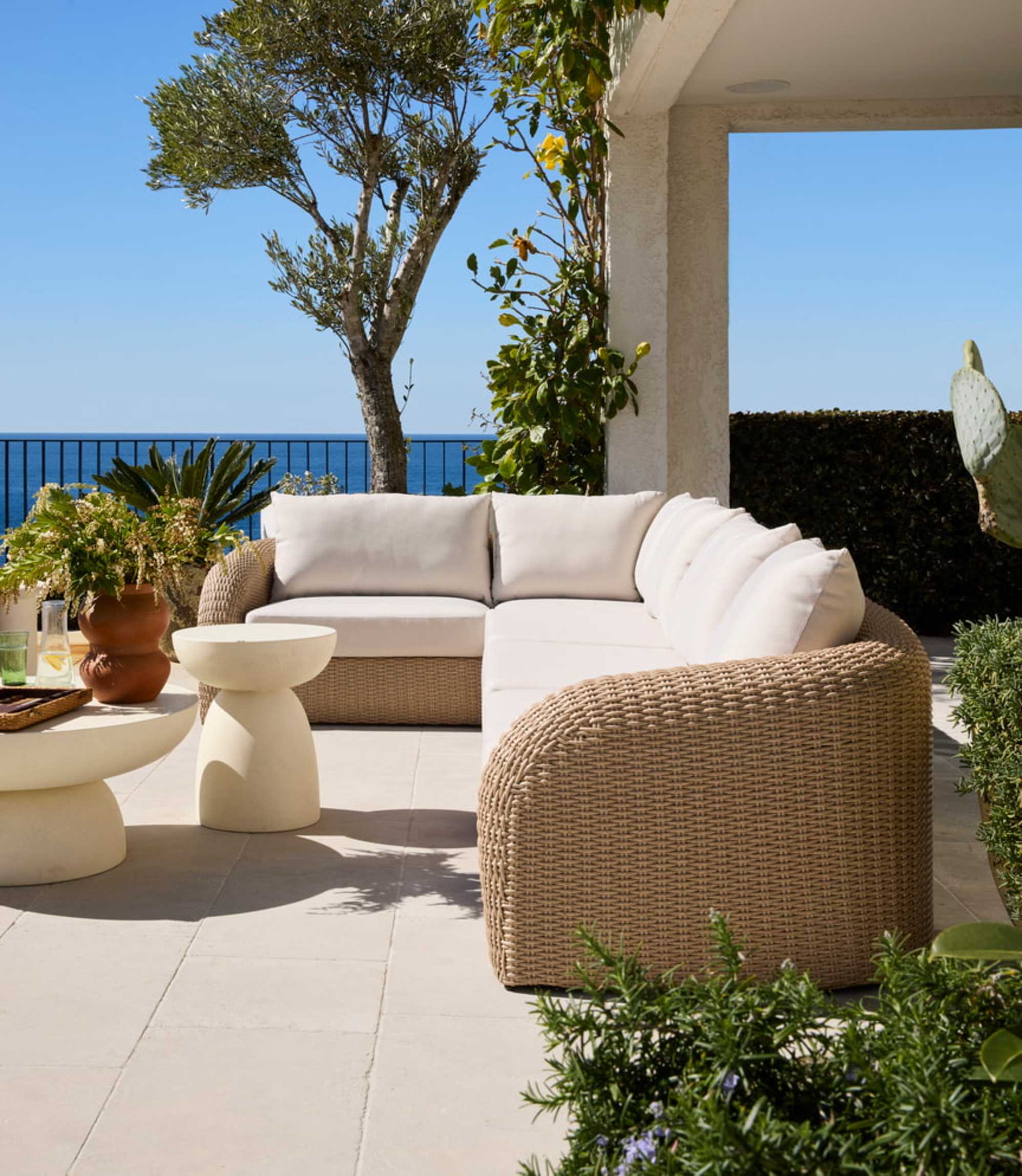
Unlike natural wicker, synthetic resin wicker is UV-resistant, fade-resistant, and moisture-resistant. It delivers that tropical coastal resort style without the fragility of natural rattan. Just keep it in shaded or semi-shaded spots to prevent brittleness.
The Sierra Outdoor Lounge Set
Picture credits: @jensgatheringnest
The Sierra Outdoor Lounge Set
Picture credits: @jensgatheringnest

The Lorna Outdoor Patio L-Shape Sectional Sofa
Picture credits: @stevecordony
The Lorna Outdoor Patio L-Shape Sectional Sofa
Picture credits: @stevecordony
4. Marine-grade stainless steel (316 grade)
When it comes to the best material for outdoor furniture, 316-grade stainless steel is hard to beat. Its superior resistance to salt damage and corrosion makes it the go-to choice for direct oceanfront exposure.
Standard steel, the untreated kind, is worth approaching with caution. Salt air finds its way in quickly, and corrosion that starts at the surface has a habit of working inward before it announces itself. It's the one material choice near the coast that tends to reveal itself at the worst possible moment.
Maintaining outdoor furniture for coastal living
Australian coastal climates are genuinely tough on outdoor furniture. Salt accelerates rust on metal frames, humidity gives wood every reason to swell and fabrics every reason to develop mould, and UV radiation fades colours and weakens materials faster than you'd expect.
Whether it's an outdoor sofa, a large extendable dining table, or poolside loungers, no piece will be spared.
That's why it's important to choose durable, weather-resistant materials and stay on top of regular maintenance. This is what separates furniture that lasts a season from furniture that lasts a lifetime.
Regular cleaning
Salt buildup can be harsh on even the toughest materials, so make a habit of rinsing your furniture with fresh water periodically. If you're going through a particularly stormy or windy season, ramp up the routine. That's when salt residue is at its heaviest and most likely to cause damage.
Use covers when not in use
A good quality furniture cover is one of the simplest ways to extend the life of your outdoor pieces, shielding them from UV fading, moisture, and wind-borne debris when they're not in use.
Seasonal maintenance
Periodically give your furniture a more thorough once-over following the manufacturer's instructions to prevent warping, cracking, or finish degradation before it has a chance to take hold.
Your ocean oasis awaits
Choose materials that respect the climate. Prioritise texture over decoration. Embrace modern coastal restraint. Invest in the best outdoor furniture for your environment, not just your Instagram feed.
When you get it right, your home becomes the place everyone gravitates toward. Lazy weekends, long lunches, and the kind of memories that make you never want to leave—that's the coastal dream, and it's closer than you think.

Frequently asked questions about coastal houses
What is a coastal house?
A coastal house is simply a home located on or near the beach or ocean. Beyond its location, coastal homes also reflect their surroundings in their design. Natural materials like wood and stone, light and airy open-plan living, and a Hamptons-inspired aesthetic all come together to create a space that feels as good as the view outside.
What are the coastal house colours for 2026?
The coastal colour palette for 2026 is all about soft sea-glass greens, muted blues, warm whites, and sandy neutrals. These are paired with contrasting moody accents like deep sea-green or navy for a look that feels sophisticated rather than beachy.
What makes a coastal home?
A significant part of what defines a coastal house is its open layout. Living on the coast means an abundance of natural light and beautiful breezes coming off the water. Coastal furniture and architecture are designed to make the most of both. Big windows, open doors, and an open floor plan all work together to blur the boundary between inside and out.

