
6 Interior Design Mistakes from Homeowners (+Advice)
There’s a specific kind of renovation regret that only arrives after move-in day, when the mood board is long gone, and the inconveniences are very much still there.
We interviewed a couple of homeowners to tell us about their biggest interior design mistakes—not the polished lessons, but the real ones: What went wrong, why, and what they wish they had known.
The interior design mistakes nobody warns you about
The most common interior design mistakes aren’t about taste. They come from a single root cause: Designing for a version of your life that doesn’t quite match how you actually live. The gap between the planned home and the lived-in home is exactly where interior design mistakes are born.
The stories below aren’t cautionary tales. They’re honest accounts from real homeowners that point toward the same truth: your home has to work for the life you actually have, not the one that photographs well.
1. The dining table that took over the room — Sarah's story
Sarah's mistake came from a reasonable place: She and her partner hosted often, so they bought a dining table to match. It filled the space beautifully on the occasions it was needed. On every other day, it filled the space in a different way entirely.
"On a day-to-day basis, this created narrow walking space around the living room that was inconvenient to navigate," she explains. It also restricted their robo-vacuum from reaching certain areas around the table—a small but telling detail about how one oversized piece of furniture can quietly disrupt the rhythm of an entire room.
Sarah’s advice: Design for the Tuesday, not just the dinner party
It’s easy to design for the best version of how a room will be used. What’s harder to hold in mind during the planning phase is the ordinary Tuesday, when it’s just you navigating to the kitchen at seven in the morning and the table is simply in the way.
Her solution, in hindsight, would have been a extendable dining table: One that could expand for hosting and contract for everyday life. "Think more about daily lifestyle needs first before deciding on furniture items," she says.
The Seb Extendable Dining Table
Picture credits: @thepantryboy
The Seb Extendable Dining Table
Picture credits: @thepantryboy
The Casa Extendable Dining Table
Picture credits: @samanthaarandazzo
The Casa Extendable Dining Table
Picture credits: @samanthaarandazzo
2. When one power outlet is never enough — ShiJia's story
ShiJia's renovation was (by most measures) a success. The space looked considered and clean, until she sat down in her favourite armchair and realised there wasn’t a single power point within reach.
"Not having enough power outlets around was my biggest interior design mistake," she says. "You have to consider the practical angles instead of just making the interior look neat. It causes so many inconveniences."
It sounds obvious. And yet the electrical plan tends to get decided early, when you’re still imagining how rooms will look rather than how you will actually use them. By move-in day, it’s too late to wonder why the reading nook has no socket.
ShiJia’s advice: Practicality beats aesthetics, every single time
A clean wall is appealing. Too many power points can feel busy, but a wall without enough sockets is not minimal. It’s inconvenient, and inconvenience accumulates into the kind of low-grade frustration that slowly changes how you feel about your home.
Her advice is simple: Put at least one power point in every spot where you might spend more than an hour. Walk through each room and ask not what it will look like, but what you will actually be doing in it.
3. The hidden cost of buying cheap — Gee's story
Gee's list of interior design mistakes is the kind that takes a moment to sit with, because each item on it made complete sense at the time. She bought lights from an online marketplace to save money, and chose a sofa from a well-known Chinese brand at a lower price point. She picked up a TV console that suited her dimensions when local options did not come in the right size.
"The lights stopped working one by one in high-use areas like the kitchen," she explains. "The sofa started peeling within a year. The TV console got mould easily."
Gee’s advice: Invest in what lasts
"Invest in quality furniture," she says. "And don't be too hung up on the little details. After staying for one month, you'll forget about all the small things. Just enjoy your home."
Materials that hold up in drier climates can warp, peel, or develop mould here. A sofa that costs half the price of a well-made alternative looks like good value right up until it starts peeling in year one, at which point you’re shopping for sofas again while still paying off the renovation.
Quality and durability have a greater impact on long-term satisfaction than many of the small aesthetic details homeowners often stress over during renovation.
The Jaron Performance Fabric Recliner Sofa
Picture credits: @qalbtohome
The Jaron Performance Fabric Recliner Sofa
Picture credits: @qalbtohome

The Solari Performance Fabric Sofa
Picture credits: @winnieechia
The Solari Performance Fabric Sofa
Picture credits: @winnieechia
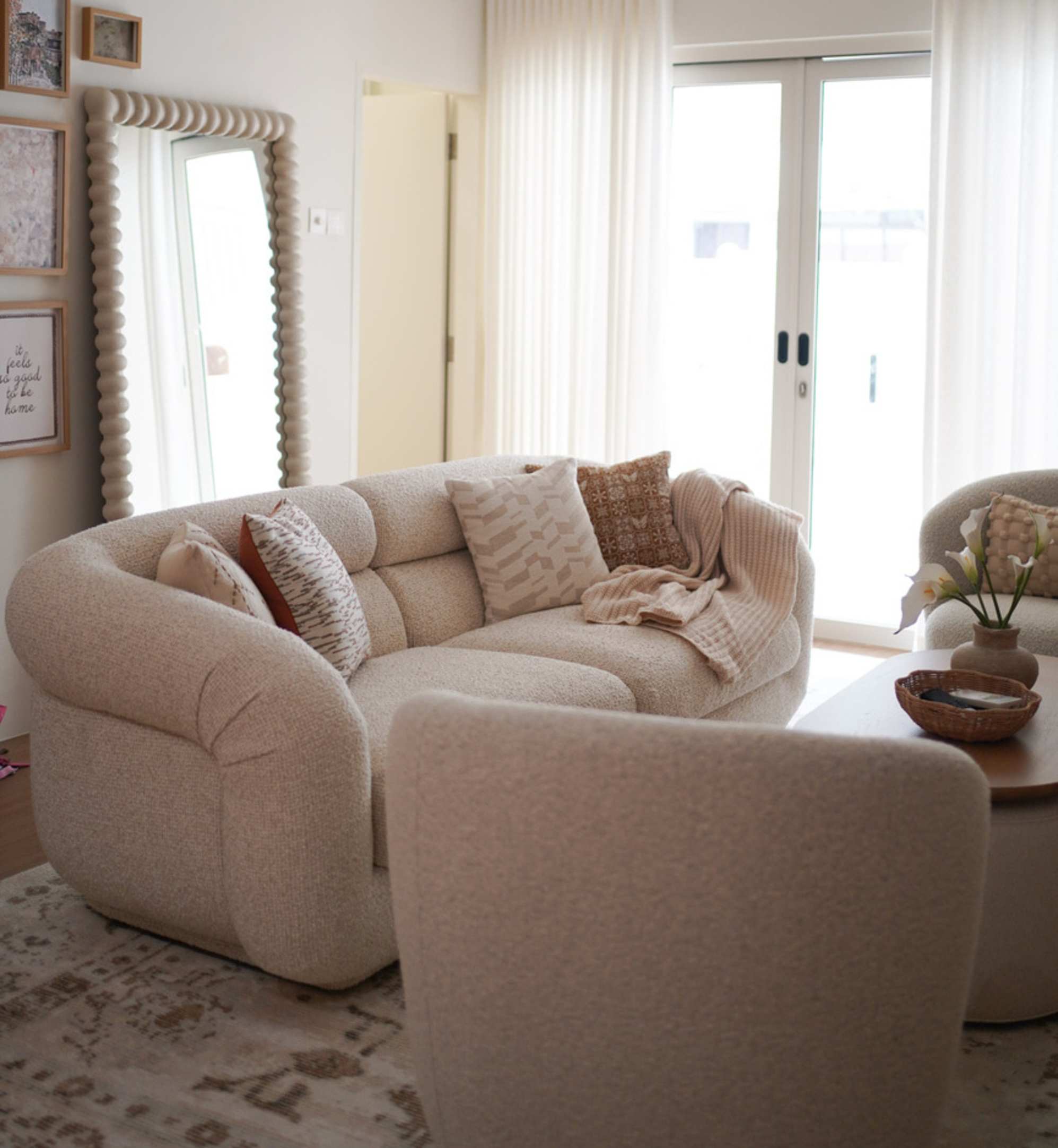
4. The carpentry trap — Adelin's story
Adelin's concern is one that resonates with many Singaporean homeowners: The commitment to extensive built-in carpentry. "It may limit our flexibility to change furniture in the future, as our design preferences could evolve over time," she says.
Built-in carpentry looks intentional and solves storage problems. The downside is that it locks you into decisions made at one moment in your life, for a version of your household that will almost certainly change.
Adelin’s advice: Flexibility is a design feature too
Her advice is grounded: Visualise yourself actually living in the space before committing to anything. Use layout tools to experiment before purchasing, and don’t feel pressured to rush.
Flexibility isn’t a compromise. It’s a legitimate design value, and one worth building into the plan from the start.
5. The robo-vacuum that didn't fit — Scott's story
Scott's mistake has a satisfying specificity to it. He and his partner designed a custom cabinet to house their robo-vacuum, measuring carefully to ensure the docking station and unit would fit. It did fit, technically.
What they did not account for was the operational footprint.
"We came to realise that the robo-vacuum requires more space than just the amount of wiggle room for navigation purposes," he explains. "We ended up needing to move the docking station outside of the cabinet, so now it's just an empty space."
Scott’s advice: Plan for the life, not just the look
The lesson: Plan around real-world usage, not just the physical dimensions of the device.
When planning built-ins or furniture layouts, account for how items will actually function—not just whether they physically fit. The turning radius, the clearance needed to function, and how a drawer opens when someone is standing directly in front of it.
6. When the floor plan fights back — Dana’s story
Dana and her partner were renovating a resale flat, and they made the kind of mistake that’s easy to make when you’re standing in a vacant apartment imagining what it could become. They built a detailed vision for the bathroom without first mapping the constraints that came with it.
"We overlooked checking the configuration of the house," she says. "With resale properties, there are often challenges like exposed sewage pipes, beams that can't be removed, or windows in awkward spots."
When they finally confronted the placement of the toilet bowl, the windows, and the sewage pipes against the bathroom they had envisioned, they had to start from scratch. "This meant we couldn't execute our original vision, and it also wasted valuable time."
Dana’s advice: Flexibility is not a backup plan, it’s the plan
Dana’s advice is to inspect thoroughly before you begin designing. Identify every fixed constraint before you start planning, because constraints discovered late rarely disappear—they simply become more expensive (in terms of time and money).
Resale properties in Singapore especially come with histories baked into the walls: Decisions made by previous owners, original developers, or contractors. Working with those constraints rather than against them isn’t a failure of vision, it’s good design.
The best-designed home is the one you actually live in
Six homeowners, six different spaces, six sets of decisions made under the combination of excitement and exhaustion that a renovation produces. And yet, their interior design mistakes converge on a remarkably consistent set of lessons.
The most useful takeaway from their stories is not a checklist of mistakes to avoid, but a simple set of questions:
Does this work for how I actually live?
Have I planned for use, not just appearance?
Am I flexible enough to work with the space constraints?
Those questions matter far more than any design trend or renovation decision.

Frequently asked questions about interior design in Singapore
What are the most common interior design mistakes in Singapore homes?
The most common interior design mistakes in Singapore homes tend to be practical rather than aesthetic. From our interview, homeowners frequently underestimate how many power points they need, commit to extensive built-in carpentry that limits flexibility later, and buy furniture that is sized for an idealised version of the space rather than the actual one. Choosing materials that cannot withstand Singapore's humidity is another recurring issue, as is failing to map the structural constraints of a resale property before beginning to design around them.
How do I make my HDB flat look bigger?
The most effective way to make a HDB flat feel larger is to be deliberate about scale. Oversized furniture is one of the fastest ways to make a small space feel cramped, so choosing right-sized pieces (or modular ones that can adapt to different needs) makes a significant difference. Keeping sightlines clear, using consistent flooring throughout, and minimising visual clutter all contribute to a greater sense of space. Built-in storage can help, though it's worth balancing that against the flexibility you might want to preserve for the future.
Is it worth hiring an interior designer in Singapore?
For most homeowners, yes, particularly for a first renovation. An interior designer brings knowledge of what is structurally possible, what mistakes to avoid, and how to stretch a budget effectively. That said, if you're not doing a full renovation but still want expert guidance on furniture and layout, an interior styling service is a lighter-touch alternative. These styling services help you make confident decisions about what to buy and how to arrange it, without the commitment of a full ID engagement.
