
Warm Minimalism: How to Create Calm, Inviting Spaces
We’ve all tried to be that person. The one with the impossibly clean living room, the untouched cushions, the coffee table that looks styled within an inch of its life.
And for a while, it works. Until you actually start living in it.
The throw ends up crumpled in a corner. You realise the sofa looks better than it feels. The space is beautiful, but slightly… untouchable. That’s usually the point where warm minimalism starts to make sense.
Because it doesn’t ask you to live less; It just asks you to live better with less.
What is warm minimalism, really?
At its core, warm minimalism is the meeting point between simplicity and softness. It sounds like a design trend, but in practice, it feels more like a correction—and I find myself coming back to it often in my own styling work.
It keeps the clarity of minimalism, but removes the rigidity. Instead of sharp contrasts and stark whites, warm minimalist interior design leans into tones and materials that feel easier to live with. Woods that show grain, fabrics that crease slightly, and colours that don’t feel like they’re trying too hard.
It’s not about emptiness—It’s about intention.
Why stark minimalism no longer works for real homes
There was a point where minimalism became almost performative. Spaces looked incredible on camera, but didn’t hold up to real routines. And somewhere along the way, “less” started to feel like “not enough.”
You notice it in small ways. A chair that’s too upright to relax in. A room that echoes because there’s nothing to absorb sound. Surfaces that look pristine but show every single mark.
Warm minimalism steps in where that version falls short. It accepts that homes are meant to be used and experienced. And experience requires comfort, softness, and maybe a little bit of imperfection, which is something I always emphasise to my clients.
The core elements of a warm minimalist interior design
To get it right, you need to understand what actually makes a space feel warm while staying minimal:
A grounded colour palette: Soft beiges, warm greys, muted browns, creamy whites, and layered neutrals
Natural materials: Wood, linen, wool, and stone are materials that age well
Texture over pattern: Interest comes from how things feel, not just how they look
Soft, layered lighting: Nothing too harsh, nothing too clinical
How to design a warm minimalist living room you’ll actually use
The living room is where intentions are tested. It’s easy to design something beautiful, but it’s harder to design something you want to collapse into at the end of a long day.
A warm minimalist living room does both.
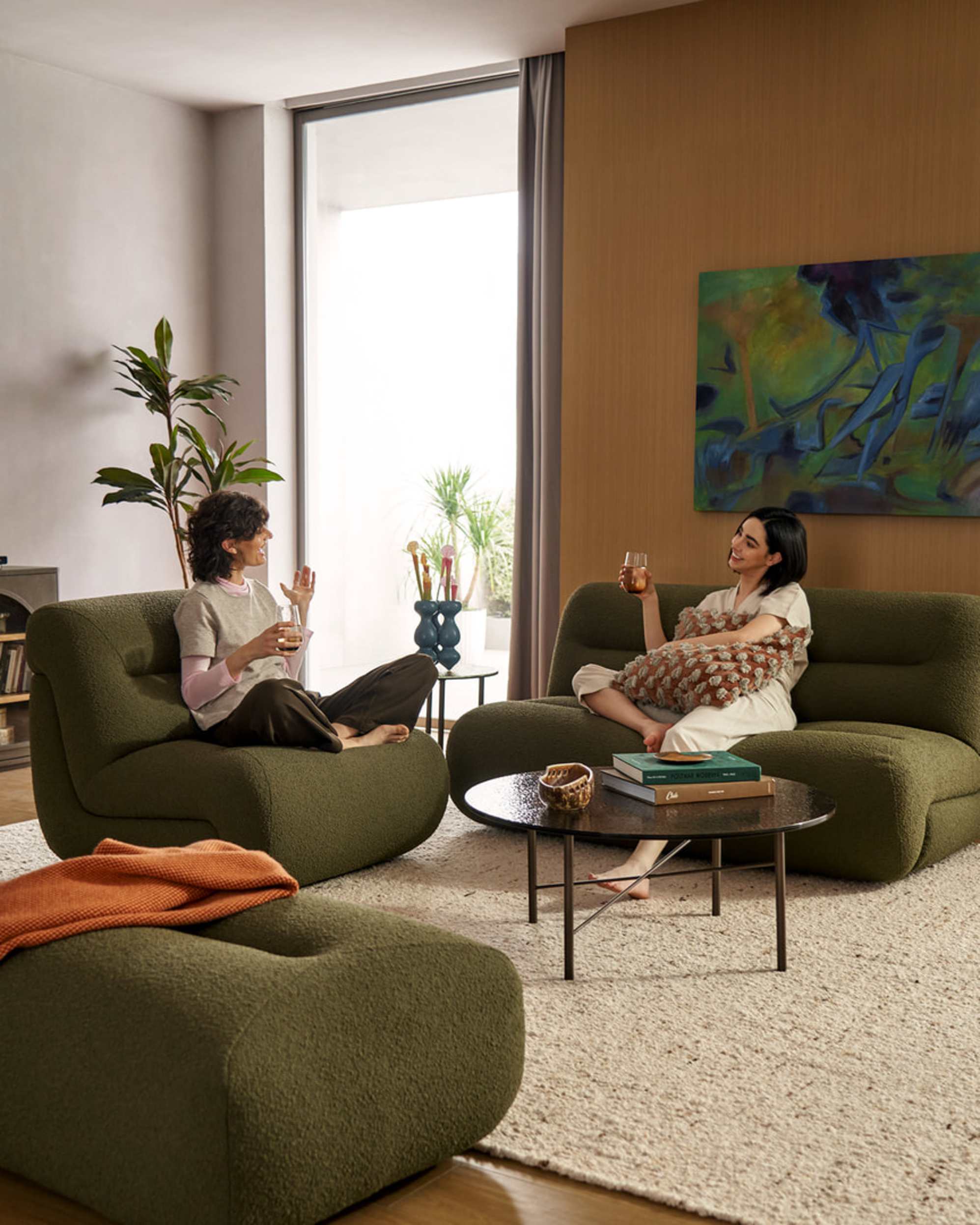
Choose seating that invites you in
The depth of the seat, the angle of the backrest, and the way the armrest supports your weight when you lean into it after a long day. These details matter when choosing the right furniture, and they’re often the first things I pay attention to when selecting pieces for a space.
Look for pieces with:
Generous proportions that don’t feel rigid
Soft, tactile upholstery like bouclé or linen
Rounded or softened edges that feel approachable
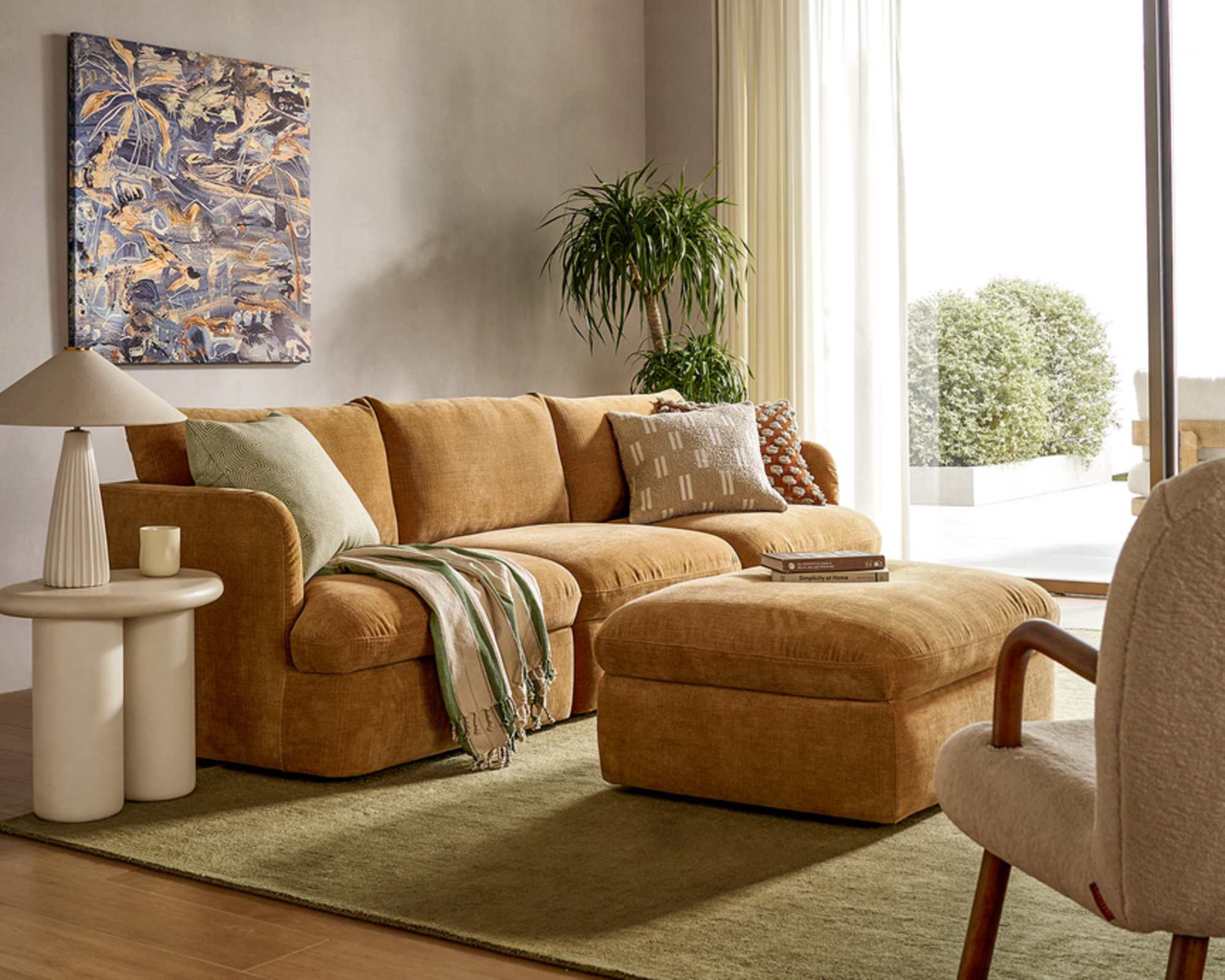
Texture is doing more work than you think
Once you remove bold colours and busy patterns, texture quietly takes over. Like a rug that softens your steps or a fabric sofa that isn’t perfectly smooth.
You don’t need a lot of layers, but the ones you have need to count. This is usually where I see the biggest difference between a space that feels flat and one that feels considered.
Let your palette do the heavy lifting
Not all neutrals are created equal. Some feel flat the moment you put them together.
The difference usually comes down to undertones. Warmer shades tend to sit better together and feel less ‘clinical’ over time (and in my experience, they’re much easier to live with day-to-day). Instead of stark whites, opt for tones that feel lived-in:
Ivory instead of white
Sand instead of beige
Taupe instead of grey
It’s subtle, but it changes how the entire room reads. The goal is to create a space that feels cohesive without feeling flat.
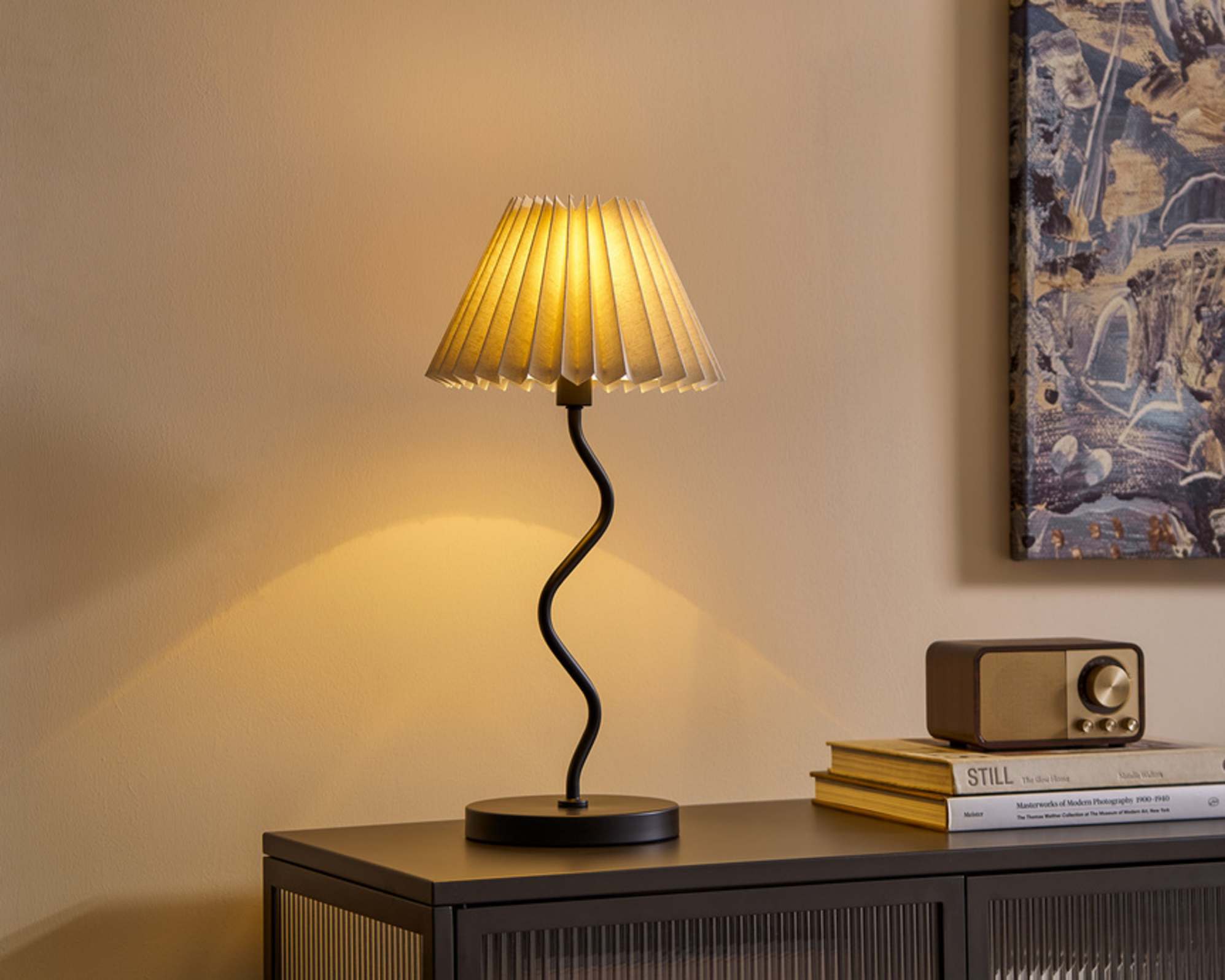
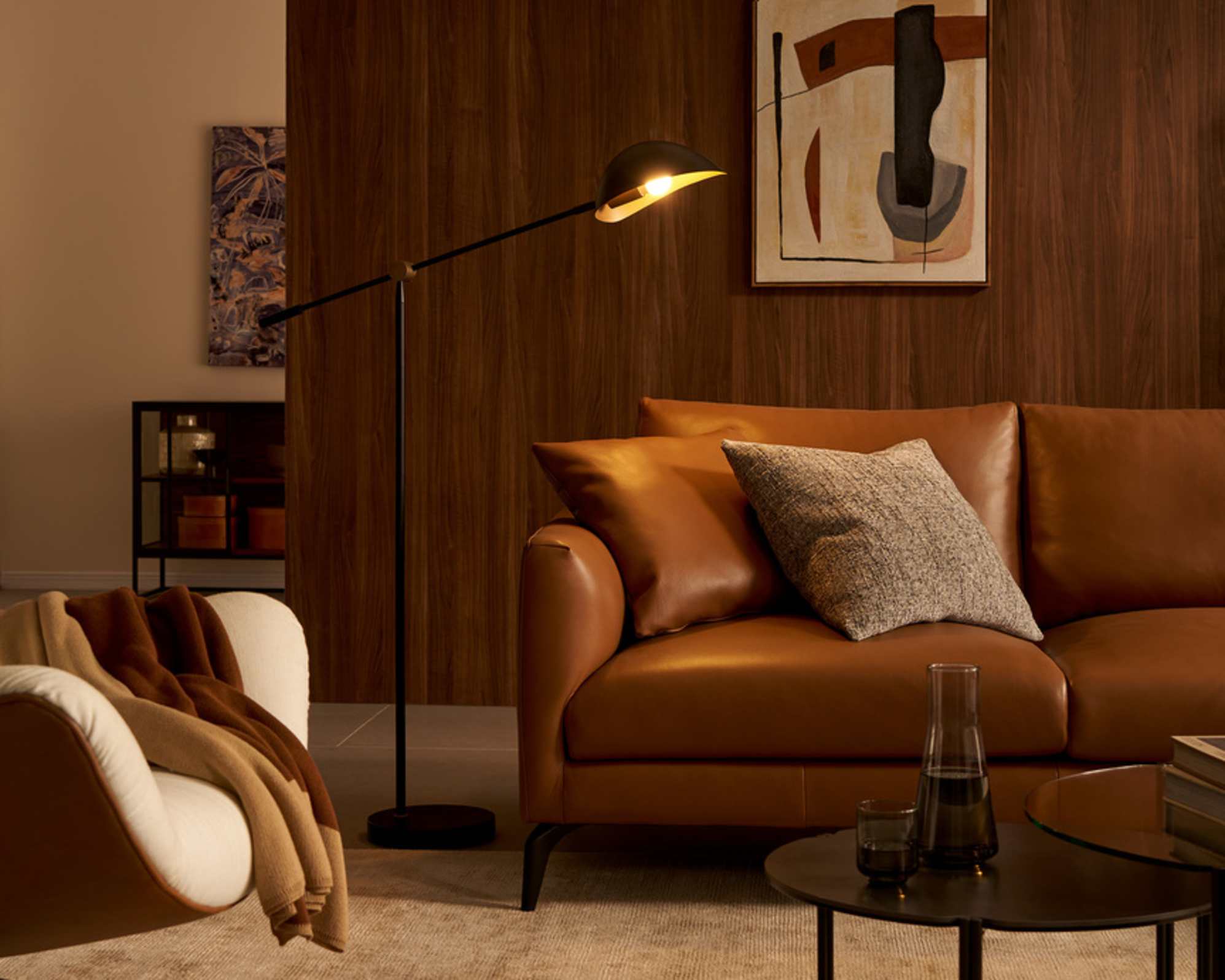
Lighting is where the mood lives
Lighting is often treated as an afterthought, which explains why so many spaces feel slightly off at night.
In a warm minimalist interior, lighting is part of the design from the start. Softer bulbs, multiple light sources, and an awareness of how light interacts with materials is something I always advise my clients to plan early on rather than leaving to the end.
It’s the difference between a room that looks good and a room that feels right.
Extending warm minimalism beyond the living room
Once you get the living room right, the rest of the home tends to follow naturally.
Bedrooms that help you switch off
Bedrooms benefit the most from this approach because it's the one space where how it feels matters more than how it looks.
Keep the palette soft and restrained, but focus just as much on what you’re actually touching every day. Bedding that breathes, fabrics that don’t feel overly precious, and bedroom furniture that supports rest rather than distracts from it. These are the details I tend to prioritise most when it comes to bedroom styling.
Dining spaces that invite you to linger
A dining space should feel easy to settle into, whether it’s a quick weekday meal or one of those dinners that stretches longer than expected.
In a warm minimalist setup, this usually comes down to a few well-judged decisions. A dining table with enough presence to anchor the room, paired with chairs that are genuinely comfortable to sit in for a while. Materials matter here too, especially those that feel solid and age well over time.
You don’t need layers of styling to make it feel complete. If anything, holding back a little makes the space feel calmer and more inviting in the long run.
Small spaces that don’t feel stripped
Small spaces are often where minimalism gets taken a bit too far, leaving rooms that feel more sparse than intentional.
Warm minimalism approaches it differently. You still edit carefully, but you don’t remove so much that the space loses its sense of comfort. There’s a balance between keeping things clean and allowing enough presence for the room to feel lived in.
This is where smart choices make a difference. Pieces that do more than one job, storage that keeps things out of sight without feeling bulky, and materials that add warmth without adding clutter. When it all comes together, even a compact space can feel complete rather than compromised.
The mistakes people make with warm minimalism
Warm minimalism looks simple, which is exactly why it’s easy to get wrong. These are some common mistakes I notice when speaking to clients:
Mistaking empty for intentional: There’s a fine line between minimal and empty. Once a space starts to feel bare, it loses the warmth you were trying to create.
Forgetting about texture: Neutral palettes without texture tend to fall flat quickly. This is usually where things go wrong.
Buying for the look, not the feel: If a piece doesn’t hold up to daily use, it doesn’t matter how good it looks on day one.
Why warm minimalism is the future of intentional living
Warm minimalism works because it doesn’t fight the reality of how we live. It accepts that homes are used, that comfort matters, and that not everything needs to be perfectly styled to feel considered.
When you approach warm minimalist interior design this way, you end up with something better than a beautiful space. You get a home that supports your routines, softens your days, and quietly does its job in the background—which, to me, is what good design should always do.


