
What is the Best Thread Count for Sheets?
There’s a particular kind of joy in sliding into a freshly made bed. The quilt is fluffed just right, the sheets are crisp and clean, and suddenly all your evening plans evaporate. But if you’ve ever stood in a linen aisle or fallen down a rabbit hole comparing sheets online, you know the number everyone obsessively checks: thread count.
Higher must be better, right?
Not necessarily.
Chasing the highest thread count without understanding what it really means is how many end up with sheets that feel like sleeping inside a plastic bag. So let's fix that.
What is thread count?
Thread count measures the number of threads woven into one square inch of fabric, counting both vertical threads (warp) and horizontal threads (weft).
In theory, more threads per square inch generally means a finer, denser, and smoother fabric. Up to a point, that’s true.
Sheets with higher thread counts often feel softer, heavier, and more luxurious—the kind that makes your bed seem like it’s actively working to keep you there.
But thread count alone doesn’t tell the full story. Some manufacturers have mastered the art of making the number look impressive without improving the feel.
What affects the thread count?
Weave type
The way a sheet is woven has a significant impact on its thread count and how it feels against your skin. The two most common weaves are percale and sateen.
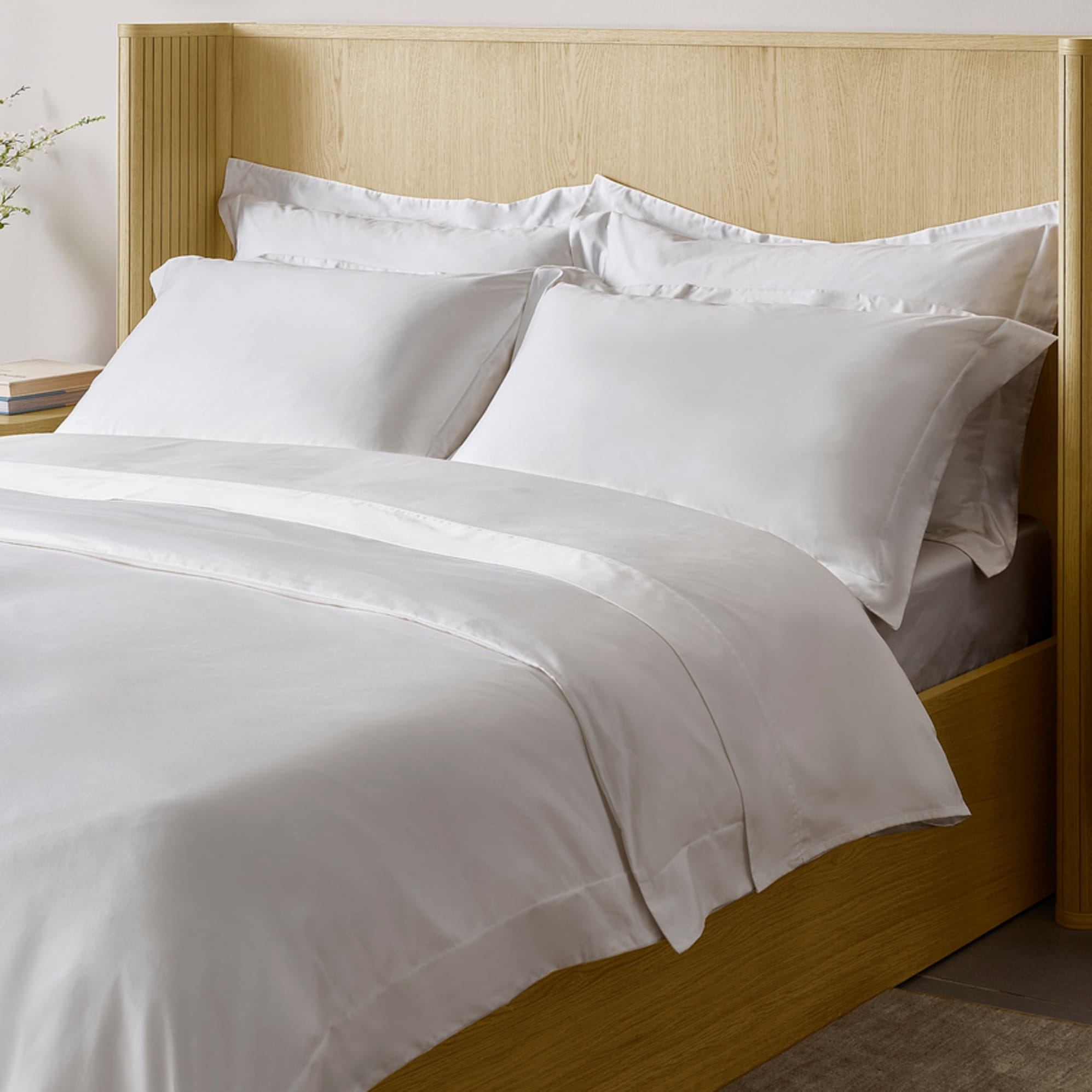
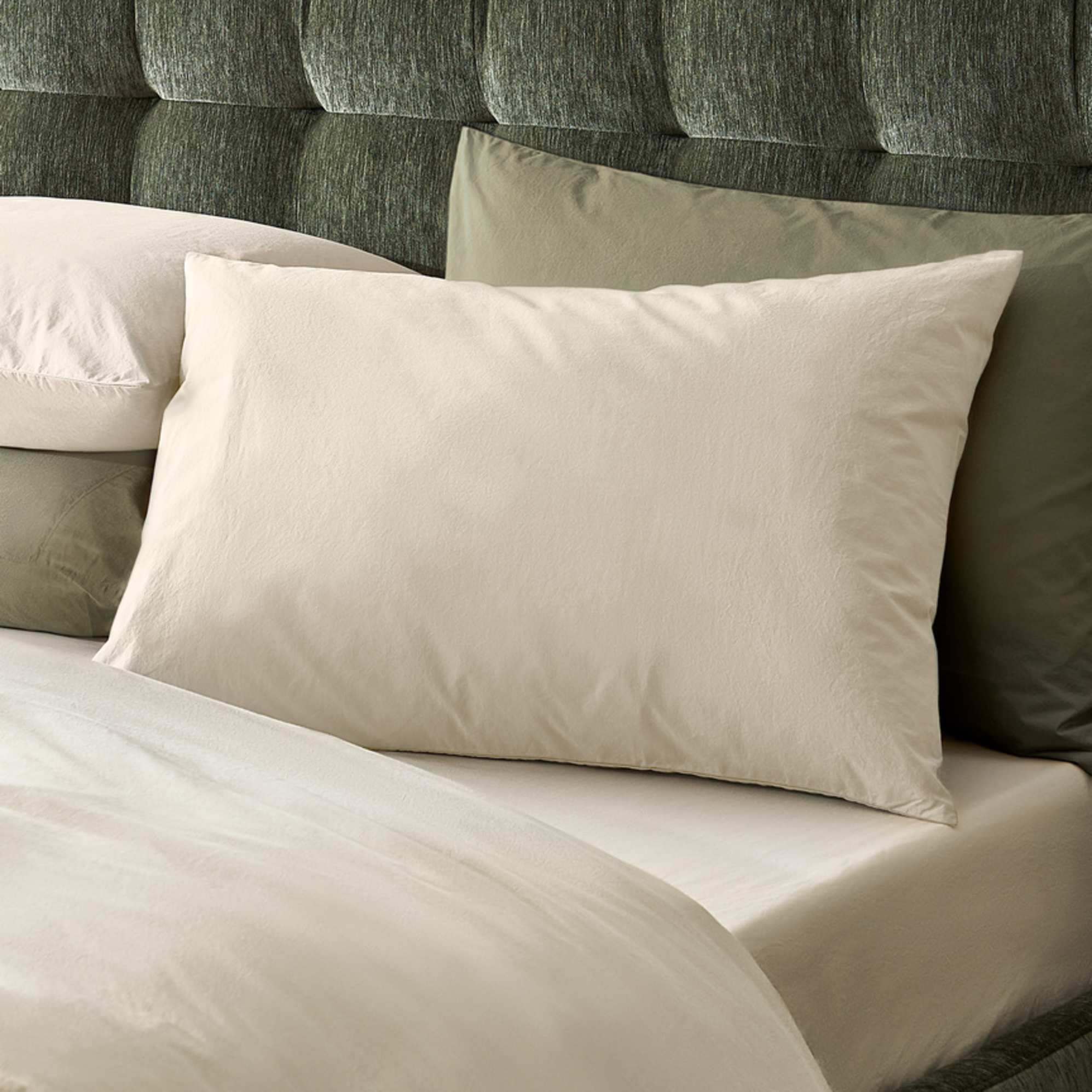
Percale: A simple one-over-one-under weave creates a crisp, cool, matte finish. It's lightweight, breathable, and gets softer with every wash. Think hotel-quality beds that improve over time.
Sateen: A four-over-one-under weave packs more threads into the same space, resulting in a heavier, smoother fabric with a subtle sheen—the kind that catches the warm glow of a bedside table lamp in all the right ways.
Neither is universally better. Your choice depends on whether you run hot, prefer crisp versus silky, and how much visual luxury matters in your bedroom.
Material
The type of fibre determines what thread count is achievable—and what a “good” thread count actually looks like.
Cotton: Can be spun into fine, strong yarns that pack tightly together. That’s why cotton sheets can comfortably sit in the 300-500 range.
Egyptian cotton & Supima cotton: Both are known for their extra-long staple fibres that allow for higher thread counts, at around 400–800 and 300–600, respectively.
Linen: Shorter, thicker fibres keep thread counts lower, usually 80–150. But it’s not a flaw: linen is breathable, softens with use, and has a relaxed charm.
Silk: Smooth, luxurious, with an optimal thread round range of 400–600.
So when you’re asking what a good thread count for sheets is, the material matters.
Multi-ply threads
When you see sheets with a very high thread count (we’re talking 800, 1000, or beyond), it’s worth asking how they got there. In many cases, the answer is multi-ply yarn: where two or three threads are twisted together, and each strand is counted separately, rather than each finished thread.
Technically accurate, but in practice, these sheets can feel dense, heavy, and less breathable than advertised. The fabric doesn't drape well, it doesn't feel as luxurious, and it certainly doesn't justify the premium price.
There are physical limits to how tightly single-ply threads can be woven. If the thread count defies those limits, it’s worth checking whether the number is genuine single-ply. Otherwise, you’re paying for arithmetic, not comfort.
Metric vs imperial
Most thread counts are per square inch, but some manufacturers use square centimetres. A 240-thread-count sheet per inch could appear as 300 per cm².
Same sheet, bigger number, different system. Always read the fine print. It's the kind of detail that feels pompous until you realise you've paid extra for a number that doesn't mean what you thought it meant.
So, what is a good thread count for sheets?
For most people, the sweet spot sits somewhere between 300 and 500. At this range, sheets tend to be soft, durable, and breathable—genuinely comfortable without being so heavy they trap heat.
That said, “good” is relative. Here’s a general guide by material:
Cotton: 300–500
Egyptian cotton: 400–800
Supima cotton: 300–600
Linen: 80–150
Silk: 400–600
If indulgence is your goal, aim for 500–600 in quality cotton or Egyptian cotton. Beyond 600, the benefits diminish unless the yarn is genuinely fine, single-ply, and expertly woven.
Recommended read: The 12 Best Fabrics for Bed Sheets
How to choose the right thread count?
Your ideal thread count isn’t universal. It depends on your sleeping habits, bedroom environment, and personal preference.
| If you... | Best thread count | Best material | Why |
|---|---|---|---|
| Sleep hot | 300–400 | Percale cotton or linen | Lower thread counts allow more airflow, keeping you cool through the night. Linen regulates temperature better than almost anything else—even if the thread count looks modest on paper. |
| Love heavy, sumptuous bedding | 400–600 | Sateen weave | More threads packed into the weave means a noticeably heavier, smoother fabric with a subtle sheen. |
| Have sensitive skin or allergies | 300–400 | Natural fibres—cotton or linen | Tightly woven, high-thread-count sheets can trap heat and reduce breathability. A lower thread count in a natural fibre tends to be gentler on skin that's particular about what it spends eight hours against. |
| Are outfitting a guest room | Good-quality cotton | More than respectable, genuinely comfortable, and easy on the budget. Guests will sleep well. No one's checking the label. |
Thread counts: What really matters
When it comes to finding the best thread count for sheets, it’s tempting to fixate on numbers—but the truth is that the ideal sheet thread count depends on material, weave, and personal comfort rather than chasing the highest figure.
A sheet with a thread count of 400 in Egyptian cotton will almost always outperform a sheet with a thread count of 800 made from multi-ply low-grade yarn.
Ultimately, the best sheets are the ones that make getting into bed feel like the most reasonable thing you’ve done all day. The ones that make you weirdly reluctant to get up, even when you have somewhere to be.
That's what we're really solving. Everything else is just math.
Frequently asked questions about sheet thread count
What is a good thread count for a bedsheet?
For most people, somewhere between 300 and 500 is the sweet spot—high enough to feel quality, low enough to stay breathable. The weave and material matter just as much as the number itself, so a 300-thread-count percale cotton will often outperform a 500-thread-count synthetic without breaking a sweat.
Is a 1000 thread count better than 500?
Not necessarily, and often, not at all. Beyond 600, manufacturers start counting individual fibres within each thread to inflate the number, which says more about marketing than it does about quality. A well-made 400–500 thread count sheet in a good natural fibre will almost always feel better, last longer, and breathe more easily than a 1000-thread-count sheet that's chasing a headline.
What thread count do 5-star hotels use?
Most luxury hotels land between 300 and 600, with 400 being something of an industry favourite. The full picture goes beyond thread count—it's high-quality Egyptian or long-staple cotton in a percale or sateen weave, bedroom furniture that earns its place in the room, and an obsessive approach to laundering that most of us will never quite replicate at home.
