
How to Place an Area Rug in Your Living Room
An area rug can truly tie a living room together. When placed right, your living room furniture suddenly looks like it was meant to be together. Get it wrong, and even a beautifully furnished space can feel oddly off.
The culprit is usually size. Too small, and your furniture looks stranded. Too big, and your rug starts eating into the room. The sweet spot? A rug that anchors the space without overwhelming it, making the whole room feel more balanced.
So, how do you place a rug in your living room without playing a very expensive game of guesswork? It starts with getting the size right, then finding the placement that works with your room, furniture, and everyday life.
Getting the size right
Before we talk layout, let’s talk scale. Rug size can make or break the flow of your space, so here’s how to get it right:
Small rugs (3 x 5, 4 x 6 feet): Use for layering, defining a reading nook, or grounding small coffee tables.
Medium rugs (5 x 8, 6 x 9 feet): Perfect for smaller living rooms. They anchor your main seating arrangement, making the space feel instantly more cohesive.
Large rugs (8 x 10, 9 x 12 feet): For spacious living rooms, pulling together even the most sprawling furniture arrangements. They’re big enough to hold your seating area together without swallowing it whole.
Extra-large rugs (10 x 14 feet and larger): For those glorious, open-plan spaces where living and dining areas blur. These define the living zone within a larger footprint.
Match the rug to your room's shape
Your room's shape sets the tone, and your living room rug layout needs to work with it. Here's our guide to common layouts and their matches:
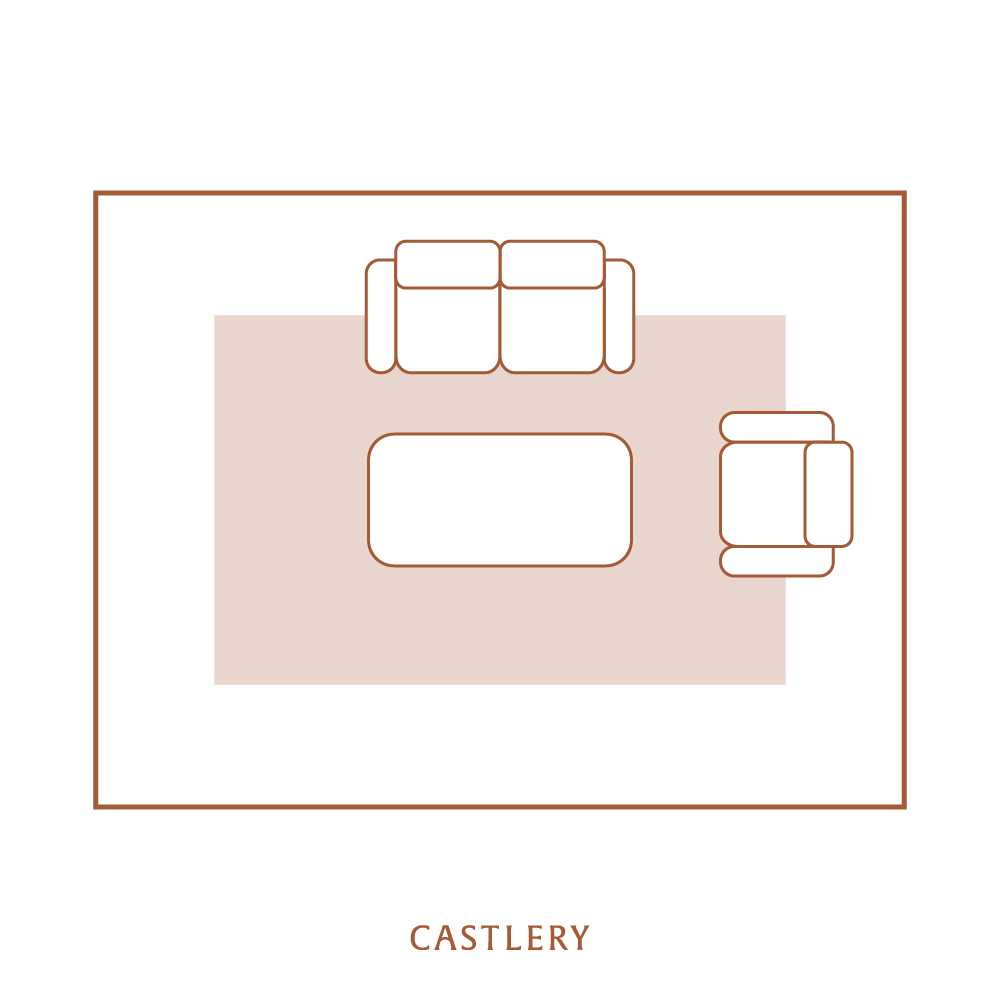
Long and narrow rooms
These living rooms can often feel a bit like a perpetual hallway if the furniture and rug don't work together. To escape the dreaded tunnel effect, a rectangular rug placed lengthwise pulls the sightline down the room and unifies the seating.
Avoid forcing a small square rug into the middle of a long room. It can exaggerate the empty floor around it and make the space feel even more divided.
Recommended read: 10 Ideas for Decorating a Long, Narrow Living Room
Square rooms
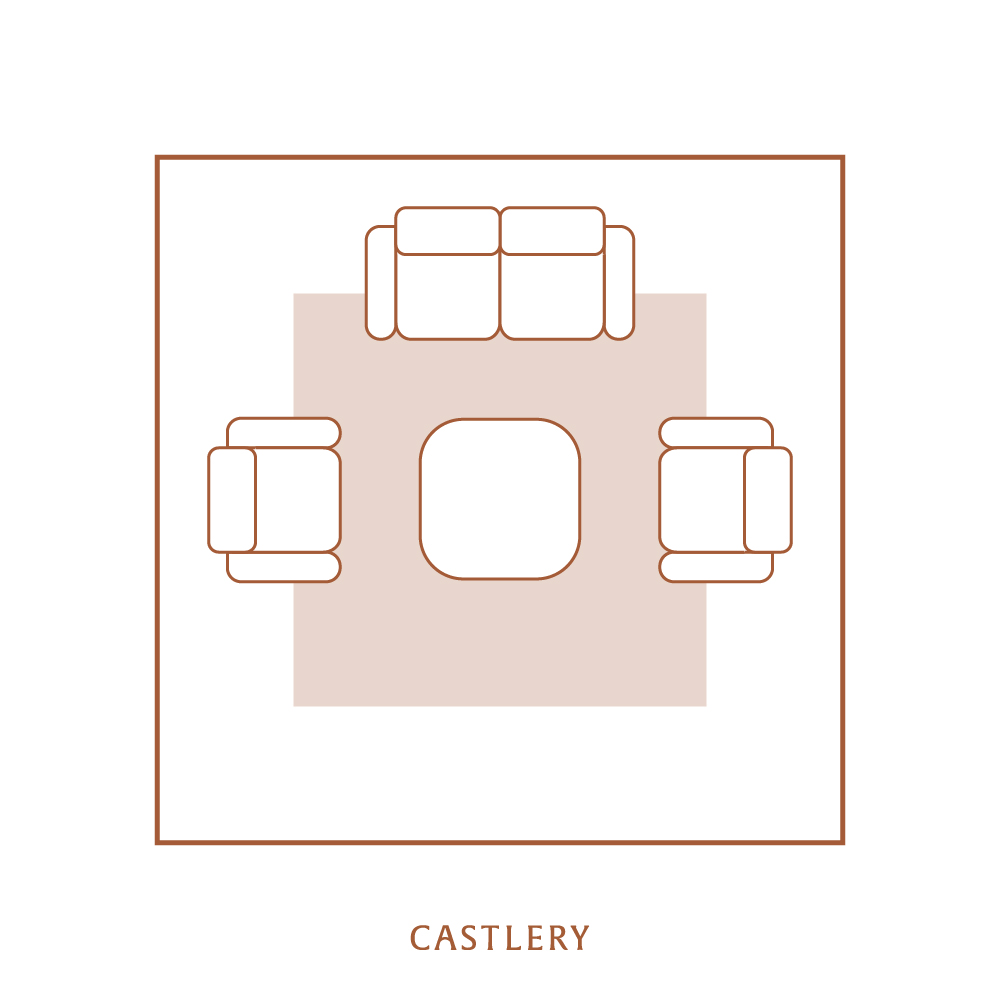
A square room gives you a little more freedom. A square rug can echo the room's proportions for a symmetrical, structured look, while a round rug can soften all those straight lines.
If your furniture arrangement already feels quite angular, a circular rug beneath the coffee table can be an easy way to introduce some movement.
Open-plan living and dining
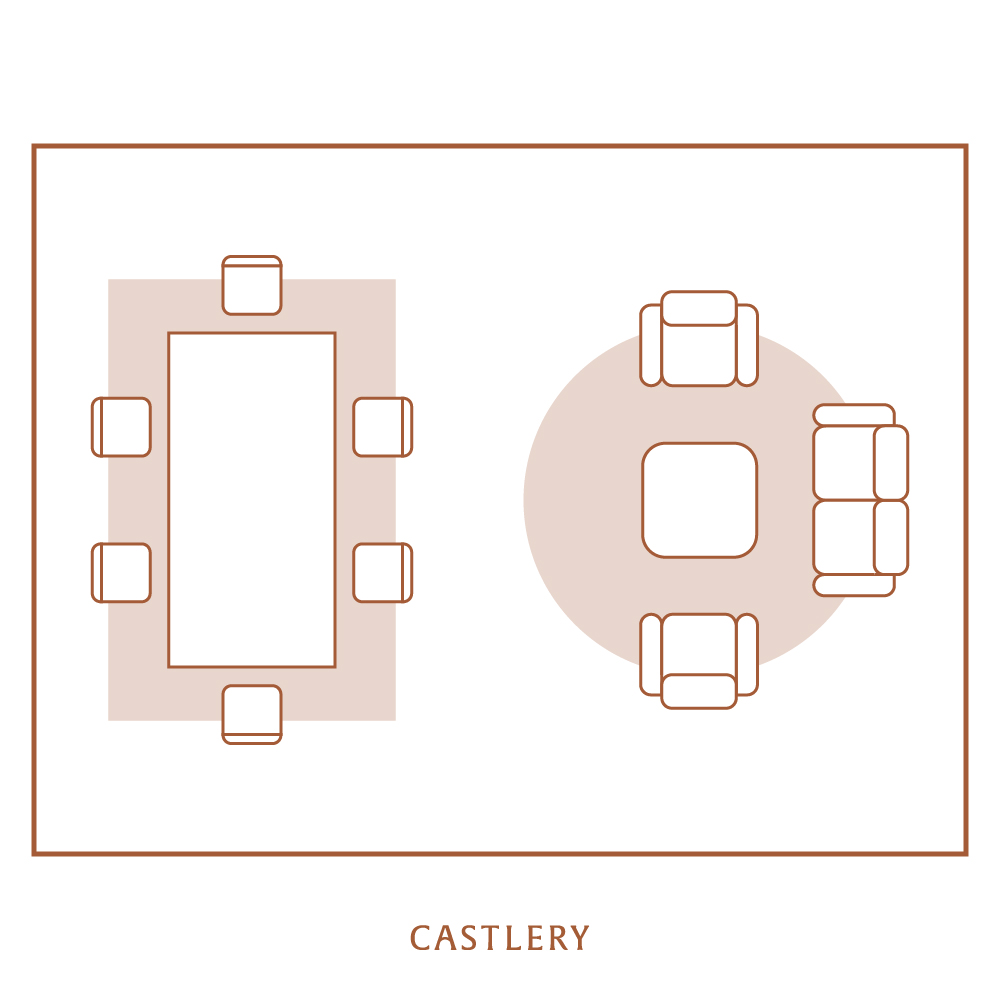
When the living area flows straight into a dining space, one rug rarely covers it well. That’s why open-plan spaces need definition without actual walls.
Use one large rug to anchor the living area and create a clear boundary between it and the dining or kitchen zone. If you have enough space, you can also use separate rugs for separate zones.
The rugs don't need to match perfectly. Instead, look for a common thread in their colour, texture, or overall tone so the spaces feel connected without looking copy-and-pasted.
Three rug placement strategies that work
Every living room rug layout comes down to one of three approaches. Pick one based on room size and how much floor you want visible.
1. Centre the rug under the coffee table
This classic look keeps things neat. Your rug sits squarely beneath your coffee table, with the sofa floating just off its edge.
It's particularly useful when you have a smaller room or a rug that isn't large enough to reach the sofa. This placement creates a focal point, drawing eyes to the seating area without demanding too much floor space.
The Abanna Wool Area Rug
Picture credits: @halfway_wholeistic
The Abanna Wool Area Rug
Picture credits: @halfway_wholeistic
The Mori Performance Fabric Chaise Sofa
Picture credits: @yohan.lai
The Mori Performance Fabric Chaise Sofa
Picture credits: @yohan.lai
2. Put the front legs on the rug
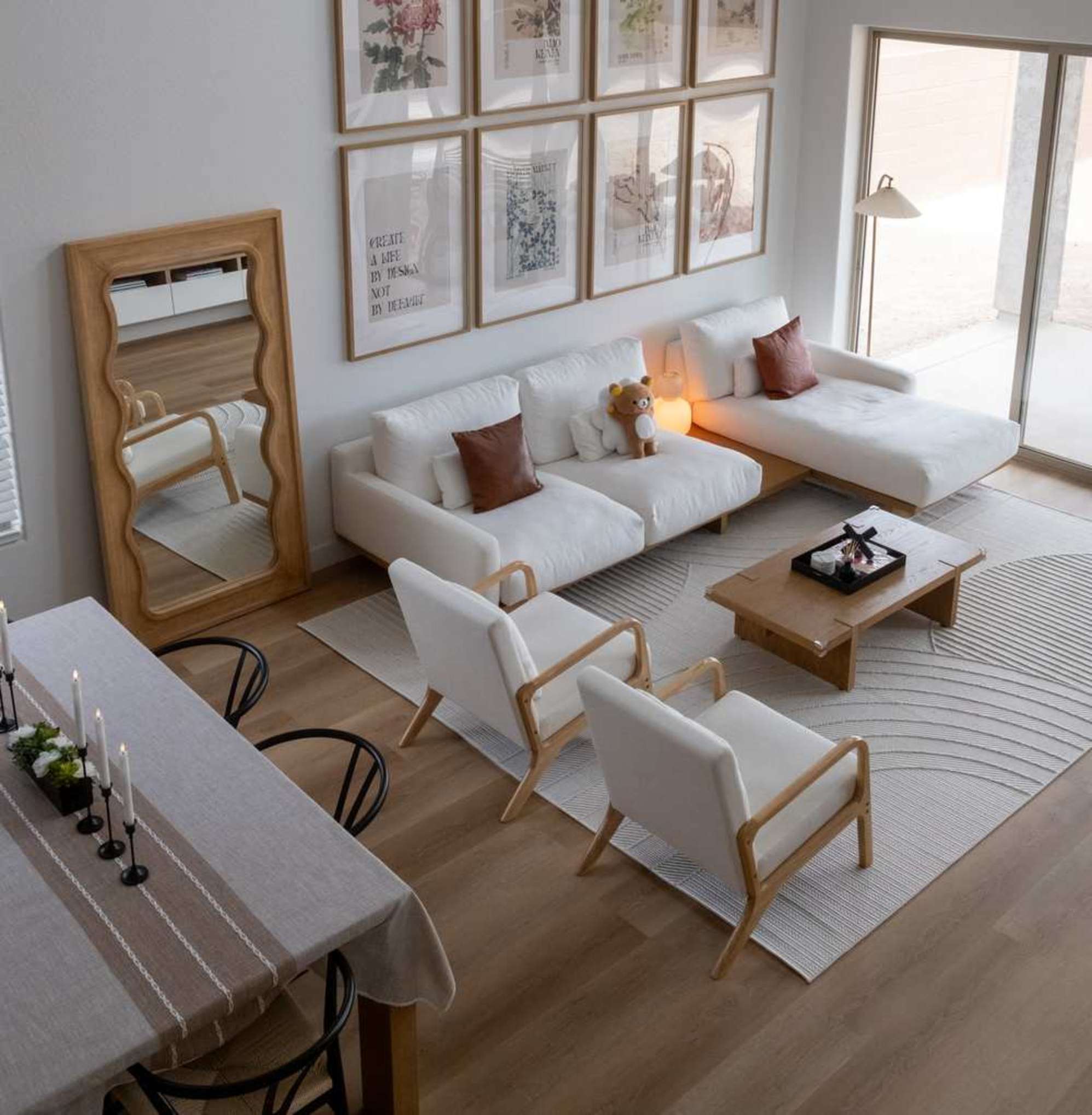
Position the rug so the front legs of your sofa and armchairs rest on it, while the back legs stay on the floor.
The back legs should sit comfortably on the bare floor, creating a visual anchor that effortlessly defines your zone without the use of a giant carpet.
This living room rug layout works especially well in medium-sized rooms, where you want to define the seating area but still want plenty of visible flooring around it.
The Cora Wool Area Rug
Picture credits: @northshoreloft
The Cora Wool Area Rug
Picture credits: @northshoreloft
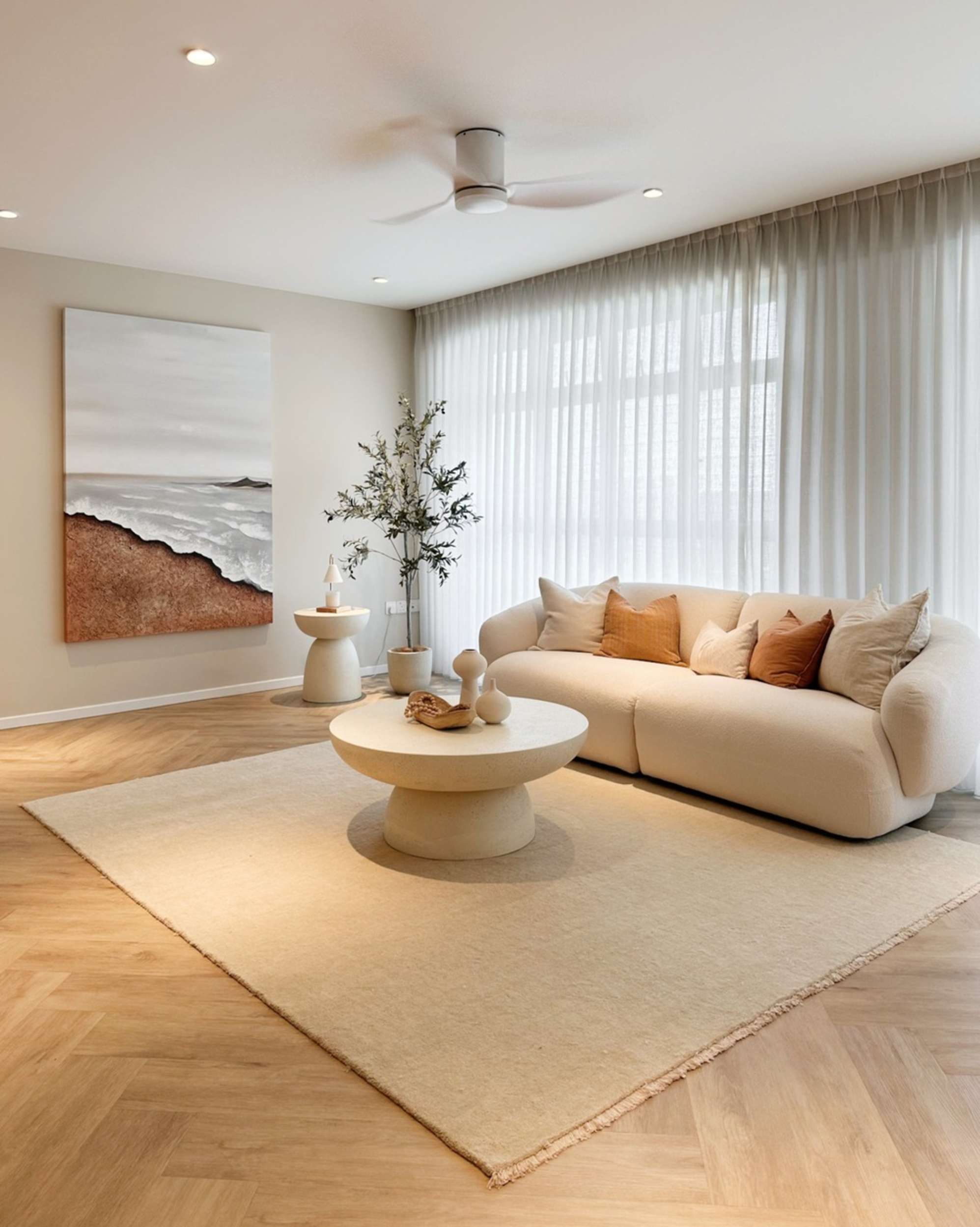
The Marlow Performance Bouclé Curved Sofa
Picture credits: @ahoneohome
The Marlow Performance Bouclé Curved Sofa
Picture credits: @ahoneohome

3. Put all the furniture on the rug
If you have the space, this is the most generous and cohesive option. Every furniture leg sits comfortably within the boundaries of the rug, leaving about 30 to 45 cm of floor visible around the edge.
That border gives the rug some breathing room and stops it from looking as though it was cut to fit the exact dimensions of the room.
This approach works particularly well in large living rooms and open-plan spaces. Instead of allowing a sprawling room to feel like one giant floor plan, the rug creates a defined place to sit, talk, and put your feet up.
The Mira Wool Area Rug
Picture credits: @pashagrozdov
The Mira Wool Area Rug
Picture credits: @pashagrozdov

The Jonathan Sofa
Picture credits: @zephyr_and_stone
The Jonathan Sofa
Picture credits: @zephyr_and_stone

Think about what the rug is adding to the room
Placement decides the structure. Colour, pattern, and texture decide the feel. The best living room area rug ideas consider how these three factors add up.
Use colour to balance the room
A rug can be the easiest way to introduce a new colour without repainting the walls or replacing your sofa.
If your furniture is neutral, a rug with a richer hue can give the room some personality. If you’re already working with colourful upholstery or statement pieces, a quieter rug can provide visual breathing room.
The trick is not to match every colour exactly. Instead, look for shades that complement what you already have. Think of the rug as the supporting cast, not the actor trying to steal every scene.
The Mori Performance Fabric Armless Sofa
Picture credits: @mensweardog
The Mori Performance Fabric Armless Sofa
Picture credits: @mensweardog


Bring in pattern where the room needs it
A patterned rug can give a quiet living room some much-needed energy. Geometric designs can sharpen a contemporary space, while softer or more organic patterns can make a room feel relaxed and layered.
If your sofa, cushions, artwork, and accessories are already competing for attention, keep the rug pattern more restrained. If the rest of the room is relatively simple, you have more room to let the floor do the talking.
Layer in texture
Texture is easy to overlook because you notice it with your feet before your eyes.
A plush wool rug can soften the clean lines of contemporary furniture, while a flatter weave can give a room a lighter, more relaxed feel. Natural textures such as jute can also bring warmth and contrast to a room filled with upholstered furniture.
Think about what your existing materials are missing. If everything feels smooth and polished, a tactile rug can add depth. If the room already has plenty of texture, a simpler weave can help keep things balanced.
Choosing the right living room rug: Size and placement guide
Not sure which size or placement makes sense for your space? Use this as a starting point.
| Rug size | Ideal for | Placement tips |
|---|---|---|
| 3 x 5, 4 x 6 feet | Small spaces, accent areas, under coffee tables | Centre the rug under the furniture or use it to define a small area. |
| 5 x 8, 6 x 9 feet | Smaller living rooms, under dining tables for 4-6 people | Partially under furniture or in an open area to define a zone. |
| 8 x 10, 9 x 12 feet | Spacious living rooms, accommodating furniture arrangements, under dining tables for 8+ people | All furniture legs on the rug or front legs only for a more defined look. |
| 10 x 14 feet and larger | Combined living and dining areas, exceptionally large rooms | In a very large living room, position the rug so that it defines the main conversational area, with all the furniture legs resting on it. Leave a border of flooring visible around the edges to create a sense of spaciousness and balance. |
Remember, these are starting points rather than hard rules. Your sofa dimensions, room proportions, and furniture arrangement matter just as much as the numbers on the tape measure.
Common rug placement mistakes to avoid
Even the most beautiful rug can look wrong when the proportions are off. Before committing, watch out for these common mistakes.
Choosing a rug that's too small
This is probably the biggest culprit. If your sofa and chairs sit completely outside the rug, the seating can look disconnected from the rest of the room. If you're between two sizes, measure the larger option against your furniture before making the call.
Pushing the rug against the walls
Your rug doesn't need to behave like wall-to-wall carpet. Leaving some flooring visible around its edges helps frame the seating area and gives the room a more intentional look.
Ignoring your furniture layout
A rug should support the way you actually use the room. Don't choose its position based on the centre of the floor alone. Consider where people sit, where the coffee table lands, and how you move through the space.
Forgetting the doors and walkways
Before buying, check that the rug won't catch beneath doors or create an awkward trip point in a high-traffic walkway. A beautifully styled rug is less useful if you're constantly stepping around it.
Let the rug bring the room together
The right rug doesn’t just sit under your furniture. It pulls the whole room together.
Get your measurements right, choose a placement that suits your seating, then let colour, pattern and texture do the rest. Whether you tuck the rug under the front legs or go all in with every piece on top, the goal is the same: a living room that feels connected, considered and unmistakably yours.
Because sometimes, the difference between “something’s missing” and “that’s it” is simply what’s underfoot.

Frequently asked questions about living room rug placement
Should area rugs in one living room be all the same?
No, your living room rugs don't have to be identical, but they do need to get along. In an open-plan space with two rugs, aim for shared tones or complementary textures so your room feels cohesive, not chaotic.
Should a rug go wall to wall?
No, unless you're installing carpet. Leave 30 to 45 cm of floor visible around the edges, giving your space breathing room so the rug reads as a piece of the room, instead of overwhelming it.
Should the rug be darker or lighter than the sofa?
Whichever creates contrast. A light rug under a dark sofa lifts the room. A dark rug under a light sofa grounds it. Just avoid matching them too closely to avoid them blending into one flat visual note.
