How to Style a Combined Living and Dining Room
A living and dining room combo sounds simple in theory. One open space, two functions, no walls getting in the way. Freedom, flexibility, flow. What could possibly go wrong?
Quite a bit, actually.
In practice, the invisible boundary between zones means your furniture has to work twice as hard, and one wrong proportion can throw the entire room off-balance.
Before you start researching the cost of building a wall, know this: open-plan spaces rarely need more square footage. They simply need thoughtful planning and better definition. Here are five living and dining room combo ideas to help you make it work.
5 living & dining room combo ideas
1. Position your sofa as a natural divider
The sofa is almost always the largest piece of furniture in a living room, which makes it the most powerful tool you have when it comes to defining space.
Face the back of the sofa toward the dining table, and suddenly you have a soft, visual line that the eye reads as a boundary—even though nothing is physically there. It’s subtle, but effective. The eye instantly understands where one zone ends and the next begins.
Want to reinforce the divide even further? Add a slim console table behind the sofa. It creates additional surface space for lighting, books, or decor while giving the room more structure. Just make sure there’s enough clearance between the console and dining chairs so nobody has to perform acrobatics to sit down for dinner.
The Hamilton Round Chaise Sofa
Picture credits: @eedesignandbuild
The Hamilton Round Chaise Sofa
Picture credits: @eedesignandbuild
2. Define each area with rugs
A well-chosen rug might be the single most efficient tool available for a living room-dining room combo. Drop one beneath the sofa and seating arrangement, and you have instantly created a zone without a contractor, partitions, or structural changes required.
What a rug does particularly well is visually anchor the furniture it sits beneath. Rather than a sofa, a coffee table, and two armchairs floating independently across a floor, the rug collects them into a single, cohesive grouping. The living area suddenly reads as a room within a room.
The Auburn Performance Fabric Corner Sofa
Picture credits: @casa.kerenjon
The Auburn Performance Fabric Corner Sofa
Picture credits: @casa.kerenjon

3. Harmonise your colour palette
One of the easiest mistakes in a living room dining room design combo is treating the two zones like completely separate rooms. Two different colour palettes might seem like a smart way to differentiate the zones, but in an open-plan space, they tend to read as chaos rather than contrast.
A cohesive palette helps both zones feel connected, even when they serve different purposes. Neutral tones work particularly well here because they create continuity without feeling overly matched. Think warm whites, soft greys, muted taupes, layered with natural wood and darker accents for depth.
The magic usually happens in the repetition.
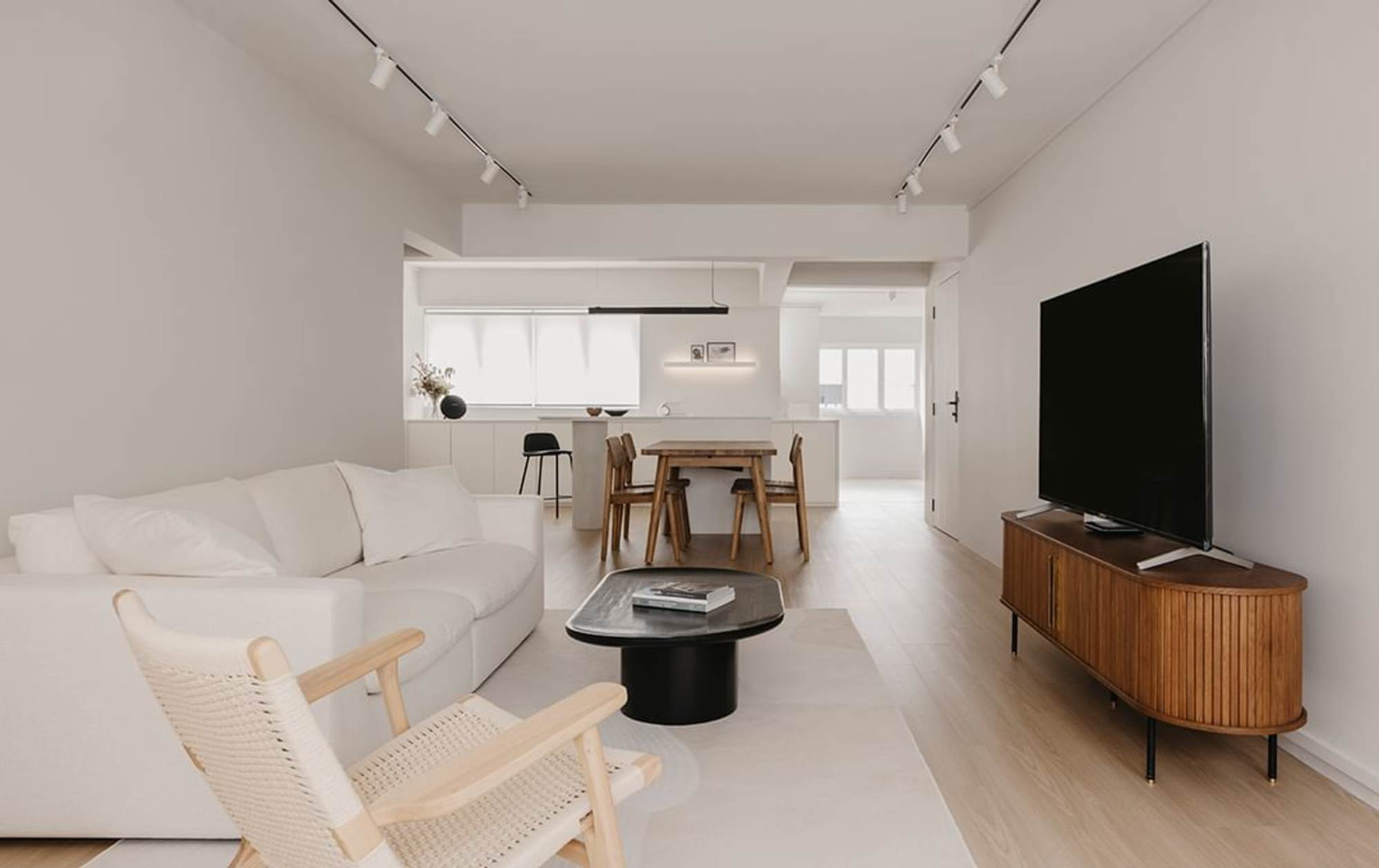
A black dining pendant echoes the black legs of the coffee table. The walnut tone of the dining chairs reappears in the TV console. Cushions, artwork, ceramics, and lighting quietly repeat colours across both spaces until the room starts speaking one visual language.
But that doesn’t mean everything needs to match perfectly. In fact, it shouldn’t.
Your living area can feel softer and more relaxed while the dining space takes on cleaner lines or a slightly more structured look. As long as the overall palette stays connected, the room still feels intentional rather than accidental.
The Jonathan Extended Sofa
Picture credits: @everyday.home
The Jonathan Extended Sofa
Picture credits: @everyday.home

4. Use lighting to separate and connect
Lighting is one of the most underestimated tools in a combined living and dining room. It doesn’t just illuminate a space, but shapes how the room feels.
Think of lighting as invisible architecture. When walls disappear, lighting becomes one of the strongest ways to define zones without physically closing anything off.
One approach is to use a single statement fixture that visually ties both spaces together. A large chandelier positioned between the living and dining areas creates cohesion and draws the eye upward, helping the room feel unified rather than fragmented.
Another approach is layering different lighting styles for each zone. Pendant lights above the dining table create focused illumination for meals and gatherings, while softer floor lamps, sconces, or spotlights in the living room bring warmth and atmosphere.
The contrast itself becomes the boundary.
The Marlow Performance Bouclé Curve Sofa
Picture credits: @brownstoneboys
The Marlow Performance Bouclé Curve Sofa
Picture credits: @brownstoneboys

The Seb Extendable Dining Table Set
Picture credits: @carpentersdesignsg
The Seb Extendable Dining Table Set
Picture credits: @carpentersdesignsg

5. Create visual balance across both zones
In an open-plan layout, both zones are always in view at the same time. That changes the rules of balance entirely. If one side of the room feels dramatically heavier, louder, or busier than the other, the entire layout can feel unsettled. A maximalist living room paired with an ultra-minimal dining area often looks less curated and more like two roommates who refused to compromise.
The goal is balance, not sameness. You can achieve this through scale and proportion, colour, or contrast. A substantial sectional sofa may feel balanced against a large dining table with sculptural chairs. A bold living room with layered textures and patterns can still work beautifully if the dining area intentionally stays quieter and more restrained.
Think of the room like a conversation. If one side is shouting while the other barely whispers, the flow feels uncomfortable. But when both spaces support each other visually, the entire home starts to feel calmer, easier, and far more functional to live in.
The Dawson Extended Sofa
Picture credits: @thehouseofemmaline
The Dawson Extended Sofa
Picture credits: @thehouseofemmaline


Making your living and dining room combo work
A living room combined with dining room setup rarely needs more space. More often, it simply needs clearer intention. The best layouts create separation without sacrificing openness; they allow the dining area and living room to coexist naturally, instead of competing for attention like siblings fighting over the remote.
Start with the foundational pieces: your sofa placement, lighting, rugs, and colour palette. Once those elements are working together, the rest of the room tends to fall into place.