
Feng Shui Mirror Tips You’ll *Actually* Use
The energy in a new home is already in motion before you unpack the first box. Your unit’s position relative to the sun is fixed, but where your furniture lands? That’s still up for discussion—and feng shui has a lot to say about it.
This ancient practice of arranging a living space to invite balanced, harmonious energy (or qi) turns the question of “where does this go?” into something worth thinking about properly.
Mirrors, surprisingly, carry a heavy load in all of this. Consider this your room-by-room guide to mirror placement, because every reflection has the potential to work in your favor.
Mirror-energy connection
If your furniture’s feng shui attributes are like UNO colours, a mirror is your Wild card. Depending on where you place it, it can reflect, redirect, or amplify the energy of everything around it.
In feng shui, this is a named technique: the method of minor additions, or xie zi fa. Small, intentional tweaks, like positioning a mirror in just the right spot, can meaningfully shift how energy moves through your home.
The operative word is intentional. Before you prop anything up against a wall, know why it’s going there.
Here’s what mirrors are actually doing in a feng shui-savvy home:
They amplify what they reflect: Mirrors multiply whatever they face: light, space, and elemental energy. A mirror angled toward a window with greenery pulls the wood element (growth and momentum) further into the room than the window alone ever could.
They fix your command position without a renovation: The commanding position is about sightlines: having a clear view of the room’s entrance without being directly in its path. A large floor mirror creates this advantage in spaces where the layout offers no obvious solution.
Their shape carries elemental influence: The glass itself embodies water: fluid, reflective, expansive. Frames and shapes add another layer of elemental meaning, so no part of a mirror is incidental.
Where is the lucky place to put a mirror?
Armed with the theory, the real question is where to actually put these things in your home. Feng shui has some clear favorites, and a few of them are probably already in your rotation.
Dining room for double happiness
The dining room symbolises your appetite for wealth and the ability to support those around you. A mirror overlooking your dining table amplifies abundance—a hearty meal, and genuine conversations around you.
To maximise feng shui in the dining room, the mirror should be facing the dining table. Ensure that it is placed in a way that it can reflect your meals, and avoid awkwardly "slicing" anyone in half for candid photos. Whether your setup features a marble or wooden dining table, a well-placed mirror here is a surprisingly rewarding feng shui move.
The Brooke Round Dining Table
Picture credits: @staybycorisamuel
The Brooke Round Dining Table
Picture credits: @staybycorisamuel
The Luna Large Wall Mirror
Picture credits: @tangkarmen
The Luna Large Wall Mirror
Picture credits: @tangkarmen
Hallways and entryways could do with more light
Hallways and entryways are the first things your qi encounters. Angle mirrors away from the entrance so energy flows inward.
A vertical mirror on a side wall opens narrow stretches, pulls in light, and keeps energy moving rather than pooling in a corner.
Staircase landings can benefit from mirrors too, cracking open tight corners without a single trip to the hardware store. Just make sure the reflection is worth doubling.
The Aurora Floor Mirror
Picture credits: @jingwensathome
The Aurora Floor Mirror
Picture credits: @jingwensathome
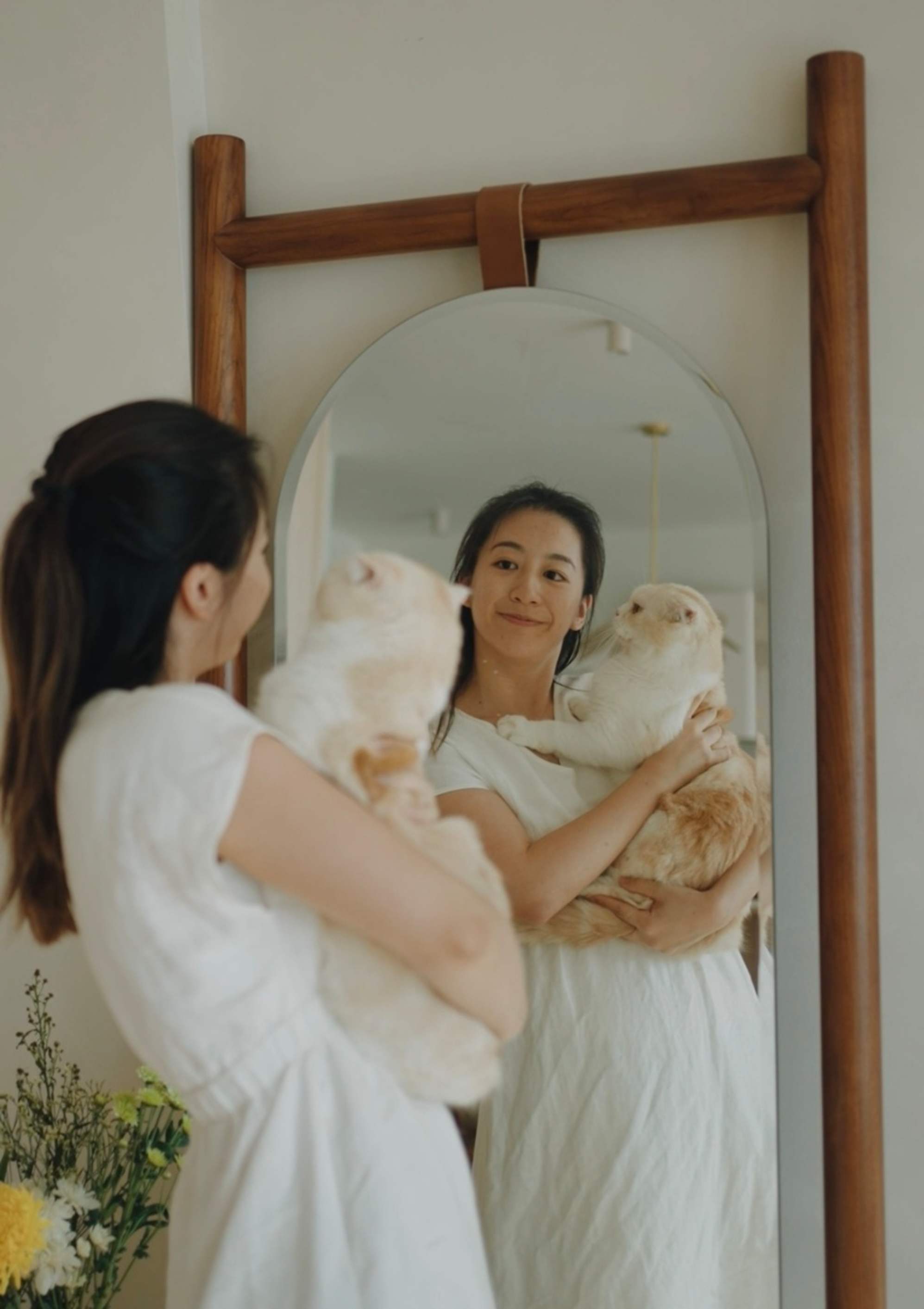
The Faro Floor Mirror
Picture credits: @ourkozykorner
The Faro Floor Mirror
Picture credits: @ourkozykorner
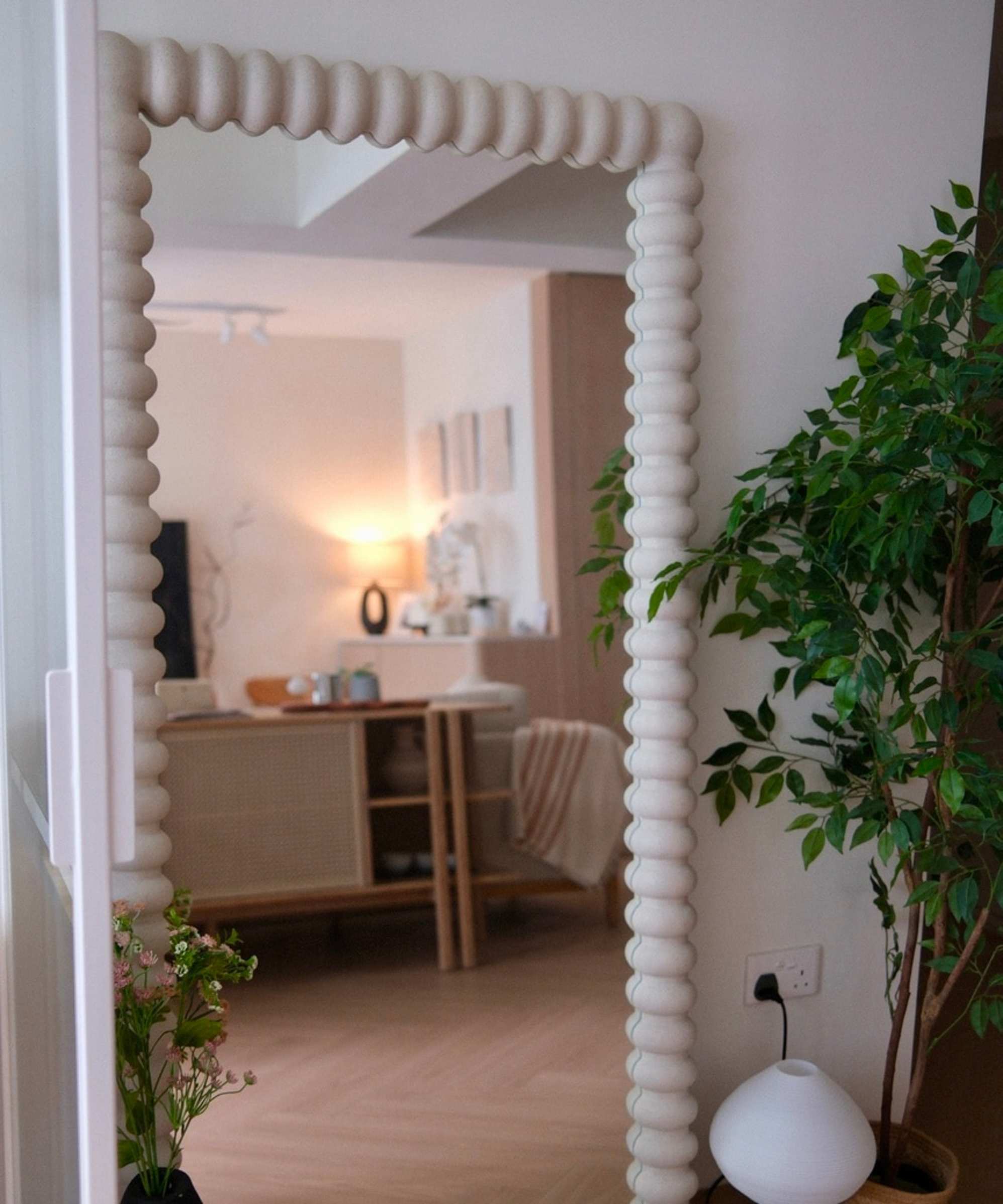
Give small rooms the illusion of space
In small bedrooms or compact living rooms, mirrors can create the illusion of more space. But placement is key. The working consensus for a feng shui-focused bedroom setup: a mirror facing your bed is where things get dicey. Because mirrors activate energy, having that energy bouncing around while you’re trying to sleep doesn’t sound restful.
To play it safe, keep mirrors off the wall that’s directly facing your bed and bedroom door. A larger floor mirror propped against a side wall adds depth to a small bedroom without reflecting its image anywhere it should not go.
The Aria Wall Mirror
Picture credits: @oliviadipede
The Aria Wall Mirror
Picture credits: @oliviadipede
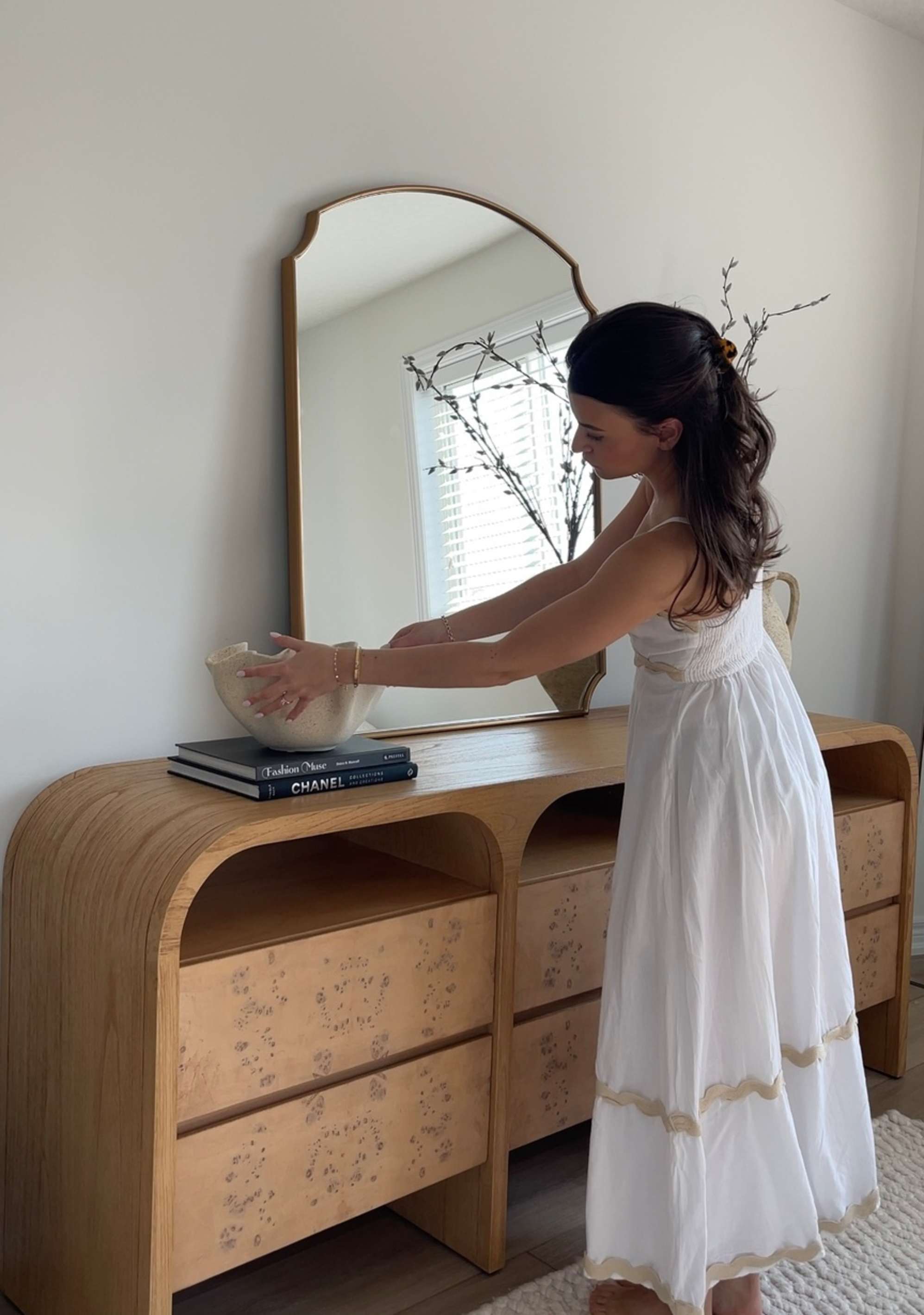
The Luna Floor Mirror
Picture credits: @samanthapotterhome
The Luna Floor Mirror
Picture credits: @samanthapotterhome
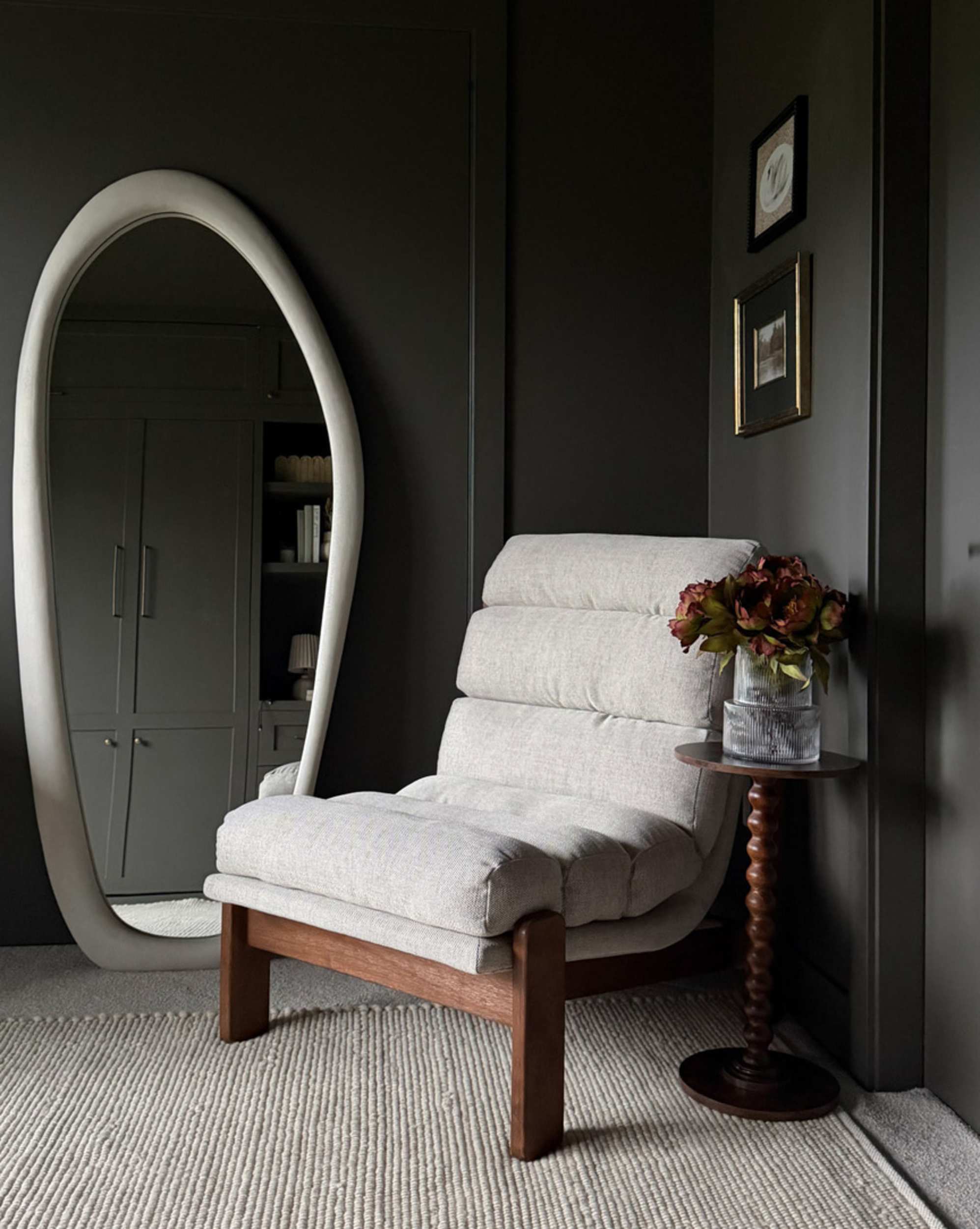
Activating your wealth corner
Every home has a wealth corner, and in feng shui, the far-left corner of any room (as seen from the doorway) is your prosperity zone. A mirror placed there does what mirrors do best: it doubles whatever energy is already sitting in that corner.
So before you hang anything, do a quick audit. A mirror reflecting clutter is just amplifying clutter. A mirror reflecting something intentional (warm light, a healthy plant, a neat and organised space) is a different story entirely.
The "no-go" zones: Where should you not put a mirror?
For all the good a well-placed mirror can do, feng shui is equally firm about where one absolutely should not go.
A mirror in the wrong spot doesn’t just sit there looking neutral. It actively disrupts the flow of qi, ranging from mildly counterproductive to genuinely affecting your sleep, mood, and sense of ease at home.
Here are some placements to avoid:
Opposite a window with an unpleasant view: A mirror doubles what it reflects, which is great until what it’s reflecting is the back of your neighbour's laundry or a grey car park wall. If the view doesn’t spark joy on its own, don’t give it a second showing.
Facing the toilet: In feng shui, the bathroom already sits on the lower end of the energy hierarchy. A mirror directly facing the toilet amplifies that energy and circulates it back into the space.
Facing your bed: A mirror facing your bed activates energy in a space that’s specifically meant for rest and restoration. The result is a bedroom that leaves you feeling like you can’t wind down. If rearranging isn’t an option, a curtain or a cupboard door that closes over it at night is a fair compromise.
Directly opposite your front door: Your front door is where all incoming qi enters the home. A mirror sitting directly opposite it sends all that good energy straight back out. Angle it to the side instead and let the qi actually move in and make itself comfortable.
Shape, size, and frame matter
We touched on this earlier when breaking down mirror shapes and their elemental pull. Consider this the expanded cut, because beyond shape, the color and material of your frame are also quietly doing feng shui work in the background.
| Design | Element | Energy | How to use | |
|---|---|---|---|---|
| Design | Round | Metal | Clarity, precision, grounded joy | Great for any space that benefits from a clear head |
| Square / Rectangular | Earth | Stable, nurturing, settled | Best for spaces where calm matters more than stimulation | |
| Tall & rectangular | Wood | Flexibility, warmth, growth | Best for spaces that could use a sense of direction. | |
| Triangular | Fire | Passion, visibility, boldness | Ideal for statement spaces; but use with intention | |
| Colour | White or grey | Metal | Clean, crisp, precise | A natural fit for minimalist or monochrome interiors |
| Brown, orange, warm neutrals | Earth | Cosy, grounding, settled | Pairs well next to natural linen or warm-toned upholstery | |
| Blue, green, teal | Wood | Fresh, growth-oriented | Surprisingly easy to work into Scandi or nature-inspired spaces | |
| Black or deep navy | Water | Sleek, fluid, quietly dramatic | Works in almost any room, especially bathrooms and entryways | |
| Red or bright orange | Fire | Bold, energising, high-visibility | Use sparingly and intentionally (probably not the bedroom) | |
| Material | Wood | Wood | Growth, flexibility, warmth | A grounding choice that works across most interior styles |
| Metal (brushed brass, matte black steel, chrome) | Metal | Clarity, precision, structure | Ideal for spaces that already lean minimal or modern | |
| Natural rattan or woven fibre | Earth | Nurturing, settled, organic | A natural companion to relaxed, tactile interiors | |
| Dark lacquered or resin | Water | Fluid, calm, quietly dramatic | Adds depth without dominating; use where subtlety is the point |
If you didn't look at your feng shui layout, look again
Good energy doesn’t always require a renovation. Sometimes, it just needs a mirror, a little thought, and the confidence to rearrange on a Sunday afternoon.
Most of these feng shui mirror rules are less about perfection and more about intention. Know what you’re reflecting, know why it’s going where it’s going, and the rest will follow naturally.

Frequently asked questions about feng shui mirrors
What direction should a mirror face?
As a general rule, mirrors should face something worth doubling: natural light, a garden view, a well-dressed dining table, or an open stretch of room. If in doubt, stand where the mirror will hang and ask yourself honestly: Is what’s being reflected adding to the room or just filling the wall?
Why should you cover your mirrors at night?
In feng shui, a mirror left uncovered at night keeps the room's energy circulating when it should be settling. The result is a subtle restlessness you might chalk up to too much coffee.
A simple fix is to drape a cloth over bedroom mirrors at night. If your sleep noticeably improves within a few nights, the mirror was probably the culprit all along.
Where should I put my mirror in my room?
A side wall is your safest and most versatile option. It adds depth, bounces light around, and keeps the reflection away from your bed and your bedroom door. For smaller rooms, a larger mirror on a side wall can make the space feel like it has a quiet expansion while you’re not looking.
