Seating Ideas That Make Small Living Rooms Feel Bigger
Small living rooms have a way of exposing the truth. Not about your taste, but about your furniture choices. One oversized sofa and suddenly the walking space disappears, coffee tables shrink into apology versions of themselves, and any extra seating gets exiled into corners it was never meant for.
So the real question becomes less about what looks good and more about what actually works when life is happening in the room.
This is where seating ideas for small living room layouts stop being a design exercise and start feeling like problem-solving for everyday living. And honestly, that is where things get interesting.
Rethinking what seating means in a small living room
We tend to think seating = sofa. One big piece. One visual anchor. One commitment. But, small rooms rarely cooperate with that logic.
Instead, small living room seating works better when it behaves like a system rather than a statement piece. Think modular seating, lighter silhouettes, and pieces that earn their footprint every single day.
A room doesn’t feel small because of its square footage alone. It feels small when furniture refuses to negotiate.
5 seating ideas for small living rooms
| Sofa layout for a small living room | Best for | Why it works in a small space |
|---|---|---|
| Single sofa along the longest wall | Daily lounging in a calm, settled room | Keeps sightlines open and preserves walking space |
| Chairs only, no sofa | Narrow rooms, awkward layouts, or multi-use spaces | Adapts to room shape and takes up less visual weight than a sofa |
| Two-piece modular sofa | Flexibility across daily use and hosting | Reconfigures from one sofa into two facing pieces and back again |
| L-shaped sectional hugging two walls | Defining a seating zone in a studio or open-plan layout | Uses corner space efficiently and creates structure without separate walls |
| Two-seater sofa paired with a recliner | Two different modes of seating in one room | Adds a recliner's lounge function without committing to a full second sofa |
1. The single sofa along the longest wall
One of the most reliable seating ideas for a small living room is also the most obvious: placing a single sofa against the longest wall to create order immediately. The remaining floor space becomes usable again, leaving room for a side table or wooden coffee table without anyone having to shuffle sideways to get past.
This approach works especially well when you are trying to keep a room feeling open from doorway to window. The eye travels cleanly across the space instead of bouncing off furniture edges.
If you’re going for this layout, here are some tips when picking couches for apartments or small living rooms:
Choose a couch with a raised frame to let light pass underneath for an airy look.
Choose a couch with a back height that’s lower than your eye line from the doorway so there’s space for the room to breathe.
Pick a sofa with a shallower seat depth so you can have more walkway space.

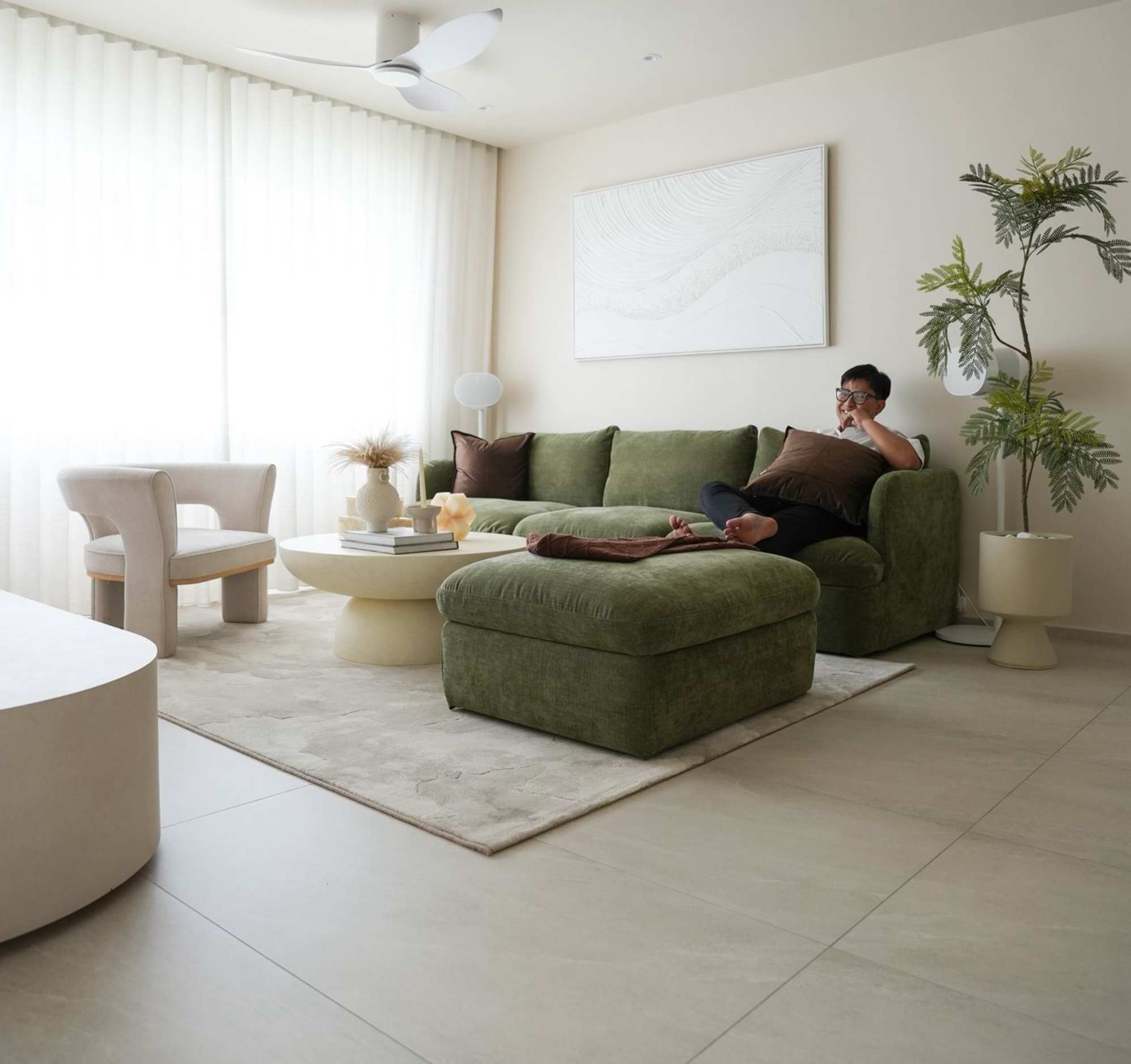
The Ollie Storage Sofa
Picture credits: @bobmubarak
The Ollie Storage Sofa
Picture credits: @bobmubarak
2. The chairs-only layout without a sofa
Removing the sofa entirely feels counterintuitive until you see how much space it frees up. A chairs-only layout works best in rooms where a sofa would create more problems than solutions. Narrow spaces, awkward wall placements, or multi-use rooms often benefit from this approach more than they would from forcing in a traditional couch.
With chairs, the room becomes modular by default. You can face them inward for conversation, pivot them toward a window for reading, or spread them out when the room needs to function differently.
It’s also one of the most underrated seating ideas for small living room design because it challenges the assumption that comfort must always come in one large, fixed form.
Here are the scenarios where it actually works:
In a narrow room, where a sofa makes the space feel longer and thinner instead of helping it.
When door and window placement leaves no clear sofa wall, so four chairs around a low table can use the space more flexibly.
When the room is doing double duty as a reading nook, a home office corner, or a music room, since chairs adapt to multiple uses where a sofa locks you in.
3. The modular sofa that splits when you need it to
Modular sofas are one of the more forgiving couches for small living rooms or compact spaces, mostly because they refuse to commit to a single shape. A two-piece modular sofa can behave like a standard couch during the week, then split into separate seating zones when people come over.
If you're exploring modular sofa ideas for small spaces, here are the modular sofa configurations worth knowing:
Push the two pieces together against the longest wall for a standard sofa setup you can live with day to day.
Pull the pieces apart and angle them to face each other when you're hosting a few people for dinner or drinks.
Split the pieces into separate seats against different walls to expand the seating area when you have more people over.
The Marlow Performance Bouclé Armless Sofa
Picture credits: @longbridgelondon
The Marlow Performance Bouclé Armless Sofa
Picture credits: @longbridgelondon

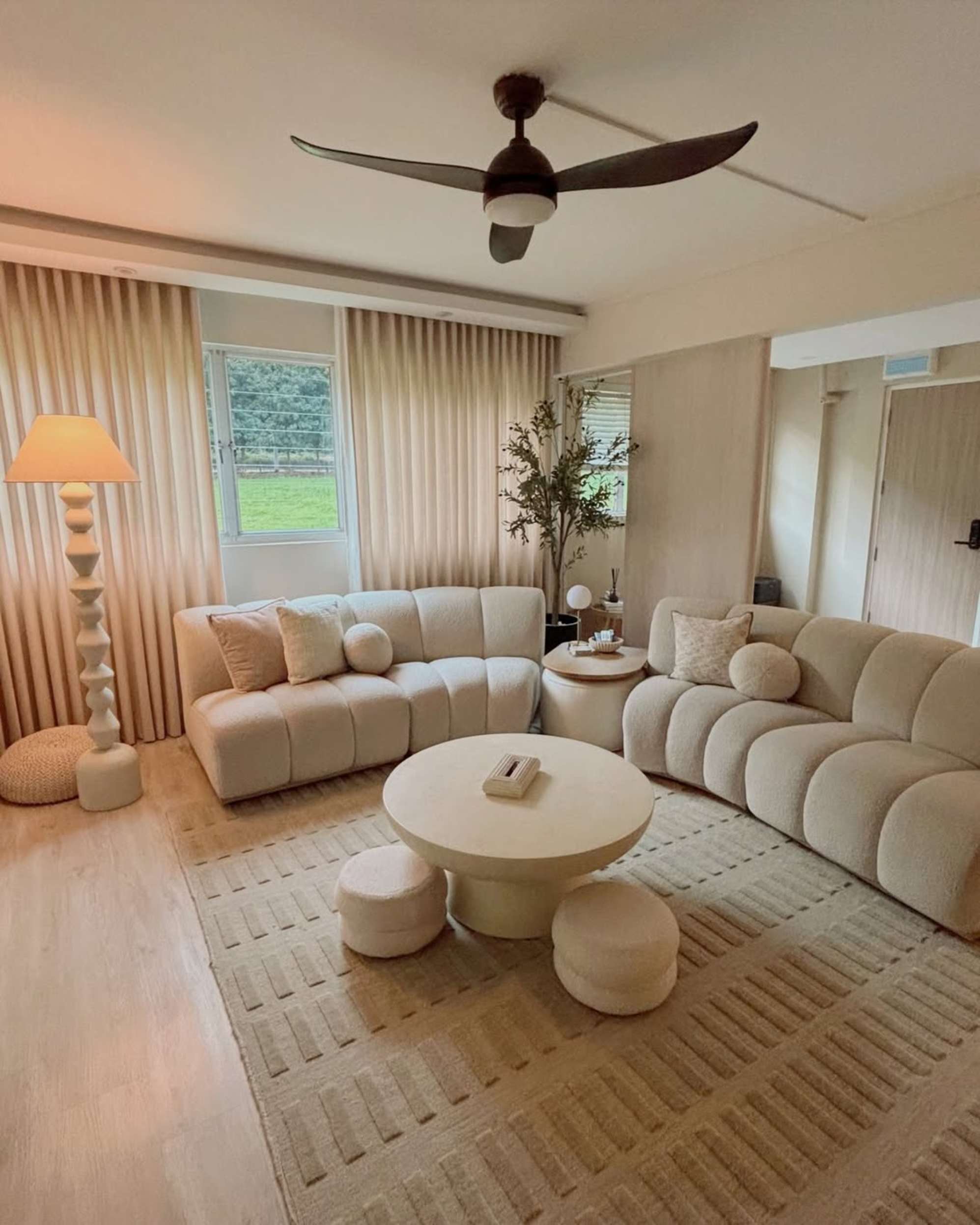
The Marlow Performance Bouclé L-Shape Sofa
Picture credits: @marshy.home
The Marlow Performance Bouclé L-Shape Sofa
Picture credits: @marshy.home
4. The L-shaped sectional that hugs two walls
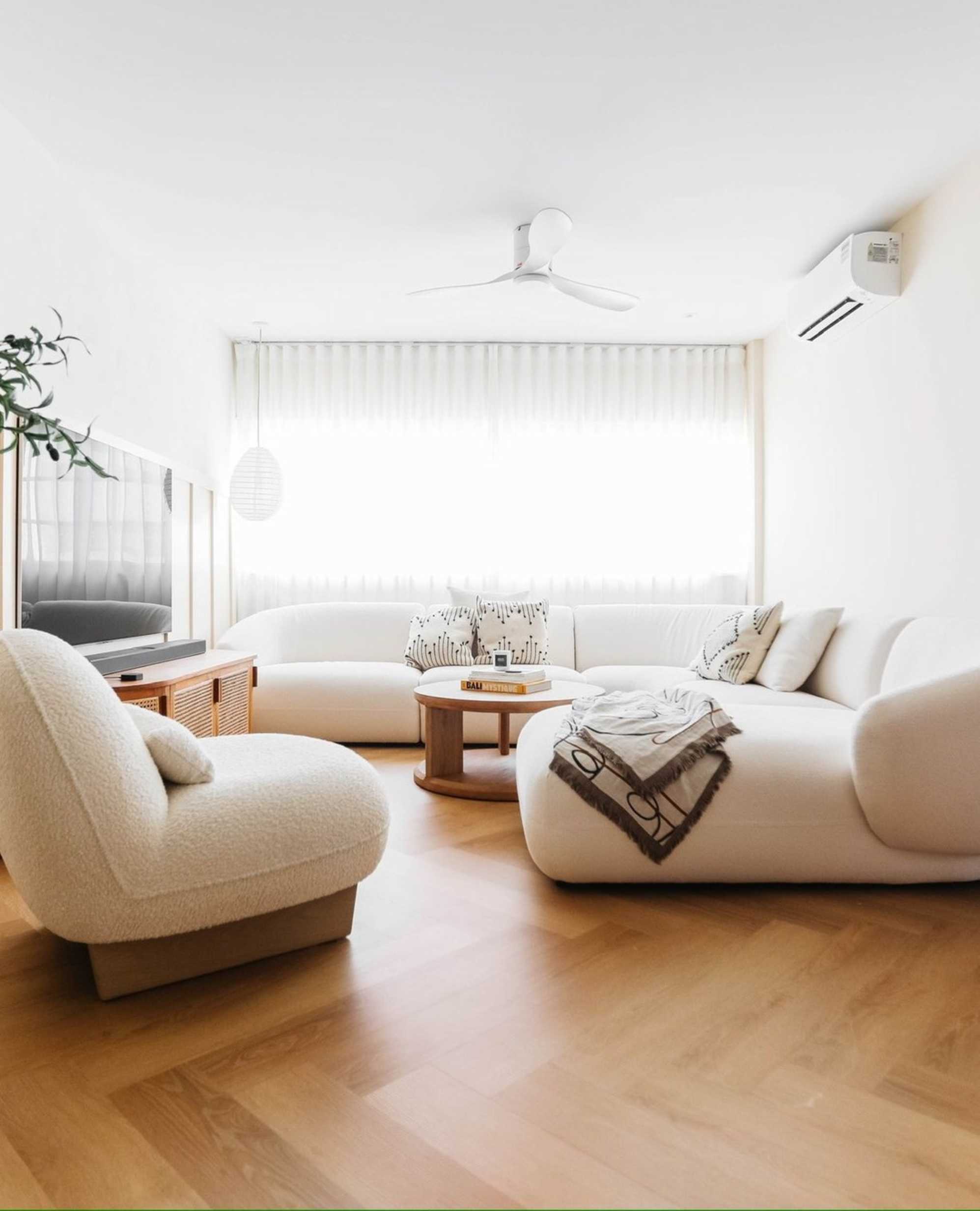
Sectionals have a reputation problem in small rooms, mostly because people treat them like they belong only in large spaces. In reality, a well-scaled L-shape can be one of the smartest sofa ideas for small spaces.
By hugging two walls, the sectional turns unused corners into functional seating zones. Instead of fighting for space in the middle of the room, it defines the edges, which is exactly what small layouts need.
If you’re set on getting a sectional sofa, here are some measurements you should take note of:
Measure the long arm against the wall it’ll sit against, making sure it clears the doorway and any window.
Measure the short arm with enough space to breathe at the other end, not jammed into a corner.
Check that the seat depth matches on both arms, or the corner will look bulkier than the rest of the piece.

The Auburn Performance Fabric Chaise Sofa
Picture credits: @findingfarah_
The Auburn Performance Fabric Chaise Sofa
Picture credits: @findingfarah_
5. The two-seater sofa paired with a recliner
Some rooms need more than one seating personality. A two-seater sofa paired with a recliner gives you that balance without overcrowding the space. The sofa handles structured, upright sitting, while the recliner handles the moments when the day stops asking for effort.
This is one of the more practical small living room ideas with recliners because it avoids the visual heaviness of a full second sofa while still expanding how the room can be used.
If you're going for this layout, keep these rules in mind when scaling the pieces:
Keep enough clearance behind the recliner so it can function fully without colliding with the wall. Or, choose a wall-hugging recliner that sits a few inches off the wall when reclined to save space.
Angle the recliner slightly toward the sofa to create a conversation zone rather than two separate islands.
Pick a recliner with a slimmer profile and a lower back so it doesn't take away from the two-seater visually.
Layout decides everything before furniture does
Small living rooms are rarely limited by size. They’re limited by decisions made in the wrong order. Once the seating layout is right, everything else becomes easier. The sofa fits instead of fights. The room flows instead of stalls. Even compact pieces start to feel considered rather than constrained.
The best layouts are not about filling space. They’re about giving space a reason to feel open in the first place.