
The Timber Debate: Light Colored Wood vs. Dark Wood
Every room tells a story, and right at the center of it, your timber choice quietly sets the tone.
Are you leaning into the grounded, slow-burn richness of dark timber? Or something lighter, like light colored wood that makes everything feel a bit more open?
There isn’t a universally “better” option. There’s only the version of home you’re trying to build. Once you get honest about that, the debate stops feeling like a dilemma and starts feeling like direction.
Light wood vs. dark timber: Choosing your home’s foundation
Timber doesn’t just sit there looking good, it changes how a room behaves. How light moves, how other colors land, and how everything comes together at the end of the day.
So what are you really choosing between?
The case for dark timber
Dark-colored wood has a way of holding a room together without making a scene. It’s steady, a little richer, and somehow makes everything around it feel more considered.
Think walnut, jarrah, marri. The kind of timbers that bring warmth and a quiet sense of elegance to a room.
Here's what dark wood does particularly well:
Adds depth and warmth: The rich hues of timbers lend a sense of luxury that works especially well in living rooms and dining areas, where you want the atmosphere to feel a little more intimate and a little less transactional.
It works across styles: Whether your space leans classic or more modern, dark timber fits in without much effort. It handles bold colors, soft neutrals, even metallic accents without looking out of place.
It’s forgiving in real life: Minor scratches and everyday wear are far less visible on darker finishes, which makes dark wood a practical choice for busy households.
The Vincent Walnut Dining Table Set
Picture credits: @_vincelam
The Vincent Walnut Dining Table Set
Picture credits: @_vincelam

The case for light wood
If dark timber grounds a space, light wood opens it up. It creates breathing room, especially in homes that don’t have much to spare.
Oak, ash, lighter-toned finishes. The ones that quietly do their job without taking over.
Here's what light wood does particularly well:
Opens up the room: Light wood is basically a shot of espresso for a dark room. Timbers like oak or ash act like natural reflectors, bouncing light around and making even the most compact apartments feel airy and expansive.
It suits a cleaner, modern look: If you’re drawn to Scandi or coastal interiors, light wood tends to sit right at home. It keeps things looking simple without feeling empty.
Plays well with others: Think of light wood as the ultimate social butterfly. It’s remarkably easy to style because it doesn’t compete for attention; it pairs beautifully with pastels, earthy textures, or even bold, moody walls if you’re feeling brave.
Camouflages the daily dust: Not the most exciting benefit, but a real one. If you’ve ever owned a dark coffee table, you’ll know that lighter wood is the champion of hiding dust.
The Brooke Round Dining Table
Picture credits: @melissalorene.stylist
The Brooke Round Dining Table
Picture credits: @melissalorene.stylist
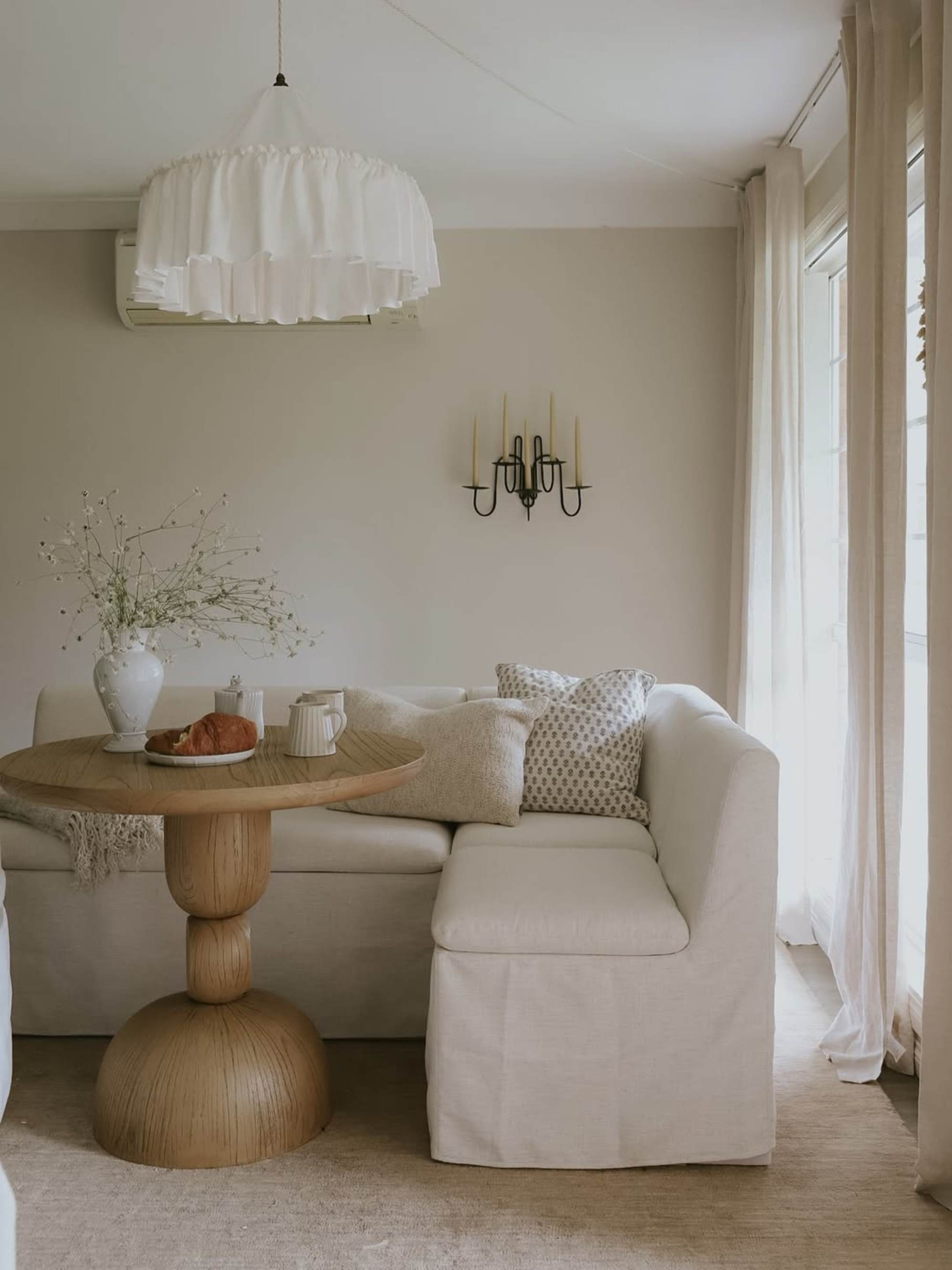
The Vincent Oak Dining Table Set
Picture credits: @jules.nguyenn
The Vincent Oak Dining Table Set
Picture credits: @jules.nguyenn

Expert styling tips to balance your palette
Choosing between light wood and dark timber is just the starting point. What really makes the difference is how you style around it.
Mastering the dark wood aesthetic
Pair with light, neutral walls: Dark timber is a bit of a space-hog visually, so pair it with light, neutral walls to keep the moody from turning into gloomy. Pale walls in warm white, cream, or soft stone prevent the room from feeling heavy and let the timber's natural character take centre stage without overwhelming everything around it.
Bring in light fabrics and textiles: Linen cushions, cotton throws, and sheer curtains balance the visual weight of dark wood beautifully. The contrast gives the room a layered, lived-in quality rather than that slightly stiff look of furniture that's never actually been used.
Add greenery for a natural contrast: Plants are the easiest way to break up dark tones without disrupting the palette. The fresh, organic quality of greenery sits naturally alongside rich timber, making the whole room feel more alive.
Elevating your light wood furniture
Keep things intentional: Light wood is a minimalist at heart and does its best work when it isn't suffocated by clutter. Fewer pieces, more breathing room, and intentional styling let the timber's natural grain and warmth come through without competition.
Pair with soft, muted colors: Dusty pinks, sage green, warm grays, and off-whites all complement lighter timbers without flattening the palette. The goal is a room that feels calm and cohesive, not bland.
Introduce dark accents: A dark-framed mirror, charcoal cushions, or a deep-toned rug add contrast and depth to a light wood scheme. Without them, the room can read as washed out; with them, it feels intentional and balanced.
The Casa Extendable Dining Table
Picture credits: @camillas_edit
The Casa Extendable Dining Table
Picture credits: @camillas_edit

The Harper Dining Table
Picture credits: @haleyscornerr
The Harper Dining Table
Picture credits: @haleyscornerr

Your room, your rules
The great timber debate doesn't really need a winner.
Some of the best spaces mix both light wood and dark-colored wood without overthinking it. A lighter floor with a darker dining table, or light shelving against a deeper-toned wall, can give you contrast without making the room feel disjointed.
Once you stop thinking of them as opposites, it gets easier to see how they can work together.

Frequently asked questions about light colored wood vs. dark wood
Is light or dark wood better?
Neither. Light wood makes spaces feel larger and airier; dark wood adds warmth and depth. The right choice depends on your room size, natural light, and the atmosphere you're going for.
Is dark wood or light wood more timeless?
Both are. Dark timber has centuries of traditional craftsmanship behind it, while light wood has anchored Scandinavian and contemporary interiors for decades.
Do light wood and dark wood match?
Yes, and often beautifully. A dark dining table against a light timber floor, or pale oak beside deep-toned panelling, creates depth without the room feeling disjointed. The key is making the contrast deliberate rather than accidental.
