
What is Acacia Wood and Is It Good?
Nothing signals "I have my life together" quite like investing in solid wood furniture. Not because it’s trendy, but because it quietly changes how a space feels: rooms get warmer, more grounded, and less temporary.
Lately, acacia wood has been everywhere—dining tables, outdoor loungers, and coffee tables. Which raises the obvious question: is acacia wood good, or is it simply having a moment?
So let’s slow it down and unpack what acacia actually is, what it looks like, and whether it deserves a permanent place in your home.
What is acacia wood?
Acacia wood comes from the acacia tree, a fast-growing species native to regions like Australia, Africa, and parts of Southeast Asia. While there are hundreds of species out there, the ones likely sitting in your living room are usually:
Babul (Acacia Nilotica)
Mangium (Acacia Mangium)
Australian Blackwood (Acacia Melanoxylon)
Born in some of the world’s harshest climates, these trees have spent centuries developing a serious "thick skin." The result is a timber that’s incredibly dense, naturally durable, and basically built for the chaos of daily life.
Characteristics of acacia wood
Acacia has a massive range of elegant looks, but what gives this timber its main character look usually boils down to a winning combination of color, grain, texture, and luster. Here’s exactly how it manages to steal the spotlight every single time:
Color: Acacia refuses to be basic beige. While it usually shows up in warm, golden-to-medium browns, it’s got range—depending on the species, you might find honey tones, amber reds, or even moody, deep purple-brown hues.
Grain pattern: If you’re bored with straight lines, acacia furniture is just your thing. Acacia’s grain is famously wavy, interlocked, or irregular, creating a visual appeal reminiscent of free-flowing river currents—that’s art you can eat dinner on.
Texture: Acacia has real grit. Its medium-to-coarse texture feels distinctive and organic, adding a rustic and natural appearance to your home that says, “Yes. I am real wood.”
Luster: Even when it’s unpolished, acacia wood has a natural, subtle sheen that’s good for a soft interior design style. Once you hit it with clear sealants or oils, that luster turns rich and glossy, looking vibrant and full of life without needing a heavy Instagram filter to pop.
The Seb Extendable Dining Table Set
Picture credits: @thepantryboy
The Seb Extendable Dining Table Set
Picture credits: @thepantryboy
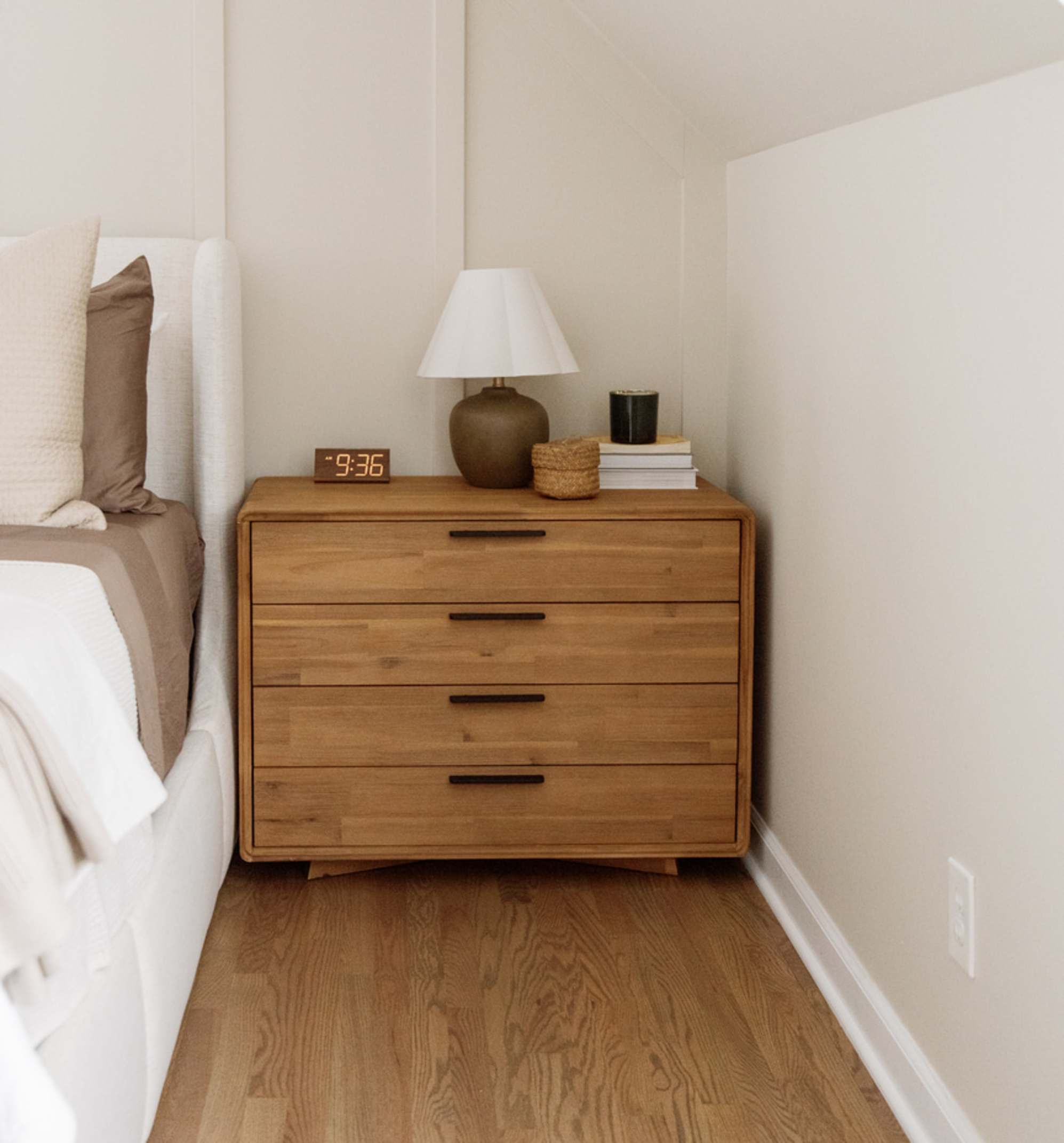
The Seb 4-Drawer Dresser
Picture credits: @homeandkind
The Seb 4-Drawer Dresser
Picture credits: @homeandkind
Is acacia a hardwood, or is that just semantics?
Yes, acacia is a hardwood. Botanically and practically.
The term “hardwood” gets misused often, but in this case, it fits. Acacia has a tight grain structure and a high density, which gives it strength and impact resistance. In plain terms, it doesn’t dent easily, and it doesn’t feel flimsy under pressure.
If you’re wondering is acacia a hardwood because you’re comparing it to oak, walnut, or teak, you’re asking the right question. Acacia belongs in that conversation. It may not have the legacy status of teak, but performance-wise, it holds its own.
Benefits of acacia wood
Call it a teacher’s pet if you want, but there’s a reason acacia is the constant favorite when it comes to furniture manufacturing. It balances heavy-duty durability with centerpiece beauty like a pro—a feat most other timbers can’t quite pull off.
Here’s why acacia wood furniture is a good investment that actually earns its keep both indoors and outdoors.
Durability that handles real life
Because acacia is a hardwood, it already has a major head start in the durability department. With a density closer to marble than to many other softwoods, acacia wood furniture can handle its fair share of trouble in the house.
Whether you're eyeing a solid wood coffee table or a wooden dining chair, you can expect acacia to stick around long enough to see your style evolve.
The Maui Outdoor Sofa Set
Picture credits: @kaileylewisss
The Maui Outdoor Sofa Set
Picture credits: @kaileylewisss

The Seb Dining Table Set
Picture credits: @keyconceptsg
The Seb Dining Table Set
Picture credits: @keyconceptsg

Water resistance that actually works
Unlike most wood furniture, acacia is much more resilient. Thanks to its dense grain, it’s naturally resistant to moisture and decay, meaning your patio set won’t have a total meltdown if it gets caught in a surprise sunshower.
A quick heads-up: While acacia wood is water-resistant, it hasn't quite achieved waterproof status. You'll still want to wipe away any standing water after a storm, as letting puddles hang out on the surface is a surefire way to eventually cause warping or swelling.
Low maintenance, high reward
As far as timber goes, acacia is delightfully low-maintenance. A quick dusting and the occasional wipe-down with mineral oil is all it takes to keep that signature glow.
Busy bees with zero room for high-maintenance furniture: this one's for you. With minimal effort, you can get good mileage out of your acacia wood furniture. But if you treat it right, an acacia piece can last decades without losing its charm.
Versatility that plays well with everyone
Due to its warm and versatile color palette, acacia wood plays nice with just about everyone.
Traditional? Sure. Modern? Absolutely. Rustic? Well, need we say more?
Plus, since it works just as well on the patio as in the dining room, it helps you extend your design aesthetic from the inside out, making your whole home feel like one cohesive thought bubble.
Unique appearance that tells a story
The acacia genus comprises over a thousand species of trees and shrubs. Each species of acacia has its own distinct growth patterns, grain structures, and color variations.
Unlike a generic set of live-laugh-love coasters, no two pieces of acacia are ever identical. Every slab has its own wonderful quirks, giving your space immediate character without you having to try.
Because of this distinct personality, acacia goes well in a mixed interior design style, acting as a natural bridge between your vintage finds and your modern staples.
Is acacia a good wood for furniture?
Short answer: yes. Longer answer: it depends on how you live.
Acacia is a good wood for furniture because it balances strength, beauty, and affordability. It’s dense enough to handle daily use, yet visually expressive enough to stand on its own without heavy styling.
We like acacia for pieces that need to work hard: dining tables, benches, sideboards, and outdoor sets. It doesn’t ask you to tiptoe around it. It asks you to live.
If you’ve been asking is acacia wood good for furniture because you want something durable but not precious, you’re already thinking like we do.

