
The Ultimate Guide: How to Repair Split Wood
There’s a specific kind of frustration that comes with spotting a crack in a piece of furniture you love. One minute, everything looks solid. The next, you’re Googling how to repair split wood while squinting at the damage like it owes you an explanation.
Yes, you can fix wood that has split. And no, you don’t need to be a master carpenter to do it well. With the right tools, a bit of patience, and a clear plan, repairing split wood becomes a satisfying kind of rescue mission.
Whether you’re dealing with a hairline crack on a side table, a split along a dining tabletop, or figuring out how to fix cracked wood furniture that has lived a full life, most repairs are far more manageable than they look.
Why do wood table tops split in the first place?
Before we get into how to fix split wood, it helps to understand what caused the crack in the first place. Wood is a living material, even long after it becomes furniture. It moves, reacts, and occasionally rebels.
Sudden temperature shifts
Wood expands and contracts with changes in temperature. Place your table near an air conditioner, and those constant changes can create internal stress that leads to cracks.
Humidity fluctuations
Wood absorbs moisture from the air, swelling in high humidity and shrinking in dry conditions. Over time, that cycle can result in splits or surface cracks, especially on large flat surfaces like tabletops.
Direct sunlight or heat sources
Sunlight hitting the same spot every day slowly dries the wood, making it brittle. That sun-kissed glow that looks good on your side table or bed frame every morning can easily turn into a sun-cracked problem.
Natural wood movement
Even the highest-quality solid wood moves slightly over time. It’s part of its charm, but also part of the reason you might need to learn how to fix cracked wood at some point.
This is especially true for hardwoods like teak, which is why understanding the varieties of teak wood can help explain why some pieces react differently to climate and wear.
Physical stress and impact
Heavy objects, accidental drops, or leaning too hard on the same edge can cause splits. Wood is durable, but it is not indestructible.
The Rio Garden Teak Dining Table
Picture credits: @kristalheredia
The Rio Garden Teak Dining Table
Picture credits: @kristalheredia
A step-by-step guide on how to fix cracked wood furniture:
Most cracks look worse than they are. If you’re wondering how to fix broken wood without replacing the entire piece, here’s the step-by-step guide you’ve been looking for.
Step 1: Gather your repair kit
Before you start repairing split wood, assemble your tools:
Wood glue
Two-part epoxy or wood filler
Clamps
Putty knife
Fine-grit sandpaper
Clean cloth
Matching stain or finish
Having your tools ready keeps the process calm and controlled, instead of improvised and rushed.
Step 2: Assess the damage
Not all cracks are created equal. Knowing what you’re dealing with helps you choose the right fix and avoid turning a small repair into a much bigger project.
Small, shallow cracks: For minor cracks, wood glue is often enough. These are cosmetic splits that haven’t compromised the structure.
Larger or deeper splits: If the crack is wide, deep, or running along the grain, epoxy or wood filler will offer stronger support.
Step 3: Apply wood glue or epoxy
How you fill the crack matters as much as what you fill it with. The goal is complete coverage—the only reliable way to stop the split from spreading is to leave it nowhere to go.
For glue repairs, gently open the crack just enough to allow the glue to seep in. Apply generously, then press the wood back together.
For deeper splits, work the epoxy into the crack with a putty knife. Take your time and smooth it out while it’s still soft. This is the “make it look like nothing ever happened” stage.
If you’ve ever wondered if you can glue split wood together, this is your answer. Yes, and when done correctly, the bond can be incredibly strong.
Step 4: Clamp the table and let it dry
Clamping is what ensures the repair actually holds. Once the adhesive is in place, clamp the area firmly so the wood bonds back into its original position.
Then wait. Let the glue or epoxy cure for the full recommended time. This is also the most effective way to stop a crack in wood from spreading further. Rushing this step is the fastest way to undo your own work.
Step 5: Sand it down evenly
Once fully cured and dried, sand the repaired area with fine-grit sandpaper until it blends with the surrounding surface.
Run your hand across it. If it feels even and seamless, you’re on the right track. This is the stage where the repair stops looking like a repair.
Step 6: Refinish the split wood table top
To bring the piece back to life, apply a matching stain or wood finish over the repaired section. This helps the color blend and protects the surface from future wear.
If it’s a wood piece that sees daily life—mugs, remotes, snack plates, and all—a protective topcoat is a smart extra layer of defence.
If you’re working on older furniture, test the finish in a hidden area first. Wood ages in its own way, and matching tones can require a little adjustment.
The Seb Extendable Dining Table
Picture credits: @themayagraves
The Seb Extendable Dining Table
Picture credits: @themayagraves

The Brooke Round Dining Table
Picture credits: @staybycorisamuel
The Brooke Round Dining Table
Picture credits: @staybycorisamuel
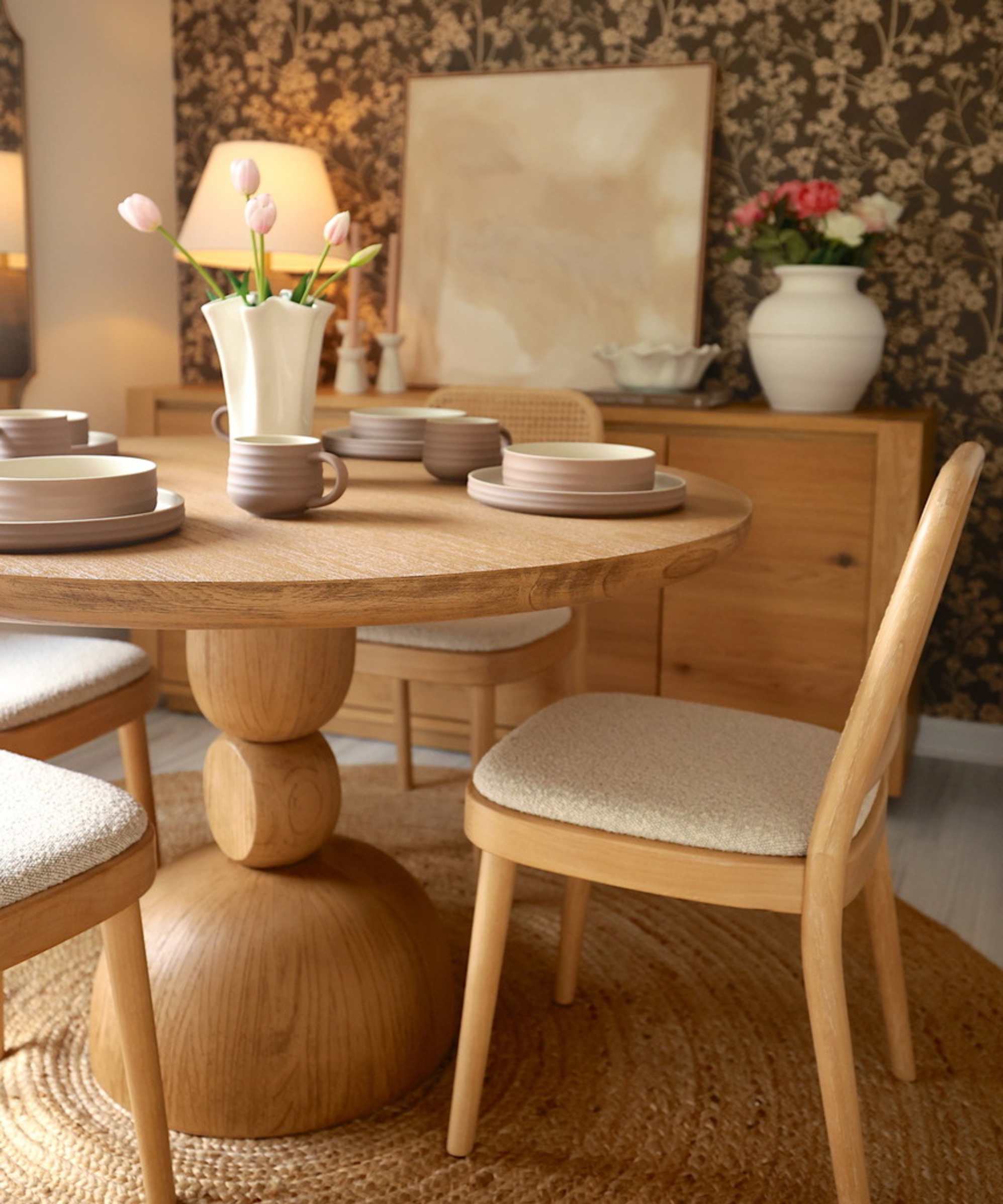
Give your wood furniture a second chance
Every piece of wood furniture carries the marks of how it has been lived with. A crack or split is not the end of its story. It is simply a moment that calls for care.
Learning how to repair split wood means you get to keep the pieces that matter. The dining table that has seen too many dinners to count. The bedside table that holds your everyday life. The bench that everyone gravitates toward without thinking.
Fix it well, and it will keep going with you for years to come.

Frequently asked questions about repairing split wood
Can you fix wood that has split?
Yes, most split wood can be repaired with glue, epoxy, or filler, depending on the depth of the crack. The key is catching it early, before the split has a chance to widen or weaken the structure.
Which is better: wood filler or putty?
Wood filler is better for structural repairs because it hardens and bonds with the wood. Putty is more for cosmetic touch-ups after the repair is done, like hiding tiny surface flaws.
Can I glue split wood together?
You can, as long as the split edges fit neatly back together. Wood glue works well for clean breaks, but larger gaps may need epoxy for a stronger, longer-lasting fix.
