
A Guide to Teak: Why It Deserves a Spot in Your Home
Teak wood isn’t just a material. Every grain, every knot, every golden hue tells a story of endurance, elegance, and understated luxury. From sun-drenched patios to cosy indoor nooks, teak furniture transforms a space.
But what makes teak wood so revered in furniture-making, and why does it consistently earn a spot in homes that value both beauty and durability? Let’s dive in.
What is teak wood and where does it come from?
Teak wood comes from the Tectona grandis tree, native to Southeast Asia, with Indonesia, Malaysia, and India among the largest producers. Its reach has extended to Central and South America, Africa, and the Caribbean, but the legacy of its quality remains tied to its Asian roots.
High-quality teak wood is immediately recognisable: warm golden-brown tones, unique streaks, and natural knots that ensure every piece is truly one-of-a-kind. Beyond aesthetics, teak’s natural oils make it resistant to water, rot, and insects, giving it a resilience that few other woods can match.
Key characteristics of teak wood
Resilience
Teak wood is inherently tough. Its natural oils act like armour, fending off moisture, UV damage, and pests. For garden furniture, this means no warping, cracking, or premature aging, even under the harshest conditions.
Protective barrier
Those same oils form a protective shield that repels water and keeps fungi and insects at bay. Rain, humidity, or fluctuating temperatures pose little threat, which is why teak furniture remains steadfast season after season.
Longevity
Teak wood is an investment in time. With minimal maintenance, occasional cleaning and oiling, it can last for generations. Each scratch or sun-faded edge only adds character, turning furniture into an heirloom rather than just an object.
Aesthetic appeal
Beyond durability, teak wood captivates the senses. Its straight, interlocked grain patterns create depth and texture, while its golden-brown hue develops a rich, natural patina over time. Whether left untreated or polished with teak oil, teak furniture carries a quiet sophistication that complements both modern and classic interiors.
The Rio Garden Teak Dining Set
Picture credits: @our.peachy.days
The Rio Garden Teak Dining Set
Picture credits: @our.peachy.days
The Rio Garden Teak Sofa
Picture credits: @kaylaaaellieee
The Rio Garden Teak Sofa
Picture credits: @kaylaaaellieee
What makes teak wood exceptional
Durability
Resistant to water, rot, insects, and warping, teak wood is built to endure. Unlike some other woods that may warp or crack when exposed to the elements, teak furniture retains its shape and integrity, making it one of the most durable furniture materials for both outdoor patios and high-traffic indoor spaces.
Strength
Its high tensile strength allows it to support weight and pressure without bending or breaking. From a family dinner table brimming with dishes to a heavily used garden lounge, teak handles it all with unwavering stability. This kind of resilience makes it not just practical, but a piece of furniture you can depend on for decades.
Low maintenance
Beauty without fuss is part of teak’s allure. A quick clean with warm water, mild soap, and a soft brush is usually all it takes to keep teak looking impeccable. Unlike more delicate woods that demand constant attention, teak’s naturally oily composition reduces the risk of stains and weather damage. With occasional care, it retains both its strength and aesthetic appeal without becoming a burden.
Natural beauty
Beyond its toughness, teak captivates the eye. Its golden-brown hues, unique grains, and subtle textures give every piece character and depth. Over time, teak develops a rich patina, a visual story of sun, rain, and daily life that makes each item one-of-a-kind.
Different types of teak wood
Not all teak is created equal. The origin, age, and harvesting method influence its quality and character:
| Type of teak wood | Origin/source | Key characteristics | Highlights |
|---|---|---|---|
| Burmese teak | Myanmar | A-grade, straight grain, high oil content, weather-resistant | Highest quality, highly prized for durability |
| Indonesian teak | Indonesia | Grade A or B, strong, attractive, slight colour variations | Adds character; widely used in furniture |
| Indian teak | India | Lighter colour, coarser grain, durable, weather-resistant | Cost-effective alternative to Burmese teak |
| African teak | West Africa | Reddish-brown, durable, visually similar to Asian teak | Often used as a substitute for traditional teak |
| Plantation teak | South America, Africa, Asia | Grown in sustainable forests, durable, less expensive | Harvested from controlled forests |
How to identify real teak wood
Investing in teak wood furniture is not just a purchase—it’s a commitment to pieces that will age beautifully for decades. But not every “teak” you see is the real deal. Some woods are stained, treated, or misrepresented, so knowing what to look for is essential. Here’s how to tell authentic teak from impostors:
Colour: Real teak glows with a warm, golden-brown hue that deepens over time. Slight variations are normal, but overly uniform or artificially darkened pieces are a red flag.
Grain: Teak’s grain is tight, often straight but sometimes interlocked or gently wavy, with a naturally oily feel. If it’s rough, dry, or inconsistent, it may not be genuine.
Weight: Dense and substantial, teak feels heavier than most hardwoods. A lightweight piece of “teak” is likely cutting corners somewhere.
Smell: Authentic teak carries a distinctive but subtle, sweet aroma, reminiscent of leather or tobacco. If there’s no scent (or a chemical smell), proceed with caution.
Price: Quality teak comes at a price. If it seems too good to be true, it probably is.
Source: The world’s finest teak comes from South and Southeast Asia, especially India, Indonesia, and Myanmar. When the origin is vague or uncertain, authenticity is questionable. The safest way to ensure real teak is to buy from a trusted seller who can confirm both the source and grade of the wood.
The Rio Outdoor Teak Bar Cart
Picture credits: @blakeswanson
The Rio Outdoor Teak Bar Cart
Picture credits: @blakeswanson

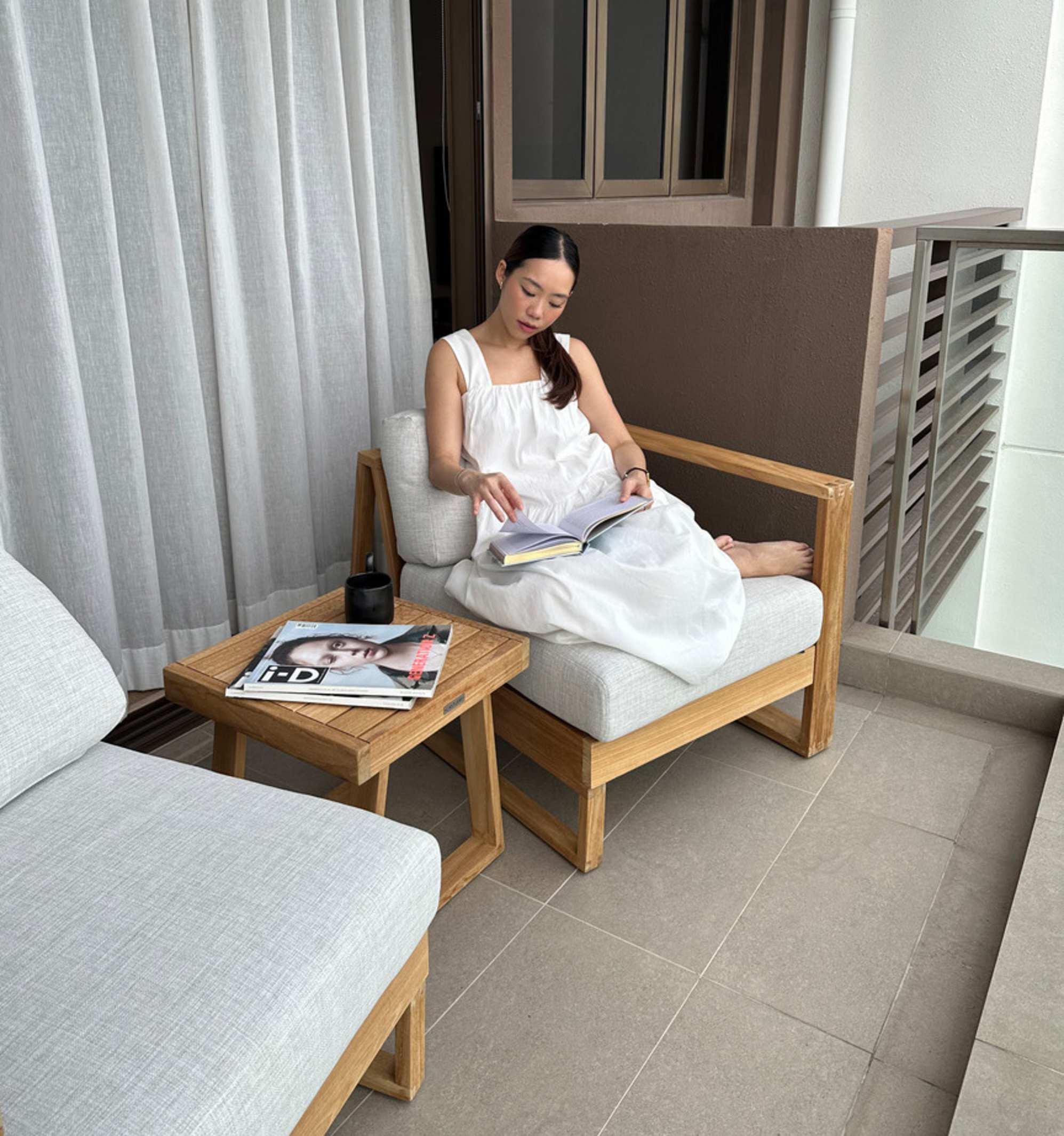
The Rio Teak Garden Sofa
Picture credits: @ddebrajane
The Rio Teak Garden Sofa
Picture credits: @ddebrajane
Caring for teak wood furniture
Teak wood is resilient, but even the toughest furniture benefits from a little attention. Caring for your teak pieces doesn’t have to be complicated—it’s about simple habits that protect the wood, preserve its colour, and allow it to age gracefully.
Here’s how you ensure your teak furniture remains as striking and reliable as the day you brought it home:
Wipe spills immediately: Teak is porous, so liquids can seep in quickly and leave stains or encourage mould growth. Cleaning spills as they happen keeps your furniture looking flawless and prevents long-term damage.
Use coasters and placemats: Beyond protecting surfaces from water rings and scratches, coasters and placemats reduce cleanup time and add a subtle decorative touch to your outdoor or indoor setup.
Protect from direct sunlight: Extended sun exposure can fade teak’s golden-brown tones and accelerate greying. Using umbrellas, pergolas, or furniture covers preserves its natural warmth.
Allow furniture to dry completely: After cleaning, ensure your teak dries thoroughly before placing cushions or covers back on. Trapped moisture can warp or crack even the most resilient wood.
Routine cleaning and maintenance: Gentle cleaning with warm water, mild soap, and a soft brush, followed by periodic applications of teak oil or sealer, enhances the wood’s colour, protects against stains, and keeps it looking effortlessly elegant.
Teak furniture that lives, breathes, and endures
Teak wood is more than furniture—it’s a statement. Its unmatched combination of durability, natural beauty, and low maintenance makes it a timeless investment for any home.
With care and attention, teak furniture doesn’t just survive the years; it thrives, aging gracefully while becoming richer in character. Choosing teak wood means choosing pieces that aren’t just seen, but felt, lived in, and treasured.

