Mattress Dimensions and Bed Sizes Guide
Buying a bed sounds simple enough. Pick a size, choose a bed frame, add a mattress and move on. But anyone who's tried fitting a king bed into an inner-city apartment or a cozy guest room knows the reality is a little more complicated.
Before you commit to a mattress size, it helps to understand the numbers behind the names. What exactly are the standard king bed dimensions in Canada? How does a queen compare to a full or California king? And will your dream bed actually fit through your doorway, hallway, and bedroom layout?
This bed size guide breaks down the most common mattress sizes in Canada to help you choose a bed that fits your space and your sleep style.
Bed sizes in Canada: Mattress size chart
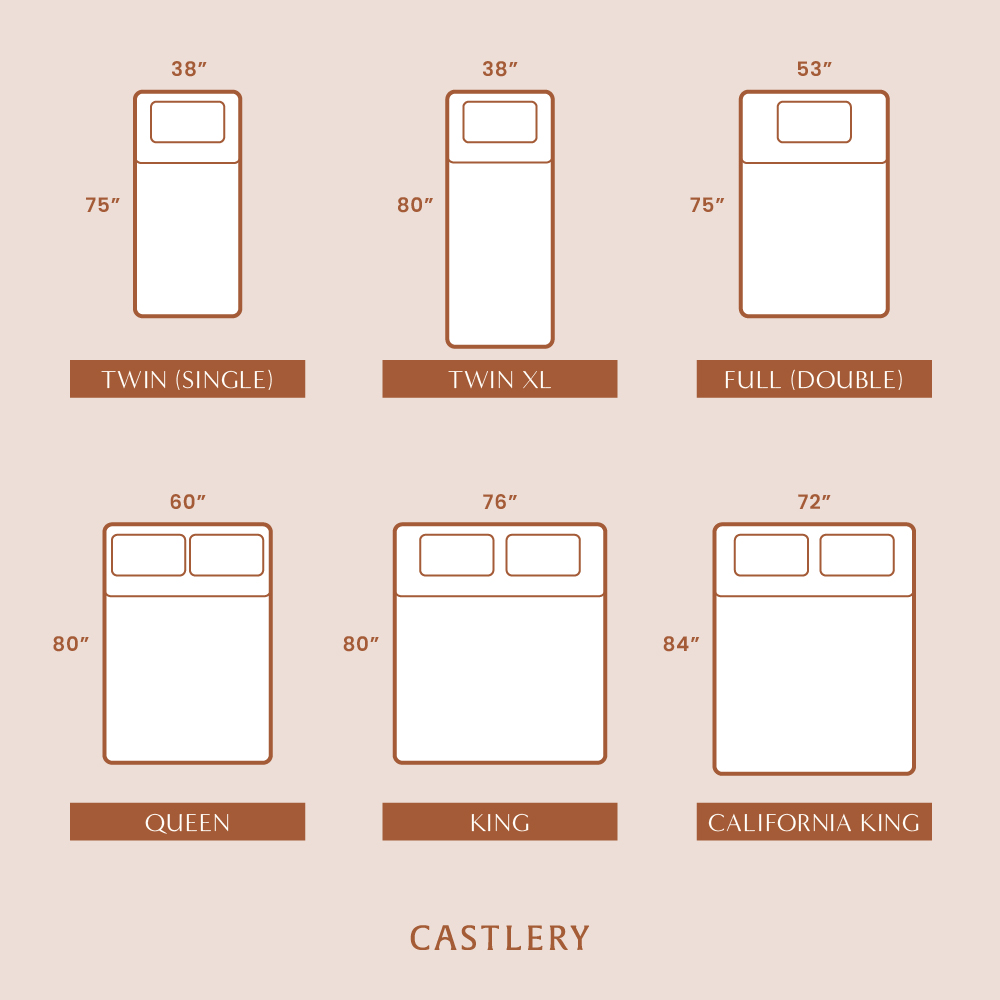
In Canada, most mattresses fall into six main categories: Twin, Twin XL, Full, Queen, King, and California King. While these names are commonly used, exact measurements can vary slightly between brands.
Always check the manufacturer’s product specifications before purchasing, especially when pairing a mattress with a bed frame.
| Bed Size | Dimensions (inches) | Dimensions (cm) | Best suited for |
|---|---|---|---|
| Twin | 38" x 75" | 96 x 190 cm | Kids, single sleepers, small spaces |
| Twin XL | 38" × 80" | 96 × 203 cm | Taller single sleepers, college dorms |
| Full | 54" × 75" | 137 × 190 cm | Solo sleepers who want extra room, guest rooms |
| Queen | 60" x 80" | 152 x 203 cm | Couples, guest rooms, master bedrooms |
| King | 76" x 80" | 193 x 203 cm | Couples needing more space, families with kids or pets |
| California King | 72" x 84" | 183 x 213.5 cm | Taller individuals, master bedrooms |
When comparing options, trust the actual measurements over the name. A “queen” in one market may not be identical to a “queen” somewhere else.
Common international bed sizes you may see online
Shopping online can make bed shopping confusing. You might come across terms like European King, UK King or Australian Queen, all of which refer to different sizing systems.
The safest way to compare beds internationally is to look at the numbers first: width × length.
| International bed size | Dimensions (inches) | Dimensions (cm) | Commonly found in |
|---|---|---|---|
| Full / Double | 54" × 75" | 137 × 191 cm | UK, Australia, Europe |
| UK King | 60" × 79" | 152 × 200 cm | UK |
| Australian Queen | 60" × 80" | 153 × 203 cm | Australia |
| European Queen | 63" × 79" | 160 × 200 cm | Europe |
| European King / Super King | 71" × 79" | 180 × 200 cm | Europe |
Bed size guide: Choosing the right size for your lifestyle
The “best” bed size is not always the biggest one you can fit. It’s the size that gives you enough room to sleep comfortably while leaving your bedroom functional. After all, a bedroom shouldn’t feel like a storage room built around one giant mattress.
Twin bed size: Compact, practical, and space-saving
A twin bed typically measures 38 inches wide by 75 inches long, making it one of the most space-efficient standard mattress sizes available. It's commonly used for:
Children’s bedrooms
Teenagers’ rooms
Guest rooms
Smaller bedrooms or study rooms that double as sleeping spaces
A twin bed gives one person enough sleeping space, but adults who move around a lot at night may find the width limiting over time. If you’re designing a room that needs flexibility, a twin bed can also leave more floor space for desks, storage, and play areas.
Twin XL: The taller solo sleeper's sweet spot
A twin XL sits between a twin and full in terms of length, measuring 38 inches wide by 80 inches long. For taller solo sleepers, this can be the comfortable middle ground. You get the same compact width as a twin, but with an extra five inches of length.
A twin XL works well for:
Adults living alone
Teenagers transitioning to a bigger bed
Guest rooms where you want extra comfort
Smaller bedrooms where a queen feels too bulky
Think of it as the “I like having space, but I still want to walk around my room” option.
The Joseph Walnut Bed
Picture credits: @holoh.there
The Joseph Walnut Bed
Picture credits: @holoh.there

The Rochelle Performance Bouclé Bed
Picture credits: @emmmagraves
The Rochelle Performance Bouclé Bed
Picture credits: @emmmagraves

Full bed size: More room for one
A full mattress, sometimes called a double, typically measures 54 inches wide by 75 inches long. It's a practical choice for solo sleepers who want more room to stretch out than a Twin provides, without moving all the way up to a Queen.
A full bed is a good fit for:
Adults living alone
Teenagers who want more sleeping space
Guest rooms
Smaller bedrooms where a Queen feels too bulky
For one person, a full can offer plenty of room to move around. For couples, however, the 54-inch width can feel noticeably tighter than a Queen.
Queen bed dimensions: The most popular couple’s choice
In Canada, queen bed dimensions are typically 60 inches wide by 80 inches long.
A queen bed is often the default choice for couples because it balances comfort and practicality. It gives two people enough sleeping space while leaving room for bedside tables, wardrobes and walking paths.
A queen is a good fit for:
Couples in apartments, townhouses or smaller homes
Guest rooms that need to accommodate two people
Individuals who enjoy having extra sleeping space
However, consider your sleeping habits too. Do you both sleep still, or does one person slowly migrate across the mattress every night? Do you share your bed with pets or children who somehow always end up taking 80% of the space?
Your lifestyle matters as much as the measurements.
King bed dimensions: Maximum sleeping space
A standard King mattress measures 76 inches wide by 80 inches long. The widest standard mattress size, a King gives couples significantly more personal space and is especially appealing for:
Couples who prefer more room
Hot sleepers who want more space between each other
Families with young children who occasionally climb into bed
Pet owners whose pets believe the bed belongs to them
Before choosing a king, measure carefully. The difference between a queen and king may look small on paper, but in a bedroom, those extra centimetres can determine whether you have comfortable walkways or constant furniture collisions.

The Camille Storage Bed
Picture credits: @my_friend_jackies_house
The Camille Storage Bed
Picture credits: @my_friend_jackies_house

California King: More length, less width
A California King measures 72 inches wide by 84 inches long, making it four inches narrower and four inches longer than a standard King. The extra length makes a California King a popular choice for taller sleepers, while the slightly narrower width can work well in certain bedroom layouts.
A California King may be a good fit if:
You're taller and want additional legroom
You prefer a longer sleeping surface
Your bedroom layout works better with a narrower bed
You want more length without moving to a wider King
Will it fit? How to measure your bedroom before buying a bed
A mattress can fit your room dimensions on paper and still feel completely wrong once everything is in place. The secret is not just measuring the bed—it’s measuring how you live around the bed. Consider:
Space beside the bed for getting in and out comfortably
Clearance for opening wardrobe doors and drawers
Room to make the bed without squeezing yourself into corners
Space for nightstands, lamps, or charging points
A larger bed may give you better sleep, but if every morning starts with squeezing between the bed and wardrobe, the room may not feel restful.
Bed frame vs mattress dimensions
In most cases, choosing a mattress is straightforward. A queen bed frame is designed for a queen mattress, and a king bed frame is designed for a king mattress. The bed size refers to the mattress it accommodates, so you don't need to worry about matching different sizes.
Where people get caught out is assuming the bed frame takes up the same amount of floor space as the mattress. In reality, headboards, side rails, storage drawers, and upholstered edges can all add to the bed's overall footprint.
Before you buy, pay attention to these two measurements.
Outer frame footprint vs mattress space
The mattress space tells you which mattress size the bed frame is designed to hold. The outer frame footprint tells you how much floor space the bed will actually occupy.
This is especially important if you're choosing a bed with a wide headboard, thick side rails or built-in storage, as these design features can add several centimetres beyond the mattress itself.
If you're furnishing a smaller bedroom, checking the outer dimensions can help you avoid sacrificing valuable walking space.
Consider mattress height and frame design
Not all bed frames support a mattress in exactly the same way. Some frames have:
Raised edges or lips around the mattress
Recessed mattress platforms
Taller side rails
These design details don't change the mattress size you need, but they can affect the bed's overall height, how easy it is to get in and out of bed, and the final look of your bedroom.

Choose the bed size that fits your life, not just your room
Choosing a mattress size is about more than finding the biggest bed your bedroom can hold. The right size gives you room to rest, move and live comfortably.
A single bed might create space for a growing child’s imagination. A queen might become the centre of a couple’s first home together. A king might finally give two people enough space to sleep without negotiating for mattress territory every night.
Before you fall in love with a design, measure the room, check the dimensions, and think about how you actually use your bedroom. Because the best bed is not simply the one that fits your floor plan. It is the one that fits your everyday life.

Frequently asked questions about bed and mattress dimensions
What are the standard bed sizes in Canada?
The most common bed sizes in Canada are Twin, Twin XL, Full, Queen, King and California King. Standard mattress dimensions vary by size, so always check the manufacturer's product specifications before purchasing.
What are Queen and king bed dimensions?
A standard Queen mattress measures 60 inches wide by 80 inches long. A standard King mattress measures 76 inches wide by 80 inches long. A King is 16 inches wider than a Queen but the same length.
What’s the difference between a King and California King?
A standard King is 76" × 80", while a California King is 72" × 84". A King is wider, while a California King is longer. A California King can be a better choice for taller sleepers, while a standard King gives couples more width.
Is a bed frame the same size as the mattress?
No. A mattress measurement refers to the sleeping surface, while a bed frame includes the surrounding structure. Always check the frame’s inner mattress space and outer footprint before purchasing.
What bed size should I get for a guest room?
A twin or full can be a practical choice for smaller guest rooms, offering comfortable sleeping space without taking up too much floor area. If you regularly host couples or want greater flexibility, a Queen bed may be a better option.
Can two people sleep on a full-size single?
Yes, two people can sleep on a full-size bed, but the 54-inch width may feel restrictive for everyday use. Couples who share a bed nightly will generally have more room on a Queen or King, especially if either person moves around while sleeping.