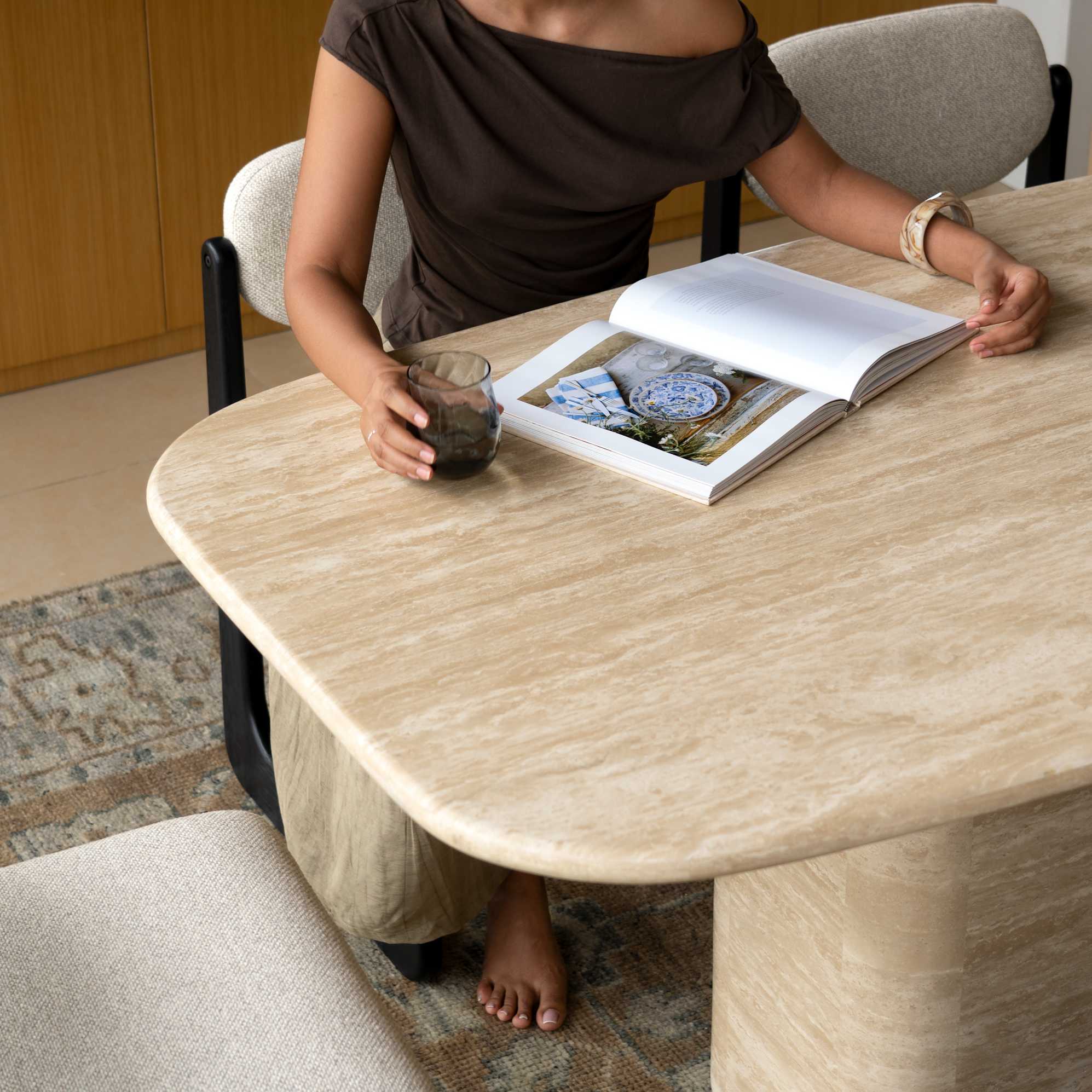
Travertine vs Marble Tables: Which Is Best?
Stone tables are having a moment—and it’s easy to see why. As interiors shift toward natural textures, organic forms, and quiet luxury, these sculptural pieces have taken center stage. With their matte finishes, tactile surfaces, and durable options like engineered sintered stone, stone tables blend beauty and practicality in a way that feels both elevated and effortless.
Choosing the right table for your space goes beyond style. Consider durability, appearance, maintenance, and how it fits into your everyday life. Because a table this solid deserves a decision that feels just as solid.
What is travertine?
Travertine is a natural limestone formed by mineral-rich springs and caves, creating its signature textured look of tiny pits and holes. For furniture, these pits and holes are filled and polished to create a smooth, durable surface that feels earthy, grounded, and quietly luxurious.
Best for: Durable, stylish pieces that stand up to daily use—think coffee, dining, or side tables, indoors or out.
What is marble?
Marble is a natural, polished metamorphic rock made of calcite, dolomite, or serpentine. Renowned for its distinctive veining, luxurious look, and durability, it’s also heat-resistant, making it as practical as it is beautiful.
Best for: Statement-making furniture, including luxurious dining tables, striking side tables, and sculptural coffee tables.
Is travertine marble?
Travertine isn’t technically marble, though the two are closely related. Both are made of calcium carbonate, but marble is a dense, metamorphic rock, while travertine is a sedimentary limestone formed in hot springs. Its porous, pitted surface and warm, earthy tones give travertine a distinct, natural look—different from marble’s smooth, veined elegance.
| Feature | Travertine | Marble |
|---|---|---|
| Durability | Softer and porous, it conceals scratches but is more susceptible to staining and acid damage. | Denser and more scratch-resistant, but it demands careful handling to avoid etching and losing shine. |
| Appearance | Naturally porous with rustic pits and subtle veining, travertine comes in warm, earthy tones and can be finished smooth or left raw for an organic texture. | Smooth, dense, and crystalline, marble shows dramatic veining in white, gray, black, green, pink, or brown, with polished, honed, or sandblasted finishes for a luxurious, elegant look. |
| Cost | Generally more affordable, costing roughly half the price of marble. | High-end luxury stone that is more expensive for its veining and labor-intensive extraction. |
| Maintenance | More porous, requiring regular sealing, usually twice a year, to prevent stains. | Highly prone to acid etching, requiring prompt spill cleanup. |
| Weight & Portability | Lighter and more portable, making it easy to move and rearrange. | Denser and heavier, offering stability and longevity, but harder to move and install. |
Making the right table choice
Picking the right stone table is about more than looks; it’s about how it fits your life. Travertine brings a warm, earthy vibe that’s lighter, forgiving, and ready for everyday use. Marble makes a bold, luxurious statement, perfect for pieces that anchor a room and turn heads. Think about durability, maintenance, and how you actually live, then let your space (and your lifestyle) decide. Either way, a stone table adds texture, presence, and effortless style, plus a little “wow” factor you’ll never get tired of.

Frequently asked questions about travertine and marble
Can I use disinfecting wipes on marble and travertine tables?
No, avoid standard disinfecting wipes, as their harsh chemicals can etch, stain, or damage these porous, calcium-based stones. Instead, clean with a soft microfiber cloth and warm water with a few drops of mild, pH-neutral soap or a stone-specific cleaner. Steer clear of acidic or abrasive cleaners, which can permanently scratch or dull the surface.
Can marble and travertine tables complement each other?
Marble and travertine tables pair beautifully, creating a sophisticated contrast that blends warm, rustic textures with sleek, luxurious veining. For a harmonious look, stick to a consistent color palette, like matching cream tones, and consider using honed finishes on both to keep textures balanced.
