
The Best Solid Woods for Dining Tables That Last
The dining table isn’t just another piece of furniture: It’s where stories stretch long after plates are cleared, where meals disappear faster than planned, and where someone always tests the limits with a glass of red wine. That’s why choosing a solid wood dining table matters. It needs to take the hits, age with dignity, and still look good doing it.
Of course, not all woods are made equal—some are just tougher party guests than others. The best wood dining tables combine beauty, resilience, and are ready to withstand decades of dinner parties and slightly slurred secrets.
From oak’s steady warmth to walnut’s rich drama, knowing each timber’s quirks will help you choose a dining table you’ll love living with for decades.
What makes solid wood the superior choice?
Solid wood is natural lumber, a sturdy, reliable material that brings the warmth and enduring quality of the outdoors right into your dining room. Each piece carries its own unique grain pattern, subtle colour variations, and character marks that tell the story of the tree it came from.
Why solid wood stands apart:
Naturally regulates moisture and responds to its environment
Develops a deeper patina over time rather than simply wearing down
Can be sanded and refinished if life leaves its mark too enthusiastically
Offers longevity that makes it both an environmental and practical choice for households that measure furniture lifespans in decades
What are the best solid woods for furniture?
Not all woods behave the same way once real life gets involved. When considering the best wood for a dining room table, think beyond looks. Density, grain structure, moisture resistance, and stability all matter, especially for a tabletop that sees daily use.
Here’s a closer look at the best types of wood for tables, and what they bring to the room.
1. Walnut wood: The quiet show-off
Walnut is the dark-roast coffee of hardwoods. Deep, rich, and confident without being loud, it’s the kind of wood that doesn’t need to prove anything. Its colour ranges from light chocolate to deep espresso, paired with a smooth, refined grain that feels instantly elevated.
Structurally, walnut is impressively stable. It resists shrinking and warping even with frequent use, making it a strong contender for anyone who hosts often. Add to that its natural resistance to decay and humidity, and you get a table that shrugs off spills and steam without drama.
If you want a solid wooden dining table that feels grown-up, grounded, and a little indulgent, walnut delivers.
The Vincent Walnut Dining Set
Picture credits: @_vincelam_
The Vincent Walnut Dining Set
Picture credits: @_vincelam_
2. Oak wood: The dependable classic
If walnut is the dark-roast coffee of hardwoods, oak is the milk latte: lighter in colour, strong as anything, and covered in bold, open grains that make it feel naturally alive. When people ask about the best wood for a dining table strength and longevity, oak consistently tops the list for good reason.
It’s dense and dependable, not only resisting mould and warping but barely shrinking over time. That makes it the ultimate low-maintenance friend you want in your dining room.
Oak suits homes that want durability without heaviness. It works beautifully in bright, airy interiors and brings balance to quiet Japandi homes or Scandinavian-inspired spaces.
The Vincent Dining Table, Oak
Picture credits: @ohhowstrange
The Vincent Dining Table, Oak
Picture credits: @ohhowstrange

The Vincent Oak Dining Set
Picture credits: @girlandgrey
The Vincent Oak Dining Set
Picture credits: @girlandgrey

3. Teak wood: The weatherproof legend
Teak has earned its reputation as the gold standard for garden furniture, but that same legendary durability translates beautifully indoors. Known as one of the most weather-resistant woods, it’s packed with natural oils that protect it from moisture, rot, and pests.
What makes teak one of the best woods for a dining table is its exceptional dimensional stability. It doesn’t swell, crack, or warp when humidity changes, which means it stays reliable through seasonal shifts and years of use.
Aesthetically, teak offers a warm honey-gold tone and a straight, even grain. Over time, it can develop a soft, silvery patina if left untreated, adding to its character rather than diminishing it.
4. Acacia wood: The versatile performer
Smooth on the outside but built like a tank underneath, acacia wood is that rare hardwood that delivers both stunning visual interest and unmatched durability. Dense and durable, it resists warping and cracking even when life around the table gets energetic.
Its natural water resistance makes it a popular choice for garden furniture, and that same resilience translates well indoors. Acacia handles spills, bumps, and heavy use without demanding much in return.
For busy households that need a real wood dinner table that can keep up, acacia offers strength, warmth, and flexibility in equal measure.
The Seb Extendable Dining Table Set
Picture credits: @thepantryboy
The Seb Extendable Dining Table Set
Picture credits: @thepantryboy
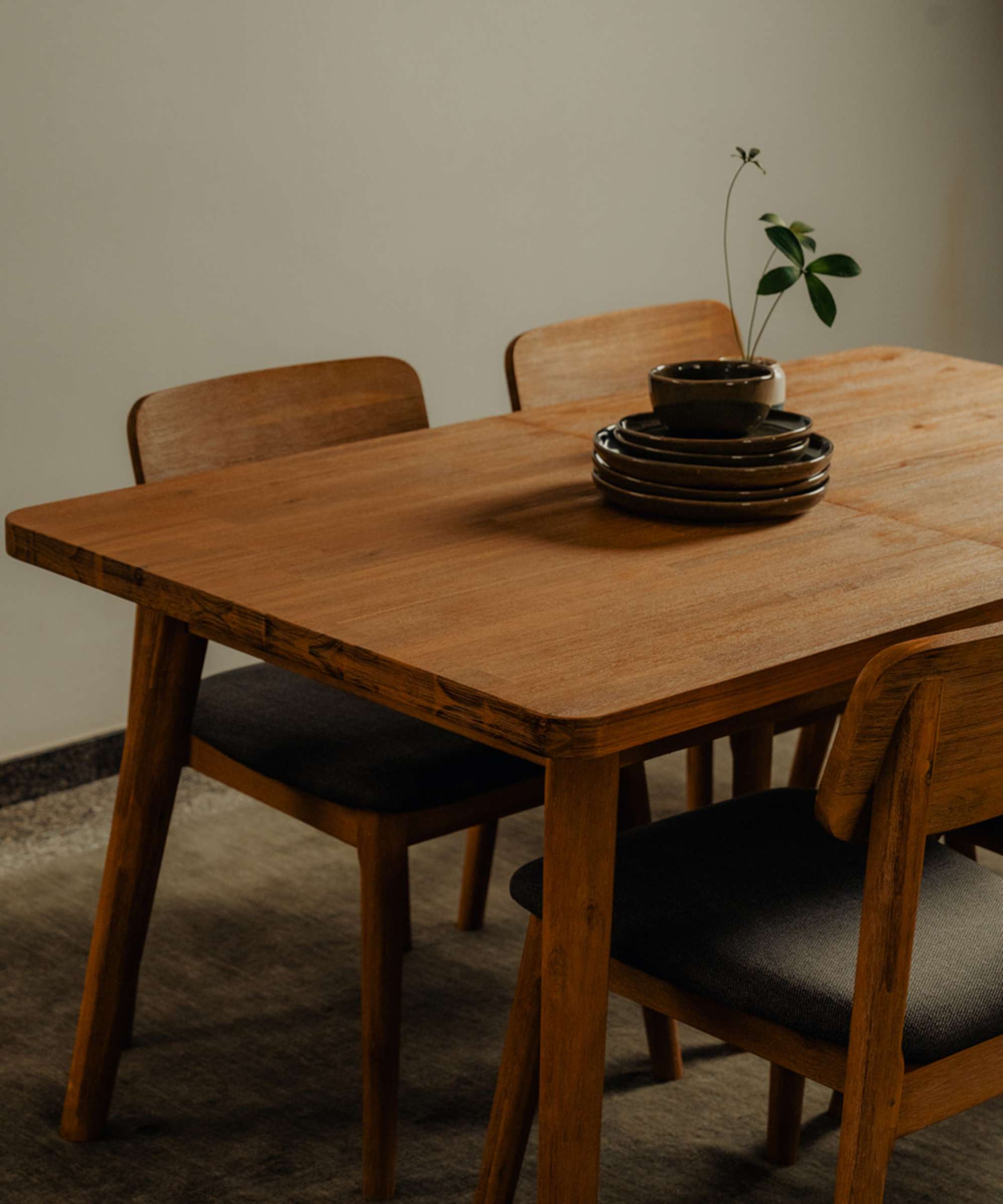
The Seb Extendable Dining Table
Picture credits: @elisecook
The Seb Extendable Dining Table
Picture credits: @elisecook

5. Mahogany: The timeless classic
Mahogany is one of those classic woods that’s been prized for ages thanks to its unbeatable trifecta: stunning beauty, undeniable strength, and sheer resilience.
This is wood that ages with intention. A mahogany dining table doesn’t just last; it becomes more refined as the years pass. Its strength makes it well-suited for long-term use, while its visual depth adds a sense of permanence to the room.
If you’re drawn to classic interiors and furniture that feels destined to stay, mahogany is a natural choice.
6. Mindi wood: The understated achiever
Mindi is one of those under-the-radar hardwoods that quietly does everything right. It’s tough, naturally resistant to decay and fungus, and refreshingly low-maintenance, which is exactly what you want from a dining table.
Visually, mindi offers a softer grain and lighter tones that range from pale blonde to gentle honey. It brings warmth without demanding attention, making spaces feel relaxed and lived-in.
For those who value subtle character and everyday reliability, mindi quietly earns its place among the best hardwoods for dining tables.
6. Mango wood: The practical charmer
Not only does mango wood possess superior strength and density, but its water resistance means that it can stand up to the everyday hurly-burly without needing constant attention. Its warm golden-brown tones and distinctive grain patterns add visual interest without feeling fussy.
What makes mango one of the best woods for a dining room table is its balance. It’s polished enough for more considered interiors, yet tough enough to handle everyday wear. For homes that want warmth, durability, and ease, mango wood delivers without trying too hard.
Comparing the best hardwoods for your dining table
Here’s the wood lineup in a nutshell, so you can remember who does what:
| Wood types | Appearance | Qualities | Best for |
|---|---|---|---|
| Walnut | Rich and dark with a satiny grain | Resistant to shrinking and warping | Style-forward households that love hosting |
| Oak | Light and bright with bold, open grains | Dense and stable; resistant to mould and warping | Households that want durable warmth with zero drama |
| Teak | Rich honey-gold with straight, even grain | Naturally weather-resistant; extremely stable; resists rot and pests | Households that value longevity and minimal maintenance above all else |
| Acacia | Warm golden-brown tones | Tough but flexible; resistant to water and warping | Busy homes that don’t have time for fuss |
| Mahogany | Reddish glow that deepens over time | Strong and resilient | Classic-leaning homes with a timeless feel |
| Mindi | Ranges from a light, airy blonde to a honeyed warmth. | Durable; resistant to decay and fungus | Relaxed, cosy homes that want subtle character and everyday sturdiness |
| Mango | Golden-brown warmth, marked by a wonderfully dense grain | Durable and dense, water-resistant | Practical, lived-in households that want strength, warmth, and easy upkeep |
Choosing a real wood dining table that grows with your home
Picking the best wood for a table is less about ticking off a checklist and more about choosing a partner for your life’s best moments. Maybe that means oak for bright durability, walnut for rich depth, or mango wood if you want something sturdy, warm-toned, and naturally hard-wearing.
Once you understand the different types of wood for tables and how they behave over time, picking a solid wooden dining table becomes less about guesswork and more about alignment. Think about how you live, how you gather, and what you’re willing to maintain.

Frequently asked questions about solid wooden dining tables
How to care for a real wood dining table?
Treat it like a good leather bag: wipe spills fast, use coasters, and don’t let heat or water camp on the surface. Dust with a soft cloth, clean with mild soap and water, and refresh the finish occasionally so the wood stays happy and glowing!
Is a solid wooden dining table worth it?
Yes, it’s the “buy once, love forever” kind of furniture when treated right. Solid wood can take daily life, age beautifully, and still look better years later, even with a few well-earned dents that tell your story.
How long does real wood furniture last?
Decades, easily. Real wood doesn’t tap out early; it settles in, develops character, and keeps showing up for every meal, milestone, and midnight snack run.
